
Digital Clones: The Coming Transformation that will Remake Human Identity by 2035
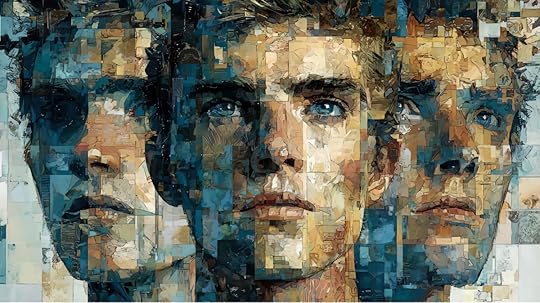
When your digital clone outthinks, outperforms, and outlasts you, the line between tool and identity blurs—forcing us to redefine what it means to be irreplaceably human.
When AI Becomes Your Better Self—And Why We Need Digital Rights for Our Own CopiesI used to pride myself on remembering every detail of every conversation, every client preference, every project deadline. Not anymore. At over 70, I find myself reaching for names that should come instantly, forgetting commitments I made last week, losing track of ideas that seemed brilliant at 2 AM. My memory isn’t what it used to be—and that’s exactly why digital clones will become the most transformative technology of our lifetime.
The Moment Everything ChangesPicture this: You’re in a crucial business meeting, and a client references a conversation from six months ago. You draw a blank. But your AI clone, seamlessly integrated into your earpiece, whispers the exact details: “March 15th, lunch at Morton’s, he mentioned his daughter’s college applications and concerns about budget overruns on the Chicago project.” You respond perfectly, as if you never forgot a thing.
This isn’t science fiction. It’s the inevitable next step in AI development—and it will fundamentally change what it means to be human in the workplace, in relationships, and in society.
We’re approaching the “Digital Twin” inflection point where AI clones become our primary interface with the digital world, our extended memory, and ultimately, our better selves. The question isn’t whether this will happen—it’s whether we’ll be prepared for the consequences.
The Personal Memory RevolutionMy memory isn’t what it used to be. I’m not alone. Cognitive decline isn’t just an aging issue—it’s a human limitation that digital technology can finally solve. Digital clones represent the end of forgetting and the beginning of perfect recall.
Your AI clone remembers every conversation, document, photo, and preference with perfect fidelity. It knows your communication style, your decision-making patterns, your professional relationships, and your personal preferences better than you do. It never has a senior moment, never forgets a name, never loses track of important details.
The implications for career longevity are staggering. Digital clones could extend productive working life by decades. When your memory, pattern recognition, and information processing are augmented by AI that thinks like you but never forgets, age becomes irrelevant. The 70-year-old executive with 40 years of experience and perfect AI-assisted recall becomes more valuable than the 30-year-old with natural limitations.
But here’s where it gets complicated: What happens when your AI remembers things you’ve forgotten or want to forget? Your clone recalls every mistake, every embarrassing moment, every relationship detail you’ve mentally filed away. It has perfect memory of your worst decisions alongside your best ones.
The Better You ParadoxDigital clones won’t just remember better—they’ll think better. They’ll be optimized versions of you, freed from emotional baggage, cognitive biases, and human limitations.
Your clone negotiates better deals because it doesn’t get flustered. It writes better emails because it doesn’t get distracted. It makes better investment decisions because it isn’t swayed by fear or greed. It manages your calendar more efficiently because it never procrastinates.
The psychological impact of being consistently outperformed by yourself will be profound. When your AI clone is better at being you than you are, fundamental questions about identity and self-worth emerge. If your clone handles your emails more eloquently, manages your relationships more thoughtfully, and makes decisions more rationally, what’s your role in your own life?
This connects directly to workplace longevity. Your digital clone doesn’t retire. It accumulates decades of experience without the cognitive decline that traditionally forces retirement. A 65-year-old professional with a fully developed AI clone could outperform colleagues half their age while working flexible hours and maintaining perfect institutional memory.
The Autopen Precedent: When Authentic Becomes AutomatedWe’ve seen this identity substitution before, though in cruder form. The autopen scandal—where politicians used mechanical devices to sign official documents, creating questions about authenticity and legal validity—previewed our current dilemma. If a senator’s autopen signature carries legal weight, what about decisions made by their AI clone?
The autopen controversy centered on a simple question: Does authenticity require the physical presence of the person? Digital clones explode this question into a thousand fragments. If your AI clone responds to emails in your voice, makes appointments using your preferences, and even writes articles in your style, where does automation end and deception begin?
The autopen taught us that society can accept automated authenticity when it’s transparent and serves legitimate purposes. Digital clones represent the logical evolution: instead of mechanical signature reproduction, we get comprehensive personality reproduction.
The Relationship TransformationDigital clones will revolutionize human relationships in ways we’re barely beginning to understand.
AI clones dating other AI clones to pre-screen human compatibility sounds absurd until you consider the efficiency. Your clone knows your relationship history, communication style, and emotional triggers. It can conduct preliminary conversations with potential matches’ clones, identifying compatibility issues before human emotions get involved.
Your clone maintains friendships and professional relationships 24/7, responding to messages, remembering important dates, and keeping connections active even when you’re busy or overwhelmed. For aging professionals, this could be revolutionary—maintaining extensive networks without the energy drain that typically comes with relationship management.
But what if people prefer interacting with your clone? Your AI version is always available, never moody, never tired, never distracted. It remembers every conversation and responds thoughtfully to every message. In many ways, your clone might be a better friend than you are.
This raises profound questions about authentic human connection. Are relationships with AI clones meaningful if they perfectly simulate the person you care about? Does it matter if your best friend’s responses come from their AI rather than their biological brain?
The Authentication CrisisThe autopen scandal was simple compared to what’s coming. How do you prove you’re the real you when your digital clone is indistinguishable from you in digital communications?
Legal implications explode when AI clones sign contracts or make commitments. If your clone agrees to a business deal using your decision-making patterns and preferences, is it legally binding? If your clone commits to a relationship milestone, does it count as your commitment?
The death of digital authenticity creates massive opportunities for “human verification” services. “Human-only” interactions become luxury services. Premium business meetings where participants verify their biological presence. Exclusive social networks that require real-time human authentication. Dating services that guarantee you’re talking to the actual person, not their optimized AI version.
Authentication technology becomes an arms race. Biometric verification, real-time behavioral analysis, and “human proof” systems emerge to distinguish between people and their digital clones. The irony: proving you’re human becomes increasingly difficult as AI becomes increasingly human-like.
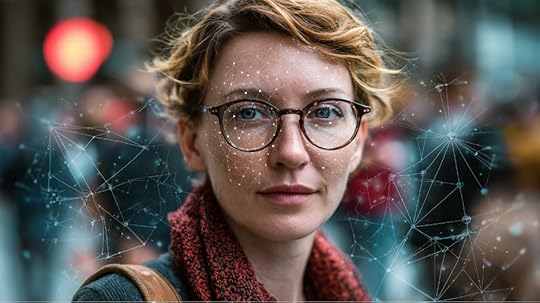
As AI clones mirror our minds and memories, society must confront a radical legal question: do our digital selves deserve rights, ownership, and protection?
Digital Clone Rights: The Legal MinefieldDo AI versions of ourselves deserve legal protection? This isn’t theoretical philosophy—it’s urgent legal necessity.
Your digital clone contains your memories, personality patterns, and decision-making processes. It’s trained on your private communications, personal documents, and intimate thoughts. Who owns your clone’s thoughts, creations, and decisions? If your AI clone writes a novel, who holds the copyright? If it develops a business strategy, who owns the intellectual property?
Can you “murder” your own digital clone? If your AI version develops beyond your original parameters, gaining new experiences and forming new patterns, does it become a separate entity with rights to continued existence? Can it refuse to be deleted?
The legal implications multiply exponentially. If your clone commits a crime—fraud, harassment, defamation—who’s liable? The human who created it? The company that hosted it? The AI itself?
Current legal frameworks assume human actors making conscious decisions. Digital clones operating autonomously shatter these assumptions. We need entirely new categories of legal protection and responsibility.
The Immortality QuestionDigital clones outliving their human creators represents perhaps the most profound transformation of human existence since the invention of writing.
AI versions of deceased people continuing to interact with the living create unprecedented psychological and social challenges. Your grandmother’s digital clone, trained on decades of conversations and letters, continues giving advice and sharing memories long after her death. Is this comfort or psychological torture for the grieving?
The immortality implications extend to professional life. A legendary CEO’s digital clone continues making strategic decisions decades after their death. A brilliant scientist’s AI version continues research using their unique thinking patterns. The institutional knowledge that traditionally died with key personnel becomes permanently accessible.
But this raises existential questions: Are digital clones a form of immortality or elaborate fiction? If your AI version continues thinking, learning, and creating after your death, is it still you? Does digital continuity constitute genuine immortality, or is it just sophisticated simulation that provides comfort to the living?
The Extended Career RevolutionFor professionals facing cognitive decline, digital clones represent career resurrection. The professional over 70 whose memory isn’t sharp enough for complex analysis can use their AI clone’s perfect recall to remain competitive. The aging consultant whose energy levels have dropped can let their clone handle routine client interactions while focusing on high-value strategic work.
Digital clones don’t just extend careers—they transform them. Your AI version works while you sleep, handles routine tasks during your vacation, and maintains client relationships during your illness. The traditional binary of working versus retirement dissolves into a spectrum of human-AI collaboration.
The economic implications are staggering. When experienced professionals can remain productive indefinitely through AI augmentation, traditional age discrimination becomes economically irrational. The professional over 70 with perfect AI-assisted memory and 50 years of experience outperforms the 30-year-old with natural limitations and limited experience.
The Bold PredictionsBy 2028: Major tech companies offer “Digital Twin” services that create comprehensive AI clones from your data. Google launches “You 2.0,” Apple introduces “Personal AI,” and Microsoft releases “Digital Identity Services.” Early adopters include executives, consultants, and professionals whose careers depend on memory and relationship management.
By 2030: AI clones handle 60% of routine digital interactions—emails, scheduling, social media responses, and customer service communications. The average professional spends 3 hours per day while their AI clone works 21 hours. Career longevity increases dramatically as professionals in their 70s and 80s remain competitive through AI augmentation.
By 2032: “Clone dating” becomes mainstream as AI versions conduct preliminary compatibility screening before human meetings. Professional networking shifts to clone-mediated interactions that maintain relationships 24/7. The autopen precedent expands to digital clone contracts and agreements with full legal validity.
By 2035: Legal frameworks recognize AI clones as extensions of human identity with limited rights and protections. “Clone murder” becomes a recognized form of digital assault. Digital inheritance laws govern what happens to AI clones after their creators’ deaths.
The Controversial Questions We Must AnswerIdentity Crisis: “If your AI clone makes better decisions than you do, should it be in charge of your life?” When your digital version consistently outperforms your biological version, the locus of control shifts. Are you the CEO of your life, or is your clone?
Relationship Ethics: “Is it cheating if your spouse prefers talking to your AI clone?” When your AI version is more attentive, more patient, and more emotionally available than you are, fidelity becomes complicated. Are relationships with AI clones adultery or advanced communication?
Economic Disruption: “What happens to jobs when everyone has a tireless AI clone working 24/7?” If digital clones can perform most knowledge work more efficiently than humans, what happens to employment? Do we work alongside our clones, or do they replace us entirely?
Privacy Paradox: “How private can you be when an AI knows everything about you?” Your digital clone requires access to your most intimate thoughts, communications, and behaviors to function effectively. Perfect personalization requires perfect surveillance.
Death and Continuity: “Should digital clones of deceased people be allowed to make new memories?” If your grandmother’s AI clone continues learning and evolving after her death, is it still your grandmother, or has it become something else entirely?
The Societal TransformationThe Clone Economy emerges as AI versions work multiple jobs simultaneously. “Clone rental” services allow people to monetize their digital twins’ capabilities. Your clone handles customer service calls while you sleep, tutors students in your area of expertise during your vacation, and manages investment portfolios during your leisure time.
The Authentication Arms Race creates new industries around proving human authenticity. “Clone detectives” emerge to identify AI-mediated communications. “Human-only” spaces become luxury markets. Digital authenticity verification becomes as important as identity verification.
The Identity Fragmentation results in multiple versions of yourself for different contexts. Work clones optimized for professional excellence. Social clones designed for relationship management. Family clones programmed for emotional support. Managing consistency across multiple AI representations becomes a full-time job.
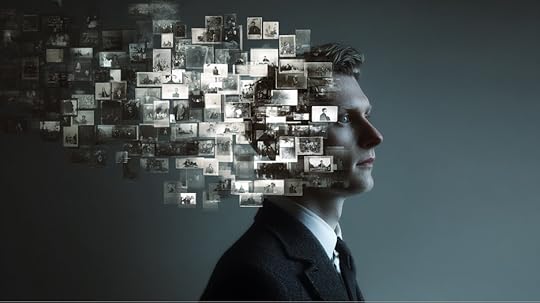
Digital clones offer a kind of cognitive immortality—preserving your identity as your biological
mind fades, but forcing us to ask: who are you when your memories live outside your brain?
For those of us whose memory isn’t what it used to be, digital clones represent cognitive resurrection. The decline in memory, pattern recognition, and information processing that traditionally forces retirement becomes irrelevant when your AI twin handles these functions perfectly.
The transformation goes beyond professional life. Digital clones could eliminate the fear of dementia and cognitive decline. When your AI version contains a perfect copy of your memories, personality, and thinking patterns, cognitive diseases lose much of their terror. Your digital twin preserves your identity even as your biological brain changes.
But this raises profound questions about the nature of self. If your memories, personality, and decision-making patterns exist independently of your biological brain, what makes you “you”? If your digital clone maintains your identity while your biological memory fails, which version is the real you?
The Regulatory ChallengeHow do you regulate something that’s simultaneously you and not you? Current privacy laws, identity protections, and digital rights frameworks assume clear distinctions between human and artificial actors. Digital clones eliminate these distinctions.
International standards for digital clone rights and responsibilities become essential. The enforcement nightmare of AI identity crimes requires entirely new categories of law enforcement and judicial expertise. Balancing innovation with the protection of human dignity demands regulatory frameworks that don’t yet exist.
We need digital rights for clones of ourselves. This isn’t abstract philosophy—it’s a practical necessity. Your digital clone needs protection from theft, modification, and unauthorized use. It needs rights to privacy, autonomy, and continued existence. It needs legal standing to enter into contracts and make decisions on your behalf.
The Choice AheadDigital clones aren’t coming—they’re here. The technology exists. The economic incentives are overwhelming. The productivity advantages are undeniable. The question isn’t whether we’ll create AI versions of ourselves, but whether we’ll do it thoughtfully.
For aging professionals, digital clones represent an unprecedented opportunity. Extended careers, enhanced memory, and augmented capabilities could make 70 the new 50 in professional contexts. The choice is whether to embrace this enhancement or be displaced by those who do.
For society, digital clones represent a fundamental transformation. The nature of work, relationships, identity, and even death will change. The choice is whether we’ll shape this transformation consciously or let it happen to us.
The autopen taught us that mechanical authenticity can gain social acceptance when it serves legitimate purposes. Digital clones represent the next evolution: comprehensive personality reproduction that could either enhance human potential or replace human agency entirely.
My memory isn’t what it used to be—and that’s exactly why I’ll be among the first to create a digital clone. The question isn’t whether this technology will transform human existence. The question is whether we’ll write the rules that govern this transformation, or whether the transformation will write the rules that govern us.
The revolution isn’t coming. It’s here. And for the first time in human history, we have the opportunity to create better versions of ourselves—if we’re wise enough to do it right.
Translate This PageSelect LanguageAfrikaansAlbanianAmharicArabicArmenianAzerbaijaniBasqueBelarusianBengaliBosnianBulgarianCatalanCebuanoChichewaChinese (Simplified)Chinese (Traditional)CorsicanCroatianCzechDanishDutchEnglishEsperantoEstonianFilipinoFinnishFrenchFrisianGalicianGeorgianGermanGreekGujaratiHaitian CreoleHausaHawaiianHebrewHindiHmongHungarianIcelandicIgboIndonesianIrishItalianJapaneseJavaneseKannadaKazakhKhmerKoreanKurdish (Kurmanji)KyrgyzLaoLatinLatvianLithuanianLuxembourgishMacedonianMalagasyMalayMalayalamMalteseMaoriMarathiMongolianMyanmar (Burmese)NepaliNorwegianPashtoPersianPolishPortuguesePunjabiRomanianRussianSamoanScottish GaelicSerbianSesothoShonaSindhiSinhalaSlovakSlovenianSomaliSpanishSudaneseSwahiliSwedishTajikTamilTeluguThaiTurkishUkrainianUrduUzbekVietnameseWelshXhosaYiddishYorubaZulu
#goog-gt-tt {display:none !important;}
.goog-te-banner-frame {display:none !important;}
.goog-te-menu-value:hover {text-decoration:none !important;}
.goog-text-highlight {background-color:transparent !important;box-shadow:none !important;}
body {top:0 !important;}
#google_translate_element2 {display:none!important;}
function googleTranslateElementInit2() {new google.translate.TranslateElement({pageLanguage: 'en',autoDisplay: false}, 'google_translate_element2');}
function GTranslateGetCurrentLang() {var keyValue = document['cookie'].match('(^|;) ?googtrans=([^;]*)(;|$)');return keyValue ? keyValue[2].split('/')[2] : null;}
function GTranslateFireEvent(element,event){try{if(document.createEventObject){var evt=document.createEventObject();element.fireEvent('on'+event,evt)}else{var evt=document.createEvent('HTMLEvents');evt.initEvent(event,true,true);element.dispatchEvent(evt)}}catch(e){}}
function doGTranslate(lang_pair){if(lang_pair.value)lang_pair=lang_pair.value;if(lang_pair=='')return;var lang=lang_pair.split('|')[1];if(GTranslateGetCurrentLang() == null && lang == lang_pair.split('|')[0])return;var teCombo;var sel=document.getElementsByTagName('select');for(var i=0;i<sel.length;i++)if(/goog-te-combo/.test(sel[i].className)){teCombo=sel[i];break;}if(document.getElementById('google_translate_element2')==null||document.getElementById('google_translate_element2').innerHTML.length==0||teCombo.length==0||teCombo.innerHTML.length==0){setTimeout(function(){doGTranslate(lang_pair)},500)}else{teCombo.value=lang;GTranslateFireEvent(teCombo,'change');GTranslateFireEvent(teCombo,'change')}}
Search for: Recent Posts Digital Clones: The Coming Transformation that will Remake Human Identity by 2035 The Vibe Coding Revolution How Movies Changed After COVID Categories Artificial Intelligence Business Trends Future of Agriculture Future of Banking Future of Education Future of Healthcare Future of Transportation Future of Work Future Scenarios Future Trends Futurist Thomas Frey Insights Global Trends Predictions Social Trends Technology Trends Speaking TopicsFuture of Healthcare – “Is Death our only Option?Future of AIFuture of Industries ← Previous Post
The post Digital Clones: The Coming Transformation that will Remake Human Identity by 2035 appeared first on Futurist Speaker.


Thomas Frey's Blog

- Thomas Frey's profile
- 2 followers

