Five Leadership Lessons from Nature’s Most Successful Collectives
My dear homo sapiens, evolution has handed us a 100-million-year case study in organizational excellence.
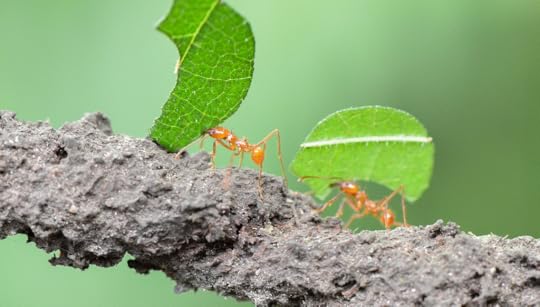
Transport yourself to Costa Rica’s rainforest canopy. Millions of leaf-cutter ants march in perfect formation, each carrying a leaf fragment twenty times its body weight. They descend into underground chambers where they cultivate fungus gardens that feed their entire civilization. Zero strategic planning meetings. Zero PowerPoint presentations. Yet these creatures have mastered collective intelligence in ways that humble most Fortune 500 companies.
Meet the superorganism. The great evolutionary biologist E.O. Wilson described them as a group of cooperating individuals, such as social insects, that are so tightly integrated through specialized division of labor and communication that the entire collective functions as a single, unified organism. Together, the millions of ants in a colony operate as one massive, unified entity. Isn’t this what we are chasing in our own organizations?
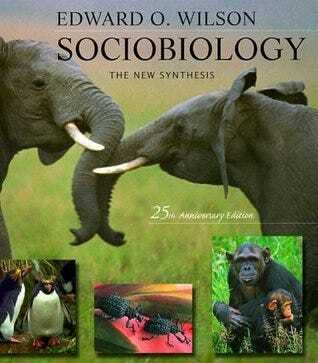 E.O. Wilson’s Sociobiology
These superorganisms have solved the fundamental tension between self-interest and collective success. This problem of individual versus team , me versus us, and sacrifice for the greater good is the exact challenge that derails most (human) organizations. Let me walk you through five not-so-common-sense principles that transform ordinary teams into genuine superorganisms.
Lesson 1: Harness Collective Intelligence Through Distributed Decision-MakingThink about this evolutionary marvel: each ant possesses a brain smaller than a pinhead, yet collectively they make decisions that would impress Harvard’s finest. How? Through distributed cognition where every individual contributes to the thinking process.
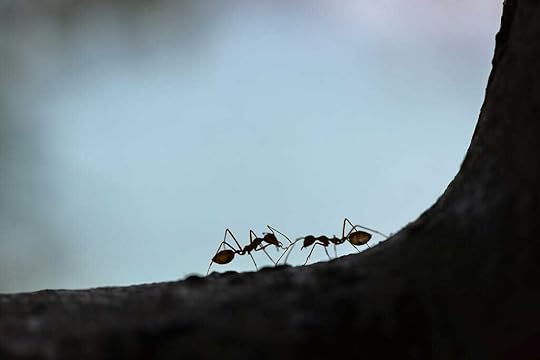 Photo by Maksim Shutov on Unsplash
When scout ants discover food sources, they launch parallel investigations. Multiple scouts explore different options simultaneously. They leave chemical trails proportional to the quality of what they find. The colony automatically converges on the best option through this democratic process. Wilson documented this phenomenon extensively in his research on ant foraging behavior, showing how simple local interactions aggregate into sophisticated collective decisions.
Your organization contains the same potential. Frontline employees often spot opportunities and threats before the C-suite does. They possess critical intelligence about customer needs, operational bottlenecks, and emerging market shifts.
Strategic application: Create systems where information flows freely across hierarchical levels. Establish clear decision-making authority at appropriate organizational layers. Your customer service representatives should have the power to resolve complaints immediately. Your regional managers should adapt quickly to local market conditions. Reserve only the most significant strategic decisions for central leadership.
Amazon’s two-pizza rule exemplifies this principle. Teams small enough to be fed by two pizzas make decisions faster and maintain accountability. Each team operates with considerable autonomy while serving the larger organizational mission (and they get free pizza, right, boss?).
 Lesson 2: Design for Multi-Level Success
Wilson’s multilevel selection theory illuminates an interesting truth about successful groups. Within groups, selfish individuals often outcompete altruistic ones. Between groups, however, collections of cooperative individuals consistently defeat collections of purely self-interested ones.
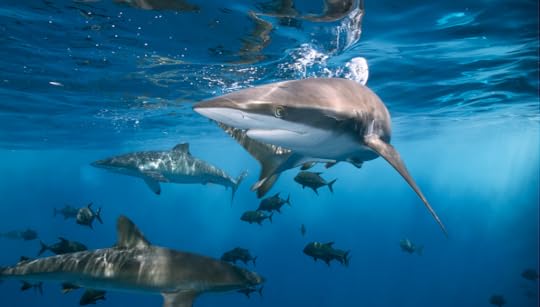
This principle plays out daily in business environments. Sales teams that operate like sharks eating each other might produce individual stars. These same teams lose consistently to competitors who combine individual excellence with collective support.
Research by economists David Sloan Wilson and Elinor Ostrom demonstrates that organizations with aligned incentive structures consistently outperform those focused solely on individual competition. Their studies of resource management groups showed that clear boundaries, collective decision-making processes, and graduated sanctions create sustainable competitive advantages.
Strategic application: Align incentives so personal advancement requires team advancement. Structure compensation systems that reward both individual achievement and collaborative success. Make knowledge sharing profitable through recognition systems and career development opportunities.
Southwest Airlines exemplifies this approach. Their profit-sharing program ensures that individual success ties directly to organizational performance (I know, I know. They cancelled my flight, too). Flight attendants, pilots, and ground crews all benefit when the company succeeds, creating natural incentives for cooperation.
Lesson 3: Build Modular Adaptive ArchitectureSuperorganisms grow from their edges outward. They add semi-autonomous units that adapt locally while serving the greater mission. As these biological systems scale, they become more resilient rather than more bureaucratic.
The key lies in modular design. Each unit maintains clear boundaries, sufficient resources, and decision-making authority. When one module discovers valuable innovations, that knowledge spreads naturally throughout the system. When threats emerge, local units respond immediately without waiting for central approval.
Biologist Bert Hölldobler’s research on ant colony organization reveals how individual chambers within the nest operate independently while contributing to overall survival. Worker ants in different chambers perform specialized functions but coordinate seamlessly through simple communication protocols.
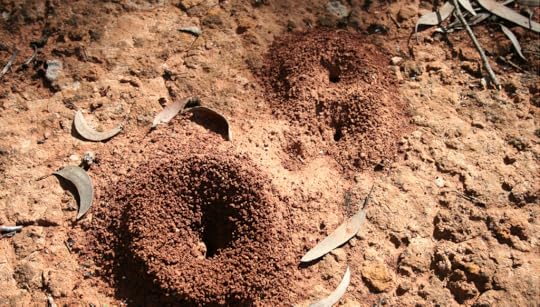
Strategic application: Structure teams like biological cells. Each department should have defined responsibilities, adequate resources, and authority to adapt to local conditions. Avoid organizational gigantism where growth creates slower, clumsier responses to change.
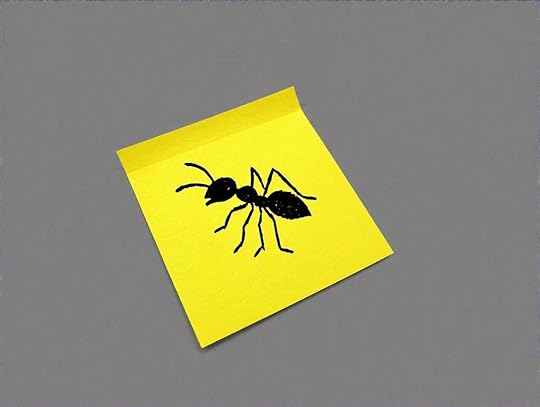
3M’s innovation model demonstrates this principle. Each division operates with considerable autonomy, pursuing opportunities specific to their markets. The famous 15% rule allows employees to spend time on personal projects that might benefit the larger organization. This modular approach has generated thousands of successful products while maintaining corporate coherence. The origin of the ubiquitous Post-it notes is a clichéd example, but it resonates in the right way.
 Lesson 4: Create Organizational Feedback Loops
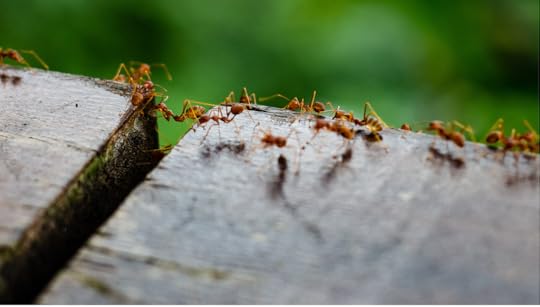
Ants use a process called stigmergy. They modify their environment in ways that guide future behavior. When they discover efficient paths to food sources, they leave stronger chemical trails that attract more workers. This creates positive feedback loops that optimize the entire system automatically.
Research by French biologist Pierre-Paul Grassé first identified this phenomenon in termite construction behavior. Individual termites follow simple rules about where to place mud pellets. These local decisions aggregate into complex architectural structures that would challenge human engineers.
Your organization needs equivalent feedback mechanisms. Systems that make successful behaviors visible and easier to replicate. Processes that allow unsuccessful approaches to fade naturally while amplifying effective strategies.
Strategic application: Build transparent feedback systems that highlight what works. Make knowledge sharing automatic rather than heroic. When someone solves a problem brilliantly, ensure that solution becomes part of your organizational DNA.
Toyota’s continuous improvement system operates on this principle. Workers at every level suggest process improvements. The best ideas get implemented across all facilities. Failed experiments get documented and shared to prevent repetition. This creates organizational learning that compounds over time.
Lesson 5: Forge Collective Identity That Transcends Individual InterestsEvolutionary psychology research reveals that humans possess remarkable capacity for superorganismic behavior when we identify strongly with our groups. Studies by social psychologist Jonathan Haidt show that group identification activates our most cooperative instincts, especially when facing external challenges.
Ant colonies succeed because every individual treats colony survival as more important than personal survival. They achieve genuine collective purpose that guides individual decisions even when oversight is absent.
Research on organizational psychology confirms that teams with strong collective identities outperform those focused primarily on individual achievement. Studies of military units, sports teams, and business organizations consistently show this pattern.

Strategic application: Cultivate organizational identity that makes people proud to belong. Create rituals, stories, and symbols that reinforce shared purpose. When facing challenges, frame them as threats to the collective mission rather than individual problems.
Patagonia exemplifies this approach. Their environmental mission creates powerful collective identity among employees. Workers routinely make decisions that serve the larger purpose even when immediate financial incentives might suggest otherwise. This shared identity has generated both exceptional employee loyalty and sustained business success.
The Evolutionary AdvantageAfter millions of years of natural research and development, evolution has provided us with blueprints for building organizations that combine individual excellence with collective intelligence. Superorganisms create abundance in environments that defeat other species by leveraging our evolved capacity for genuine cooperation.
The organizations that will dominate the future will be those that unlock the emergent intelligence arising when humans function as genuine collectives. What I call profitable prosociality.
Your ancestors survived by becoming superorganismic when survival demanded it. Time to bring those ancient skills into your modern organization. Stop fighting your evolutionary nature. Start designing with it.
[image error]Five Leadership Lessons from Nature’s Most Successful Collectives was originally published in Management Matters on Medium, where people are continuing the conversation by highlighting and responding to this story.