The Art of Sarcasm as Ghost Repellent
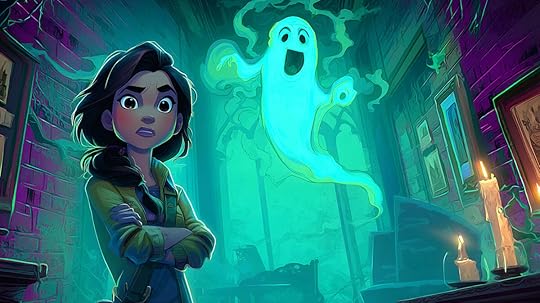
Some people pack holy water, silver bullets, or sage bundles when heading into a haunted house. Maggie Hawkins, heroine of The Haunting of Crumbleton Manor, prefers something far more dangerous: sarcasm. While most ghost hunters would be fumbling with salt circles, Maggie is rolling her eyes and muttering snark under her breath—and somehow, it works.
At first glance, this looks like pure comedy. But humor has always carried power in folklore, and as it turns out, modern neuroscience agrees. Sarcasm doesn’t just deflate egos; it can actually help us face fear.
Humor vs. Horror in Folklore
Folklore brims with stories where wit outsmarts the supernatural. In Celtic tales, laughter could break a spell or send faeries packing. Trickster figures survived not through brute strength but with a clever retort at the right moment.
The logic is simple: a ghost’s whole job is to unsettle. But when you laugh—when you answer fear with a smirk—you’ve rewritten the script. You’re no longer the trembling victim; you’re the heckler in the cheap seats, refusing to take the show seriously.
The Brain on Fear and Laughter
Neuroscience shows why this works. When we’re frightened, the amygdala—the brain’s threat detector—hits the panic button. Heart races, adrenaline surges, every instinct says “run.”
Humor flips that. Crack a joke, and the prefrontal cortex reframes the situation, labeling it as less dangerous. Psychologists call this cognitive reappraisal. Add in a dose of dopamine, the brain’s reward chemical triggered by shared laughter, and suddenly fear feels manageable.
In other words, when you mock the ghost in the corner, you’re not just being cheeky—you’re tricking your own brain into calming down.
Maggie Hawkins: Patron Saint of Sarcasm
This is exactly why Maggie thrives at Crumbleton Manor. She refuses to play the role of terrified victim. Instead of bowing to the theatrics of spectral nobility or running from shadowy wraiths, she treats them like bad performers in need of a reality check.
Every sarcastic jab becomes a shield, reframing the horror as absurdity. Her strategy doesn’t make the manor less haunted; it simply makes her less willing to hand her fear over to it. Readers get the same effect—our brains toggle from dread to delight, enjoying the comedy alongside the chills.
Why Readers Love Snarky Survivors
Sarcastic survivors have become a staple of horror and fantasy because they let us laugh even as the lights flicker. Neuroscience tells us shared humor triggers reward pathways, releasing tension without breaking the mood.
It’s catharsis in stereo: the amygdala screams, the prefrontal cortex laughs, and dopamine says, “Do that again.” We don’t just want to be scared—we want to be entertained. A clever heroine who treats a haunting like open-mic night gives us both.
Closing Thoughts
Haunted houses thrive on fear, but sarcasm thrives on cutting fear down to size. Humor shifts the power dynamic, helping both characters and readers face the spooky and the absurd. Maggie Hawkins may never get her ghost-hunting manual, but she proves that sometimes the sharpest tool is a sharp tongue.
If you’d like to experience Crumbleton Manor’s ghosts, wraiths, and one heroine armed with enough sarcasm to make the dead roll their eyes, you can find The Haunting of Crumbleton Manor on Kindle Unlimited: https://a.co/d/bb4WfaB
And remember: when the spirits rise, don’t scream—snark.


No comments have been added yet.