Why We Wrote Love and Redemption.
A Son’s Struggle to Redeem the Memory and Character of His Family. By George Kovach – Stepson of Celia Klein/Kovacova and Son of Ivan Kovach.
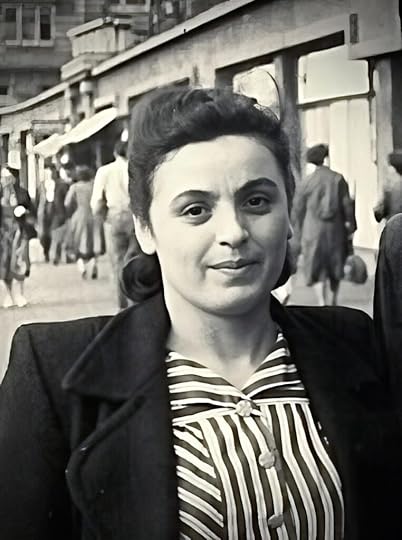
There is a reason for this novel that goes far beyond the desire to tell a remarkable story. Love and Redemption was born out of love, grief, and a sense of duty to redeem the character and tarnished memory of my stepmother, Celia Klein/Kovacova, after she was misrepresented in two global bestsellers that claimed to be “based on a true story.”
My stepmother’s character, called Cilka in The Tattooist of Auschwitz and Cilka’s Journey by Heather Morris, was a fabrication, cobbled together from rumors, selective recollections, and an author’s lurid imagination. The result was deeply offensive to my stepmother’s memory, and to those of us who knew the real Celia.
A Surprise Visit – April 2019In April of 2019, Heather Morris emailed me and asked if we could meet. She told me she was writing a novel called Cilka’s Journey which was about my stepmother, and it also included my father. I was not familiar with Ms. Morris’s work since I had not read or heard of The Tattooist of Auschwitz, her only book at that time.
It seemed that Ms. Morris was making a special stop in Oakland, California on her way to Australia, just to see me. I was puzzled. Why hadn’t she contacted me earlier? As the only living relative of both her heroine and hero, I could have provided important facts and crucial context. Heather never did explain why she hadn’t reached out before her manuscript was nearly finished.
Out of courtesy, my wife, Julia, and I invited her to dinner at our home.
A Congenial DinnerOur dinner with Heather was pleasant. Julia broiled chicken to have with salad and vegetables. We had a wine tasting of good California wines, and the three of us discussed the relative merits of California and Australian wines. After much typical small talk, I waited for Heather to ask me questions about my stepmother and my father.
Instead, when we got to dessert, Heather began revealing news about all the advances she was getting for Cilka’s Journey. In a dramatic whisper, she announced, “Over two million dollars for just the North American rights.” Then, she confessed, “Today, we got 90,000 euros for the Polish rights!” I replied, “Who would have thought? Poland!” I felt all this was an attempt to impress me for some reason. But why?
The Moment of TruthFinally, Heather got to the point. She wanted any photos I had of Celia and my father. And she wanted me to write an afterword, since I was the stepson of her heroine and the son of her romantic hero. (This was previously done by the son of Lale Sokolov for The Tattooist of Auschwitz. Lale was the hero of that novel.) If I did this for her, she implied, I would be given X number of dollars or euros.
A long pause ensued.
I thanked Heather but said that before I put my “family seal of approval” on Cilka’s Journey, I wanted to know more about the novel. Heather replied that it was all very top secret, and she could not allow me to read the manuscript. Instead, she said she would read excerpts to me.
We invited her to dinner again the next night.
From an Author’s HeartSince my wife and I are writers, I wish every author well. Writing and then selling your work is an almost impossible task. Often, years are spent desperately trying to secure an agent who will then try to interest a publisher in your work. In spite of a few miraculous success stories, most are not. Heather’s amazing luck with Tattooist was one of the few.
I later found out that Heather had spent over a decade working on Tattooist. First, in years of interviewing Lale Sokolov, then attempting to sell the story as a screenplay, and finally working with an agent to make it into a book. Her dedication, patience, and persistence is an inspiration to all authors.
An Unsettling DiscoveryThat night, I bought and read The Tattooist of Auschwitz and discovered the character, Cilka, that Heather had created.
Cilka (Celia) was just a supporting character in Tattooist. But what a character! She was the most gorgeous woman in Auschwitz. She was the mistress/sex slave of the SS Camp Commander. She supposedly saved Lale Sokolov’s life. He called her the bravest woman he had ever met. Consequently, after readers finished reading Tattooist they wanted to know, “What happened to Cilka?”
Of course, with the amazing success of Tattooist, Heather and her publishers lusted after a sequel. Cilka was the obvious choice.
New RevelationsHeather returned to our apartment the next night for more home cooking and California wine, after which she made good on her promise to read excerpts from Cilka’s Journey.
From the bits and pieces of Cilka’s Journey that Heather read to us, it was obvious that she had no real facts regarding my stepmother. How could she? She had never met my stepmother. My stepmother was dead.
Also disturbing was her completely inaccurate portrait of my father, who she also never met. She portrayed him as a kind of grifter and petty thief who was indifferent to the fate of his wife and child (me). As I had just read Tattooist, I immediately recognized my father’s character as a pale shadow of Lale Sokolov.
Heather had already presented the character of Cilka as the mistress/sex slave of a high-ranking SS camp commander in Tattooist. What would she do to Celia, and my father, in Cilka’s Journey?
In addition, in the parts Heather read to me, there was no development of my father’s and stepmother’s relationship. No discovery of each other’s past, character, or personality. The meeting and relationship of my father and Celia was supposed to be the romantic end to Cilka’s Journey. The moment where, after all she’s suffered, she finds hope for the future in a relationship with a man she can admire and love. The man who becomes the safe harbor where she can finally rest from the storms of her ruined life.
I knew I could not contribute to a book that presented characters that had nothing in common with the people that I knew and loved, namely, my stepmother and my father, no matter how much money I was offered.
I told Heather I needed to think about what she had asked of me. She was disappointed not to have the “family seal of approval” she had come so far to obtain, but we parted amicably.
I then got my hands on an advance copy of the complete novel of Cilka’s Journey and read it.
The Shocking Abuse of My Stepmother’s CharacterReading Cilka’s Journey was painful. Heather’s portrait of my stepmother had nothing to do with the Celia I knew, or her history as my stepmother had recounted it to me.
Cilka’s Journey takes place in the Soviet Gulag, but it has lengthy flashbacks to Cilka’s experiences in Auschwitz. Here are three of the most egregious errors I found.
(First) In Cilka’s Journey, my stepmother is presented as being the mistress of not one but two high-ranking SS commanders. In Tattooist, Cilka (supposedly my stepmother) was the mistress of only one SS commander, SS-Obersturmfurer Johann Schwartzhuber. This is not only false in my stepmother’s case, but patently absurd.
Ms. Morris and her publishers, it seems, chose to ignore the concept of rassenschande (race defilement) and what Herr Himmler did to SS men caught breaking that commandment. The punishments varied from imprisonment, to hard labor, or being sent to a concentration camp. If their sexual relation with a Jewish woman was long-standing, as Cilka’s is in Tattooist and Cilka’s Journey, the punishment for the SS officer could be death.
I doubt SS-Obersturmfurer Johann Schwartzhuber would have jeopardized his career, and possibly his life, over lust for some Jewish girl.
(Second) In Tattooist, Cilka is presented as a great beauty, but my stepmother was just a girl of average attractiveness when she was young. It’s interesting that in Cilka’s Journey Heather completely drops the idea of Cilka being a great beauty. The extraordinary beauty that was central to her character in Tattooist wasn’t useful in the gulag of Cilka’s Journey.
(Third) In Cilka’s Journey, Ms. Morris has my stepmother steal drugs from the Vorkuta camp hospital. This gulag hospital had very few drugs for its prisoner patients. If this had been true, can you imagine the suffering and deaths that would have been on Cilka’s conscience? My stepmother, who later worked as a senior government accountant in Slovakia, had a reputation for incorruptibility and honesty. The idea that she would steal drugs from desperate patients would have devasted her.
Ignorance of Facts of My Stepmother’s HistoryBased on documents in my possession, and my conversations over many years with Celia and my father, it was apparent that Heather got many basic facts wrong about my stepmother’s history. Here are a few.
(1) Celia was not liberated by the Russians from Auschwitz. The Germans destroyed Auschwitz before the Russians arrived. My stepmother was moved to Ravensbruck concentration camp for women in January of 1945 on the infamous death march. She was liberated by the Americans in May of 1945.
(2) Celia was not arrested by the Soviets and sent directly to Vorkuta, Siberia from Auschwitz. After liberation by the Americans, she returned home to Bardejov, Slovakia and was arrested there later.
I remember taking a trip to Bardejov with Celia and my father when I visited them in 1967. We were walking in the town and my father said to Celia, “Your house is just two streets over, do you want to go by?” There was a profound silence from my stepmother, and then she shook her head, “No.”
Later, my father told me what had happened to my stepmother when she returned home after liberation. She found that her home had been seized and occupied by the family of one of the men who had worked in her father’s business. Her home, like the homes of so many Slovakian Jews, had been turned over to the authorities and given to non-Jewish citizens.
(3) Celia was not accused of sleeping with the enemy by the Soviets. She was accused of being a spy because she spoke German and had been liberated by the Americans.
(4) In Cilka’s Journey, Heather mentions the use of penicillin. The Soviet Union was isolated from Western medicines and antibiotic therapies during and after World War II. Remote and poorly funded hospitals in the Siberian Gulag would never have had access to penicillin. If they were lucky, they may have had someone experienced in phage therapy which had been developed in Soviet Georgia.
My Profound Sorrow and Moral Outrage.The Celia Klein/Kovacova that Heather had created was nothing like my stepmother. When I finished reading Cilka’s Journey, I felt a profound sorrow over the distorted image of my stepmother presented in not one but two global bestsellers. I was outraged on behalf of the courageous, kind, and long-suffering woman I knew and loved as my stepmother.
I suppose I understand how Ms. Morris, having never met my stepmother or my father and knowing nothing except the bare facts of Celia’s biography, would naturally reach for the lurid and titillating. However, Celia was my stepmother. She was dead and could not protect herself. Nor could her husband, my father, who was also dead. It was up to me to set the record straight.
The Struggle Begins.Through my attorney, I let Ms. Morris and her publishers know that I would sue if I felt she had defamed by stepmother or father. I made it clear that I wanted no money from them. I wanted to save the reputations of my stepmother and my father.
Why did Heather and her publisher not want to do that? Because a story is much more powerful for the reader if they know the real person behind the character. The connection is more emotional and personal. Sara Nelson, the then VP of Harper Collins, said, “There’s a real interest in fiction that is based on history and real people.” What the reader wants is almost a memoir. So, Heather had to find a real person for her fictional character of Cilka, as she had with Lale Sokolov in The Tattooist of Auschwitz. And that’s where she ran into trouble.
Freedom of Speech, or Carte Blanche in Writing Fiction?Also important for me is the larger issue of how a writer handles information about a private person in writing a book that is based on a true story.
Can the author tie the name of a character to a real private citizen (living or dead), also reveal that person’s real name, and then make that character do and say things that cannot be proved and are detrimental to that person’s reputation and memory?
Freedom of speech has conferred a kind of carte blanche on those engaged in the arts. This is where the respect of the rights or reputation of others becomes important. Because of the protections bestowed by freedom of speech, the decisions of how to present a real person in a novel based on a true story are left up to the author. Therefore, the author must always consider very carefully what she/he makes that person do.
The author, as I see it, is the guardian of that real person’s reputation and memory. Expecially if that person was not a public figure. Especially if there are people still alive who knew that person. Especially if that person was a victim of the Holocaust or the Gulag.
Untimately, Heather and her publishers, under the law, had to acknowledge my right of privacy for my father because he was a blood relative. In her afterword to Cilka’s Journey, Heather explains why she doesn’t name my father: “I have not included the name of the man she (Cilka) met in Vorkuta and married, in order to protect the privacy of his descendants.” (This is false. The reason she did not include him was because I threatened to sue.)
Because of my threat, Heather replaced my father with a vague character called Alexandr, who exchanges only a few sentences with Cilka through the whole novel. His main occupation seems to be wandering around a Soviet labor camp, smoking and gazing up at the sky. This vague man is the major romantic interest of her novel.
But No Deliverance for My Stepmother.Unfortunately, under the law, the right of privacy was not extended to my stepmother, Celia Klein/Kovacova, because she was not my blood relative. Therefore, Heather and St. Martin’s Press were free to run roughshod over Celia’s character without anyone being able to defend her. Thus, they were able to exploit and defame the character of a survivor of the Holocaust and the Gulag for profit.
Moral obligation in Fiction Based on A True Story.Celia Klein/Kovacova was not a public figure. She was not a celebrity. There are people still alive who knew my stepmother personally and worked with her in Slovakia. They all would be shocked to read these things about her in both Tattooist and Cilka’s Journey. I was shocked. Some might be led to believe these things to be true because the cover of Cilka’s Journey says, “Based on the powerful TRUE story.” (My capitalization.)
I contacted Heather and her publishers and expressed, once again, my objections to the portrayal of Celia. I made it clear, again, that I did not want any money, nor would I accept any money coming from this misbegotten project. But I told them that they did have an obligation to make amends to the spirit of Celia for abusing her in the pursuit of profit.
I proposed to them that if they contributed 10% of all revenues from Cilka’s Journey to the Solzhenitsyn Fund or Memorial (the Russian Gulag organization) I would not sue or publicize my objections to the book. These are non-profit organizations. Heather and her publishers would be able to deduct their charitable contributions and take all the good works credit for themselves. Then, maybe, the spirit of Celia would indeed rest in peace.
Their response was to stonewall and slow-walk their decision. “We will get back to you in due course,” they responded. They never did.
I Went Public and the Controversy Went Global.I wrote a letter to Daniel Bloom at Times of Israel and told him my story. he published it in his blog (October 2, 2019: Veracity of Holocaust ‘novel’ Questioned by Stepson of main character.) This post is no longer available.
It was picked up in The Guardian by Alison Flood (October 3, 2019: Sequel to The Tattooist of Auschwitz branded ‘lurid and titillating’ by survivor’s stepson.”
The Daily Mail was not far behind with an article by Mahnaz Angury (October 5, 2019: Bestselling Australian author is accused of dragging Holocaust survivor through the mud after portraying her as a ‘drug pusher and a sex slave’ in new book.)
The Australian also published an article by Fiona Harari. (October 5, 2019. Holocaust survivor dragged through new hell: stepson.)
One Last Attempt to Get Justice.Love and Redemption, the novel my wife and I wrote under our pen name, Julia George, was born out of frustration at the injustice done to my stepmother by Heather Morris and her publishers. It is based on conversations I had with Celia and my father over a number of years. The parts of the novel that include my father, Ivan, are taken directly from his written memoirs.
After we completed Love and Redemption, I once again contacted Heather. I sent her the manuscript and asked her to read it. I hoped she might finally see the many errors in her treatment of my stepmother and acknowledge the fact that she was not the woman she called Cilka in both her novels. It would also have been gracious on her part to make some author comment for our publication of the novel. Even if it was only that it was interesting for her to hear Cilka’s story from the family who actually knew her and loved her. All she offered was to repeat what she had said so many times before, that this is a story that needs to be told.
The post Why We Wrote Love and Redemption. appeared first on Julia George.