
Oscar Wilde Goes Wild from the Afterlife
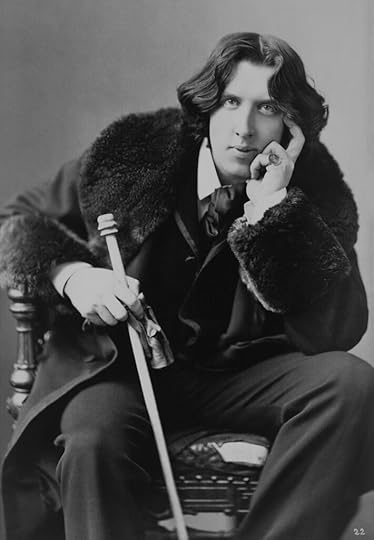 Oscar Wilde, photographed by Napoleon Sarony, 1882. (Public domain)
If the dead could talk, what would they say? According to mediums during the height of Spiritualism, a lot.
In the late nineteenth and early twentieth century, psychics were busy delivering a cornucopia of messages from beyond the veil, including many from some of world’s greatest luminaries, including William Shakespeare, Mark Twain, Edgar Allan Poe, Washington Irving, Abraham Lincoln, Benjamin Franklin, Charles Dickens, and Oscar Wilde.
Author and Weird Historian Marc Hartzman has edited these posthumous words together in the new book, The Talking Dead: A Collection of Messages from Beyond the Veil, 1850 to 1920s (Expanded Edition), published by Curious Publications. The following text is an excerpt from the ghost of Oscar Wilde, along with an introduction to the ghostly conversation (which has just received its own introduction).
Irish medium Hester Travers Smith (better known as Hester Dowden), opened her 1924 book, Psychic Messages from Oscar Wilde, with a foreword claiming the words within purportedly came from the ghost of the famous writer. She also excuses herself from any potential controversial comments from beyond: “I do not hold myself responsible for any of the literary criticism in these scripts—the opinions expressed by ‘Oscar Wilde’ are not mine.”
Wilde’s messages came through automatic writing and the Ouija board, with occasional sittings recorded by fellow automatist Geraldine Cummins.
What follows is Wilde at his best and worst—brilliant, breezy, and deliciously barbed. He opens with a shrug from beyond (“Being dead is the most boring experience in life”) and then does what he always did: talk literature, style, and pose.
The excerpt here catches his posthumous critic in full flow: a notorious broadside at James Joyce’s Ulysses, followed by quick, cutting verdicts on George Bernard Shaw, Thomas Hardy, and George Meredith. Whether you take the voice as genuine Wilde or a finely tuned pastiche, the entertainment value is undeniable—the afterlife, it seems, still rewards a sharp tongue.
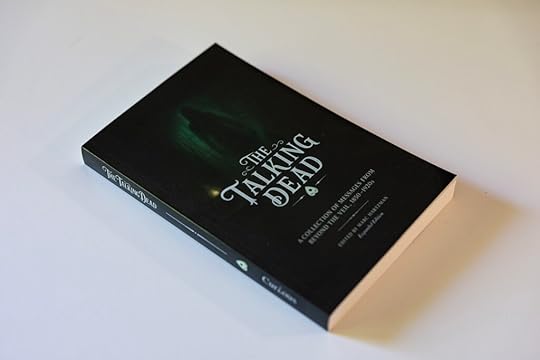 The Talking Dead
 (Expanded Edition) is available from Curious Publications.
A CRITIQUE
What is your opinion of “Ulysses,” by James Joyce?
Yes, I have smeared my fingers with that vast work. It has given me one exquisite moment of amusement. I gathered that if I hoped to retain my reputation as an intelligent shade, open to new ideas, I must peruse this volume. It is a singular matter that a countryman of mine should have produced this great bulk of filth. You may smile at me for uttering thus when you reflect that in the eyes of the world I am a tainted creature. But, at least, I had a sense of the values of things on the terrestrial globe. Here in “Ulysses” I find a monster who cannot contain the monstrosities of his own brain. The creatures he gives birth to leap from him in shapeless masses of hideousness, as dragons might, which in their foulsome birth contaminate their parent…. This book appeals to all my senses. It gratifies the soil which is in everyone of us. It gives me the impression of having been written in a severe fit of nausea. Surely there is a nausea fever. The physicians may not have diagnosed it. But here we have the heated vomit continued through the countless pages of this work. The author thought no doubt that he had given the world a series of ideas. Ideas which had sprung from out his body, not his mind!
I, who have passed into the twilight, can see more clearly than this modern prophet. I also know that if he feels his work has sprung from courage, which is innate in him, he should be led to realise that “Ulysses” is merely involuntary. I feel that if this work has caught a portion of the public, who may take it for the truth, that I, even I, who am a shade, and I who have tasted the fulness of life and its meed of bitterness, should cry aloud: “Shame upon Joyce, shame on his work, shame on his lying soul. Compare this monster Joyce with our poor Shaw. Here we find very opposite poles. For both these writers cry aloud that they have found the truth. Shaw, like a coy and timid maiden, hides his enormous modesty with bluster. Joyce, on the other hand, is not a blusterer at all. In fact he has not vomited the whole, even in this vast and monumental volume-more will come from Joyce. For he has eaten rapidly; and all the undigested food must come away. I feel that Joyce has much to give the world before, in his old age, he turns to virtue. For by that time he will be tired of truth and turn to virtue as a last emetic.
You are most amusing.
I am glad that a poor ghost can bring laughter to your eyes.
I am interested in literature.
I quite appreciate that fact. You have a sense of style, and this helps me to put poor thoughts before you.
What do you think of Hardy and Meredith?
I adore the rustic, as you know. His simple mind appeals to mine; and for that reason I should be interested in Mr. Hardy’s work. But all that is in me of rusticity revolts against this realism that flaunts itself in hopeless wanderings among the fields of Dorsetshire. Think for one moment and reflect that Mr. Hardy’s works are just the jottings down of a limited village experience with a primitive sense of romance added to it.
A very harmless writer, Hardy. He almost succeeded in being a little risky now and then in that dull period when he wrote. I well remember how his Tess set maiden hearts athrobbing. It was a tale which might attract the schoolgirl who imagined she had just arrived at puberty; but as a work this book is shapeless and has neither value as an artificial rendering of rustic life nor as a minute study of the village. Mr. Hardy is indeed the middle class provincial. He never dreamt he could arrive, and yet he had his day, partly because he tried to paint the peasant, who at this period was just about to peep above the horizon for the first time. We were quite interested to meet the peasant; we even found him rich for a short space, but soon his day had passed. For Mr. Hardy wearied us. We wearied of his peasants, and he had to fall back upon a class a little more elevated but totally uninteresting. This, I feel, was the reason for his steady decay.
What do you think of Meredith?
I am frankly an admirer of Meredith. He, of course, was a man without any appreciation whatever of beauty, but he had a most ingenious way of plaiting words, so that his most ardent admirers could never extricate his thoughts from them. They clung about his ideas as barnacles on an old ship. And he was so completely clogged that his ideas escaped and only words were left. But, after all, what an immense achievement it is to plait the English language! I never attempted this experiment myself. My plan was to select my words, to cherish them and move them from one corner of my room to another, until they each and all received their due. Meredith collected them and wove them so intricately that his intelligence was cramped by them, and no one ever penetrated their crustated masses.
Note: About a year previous to this sitting Mrs. Travers Smith had glanced at a copy of “Ulysses” for a few minutes in Ireland. Out of seven hundred pages she could not have read more than half a dozen, nor had she read reviews of this work. So she was not in a position to criticize it. She is a great admirer of Meredith, and believes him to have a fine sense of beauty. She therefore almost entirely disagreed with Wilde’s caustic estimate of his work.
For more conversations from beyond the veil, purchase The Talking Dead: A Collection of Messages from Beyond the Veil, 1850 to 1920s (Expanded Edition) today.
<br />(adsbygoogle = window.adsbygoogle || []).push({});<br />
The post Oscar Wilde Goes Wild from the Afterlife appeared first on Weird Historian.


