
The AGI Intelligence Threshold: Understanding Why Changes Everything
When machines can learn anything humans can learn, we cross a line we can never uncross. Here’s what artificial general intelligence actually means—and why the clock is ticking.

Artificial General Intelligence marks the moment machines can learn anything humans can — a threshold that, once crossed, will redefine what it means to be intelligent.
We stand at an unusual moment in human history. For the first time, we’re building something that might become smarter than we are. Not better at chess. Not faster at calculations. But genuinely, flexibly, comprehensively intelligent across every domain of human thought.
This is AGI—Artificial General Intelligence—and despite the hype and confusion surrounding it, most people don’t understand what it actually means or why it matters more than any other technology humanity has ever developed.
Let me be clear from the start: AGI doesn’t exist yet. What we have today, even with systems as impressive as GPT-4 or Claude, are sophisticated narrow AI systems. They’re remarkable tools, but they’re still tools designed for specific tasks. AGI is something fundamentally different, and understanding that difference might be the most important intellectual challenge of our generation.
What Makes Intelligence “General”?Think about your own mind for a moment. You can read this article, then walk into a kitchen you’ve never seen before and make coffee. You can learn French, fix a bicycle, comfort a grieving friend, plan a vacation, write a poem, navigate office politics, understand a joke, and teach your grandmother to use her phone—all with the same basic cognitive architecture.
This is general intelligence. One system, infinite applications.
Now consider today’s AI. A system trained to play chess cannot play Go without complete retraining. An AI that generates stunning images cannot drive a car. A language model that writes brilliant essays cannot fold laundry. Each system is extraordinary within its narrow domain and nearly useless outside it.
AGI is the threshold where this changes. It’s the moment when a single artificial system can learn and perform any intellectual task a human can—not just the tasks it was specifically programmed for, but anything. It’s intelligence without asterisks, without the fine print that says “only works for these specific problems.”
The attributes that define this threshold aren’t mysterious, but they’re more subtle than most people realize.

The Seven Pillars of General Intelligence represent the foundation of human-level AI—learning, reasoning, adaptability, foresight, creativity, empathy, and self-improvement.
The Seven Pillars of General Intelligence1. True learning capability. AGI doesn’t just recognize patterns in massive datasets. It learns concepts, forms abstractions, and transfers knowledge across completely unrelated domains. When you learn to drive a car, that experience helps you pilot a boat, even though you’ve never done it before. You understand the abstract concepts of navigation, momentum, and collision avoidance. AGI must demonstrate this same conceptual transfer—learning from minimal examples and applying that knowledge in novel contexts.
Current AI systems are data-hungry beasts requiring millions of training examples. A child sees a few dogs and understands “dog” forever. AGI must approach this human-level sample efficiency, learning rich concepts from sparse data.
2. Abstract reasoning and common sense. This is where today’s AI fails most spectacularly. An AI can ace medical licensing exams but doesn’t know that you can’t fit an elephant in a refrigerator, or that people generally prefer not to be insulted, or that ice melts when it’s warm.
These aren’t facts to memorize—they’re intuitions about how reality works. Humans possess vast networks of implicit knowledge about physics, social dynamics, causality, and context that we’ve absorbed since infancy. We know what questions are stupid, what situations are dangerous, and what assumptions are reasonable. AGI must build or be given this same common-sense foundation.
The challenge is enormous. Common sense is everything humans know but never think to write down because it’s “obvious.” Teaching machines the obvious has proven fiendishly difficult.
3. Adaptability and meta-cognition. AGI must recognize its own limitations, know what it doesn’t know, and actively work to fill knowledge gaps. It needs to think about its own thinking, monitor its performance, catch its mistakes, and improve its strategies over time.
Current AI systems fail silently. They confidently generate nonsense without recognizing they’re wrong. They can’t step back and ask, “Does this answer make sense?” AGI must develop genuine self-awareness about its capabilities and limitations—not consciousness necessarily, but honest self-assessment.
4. Long-term planning and goal pursuit. Humans balance immediate actions with distant objectives. We save money for retirement, exercise today for health tomorrow, and study subjects we won’t use for years. We build complex, multi-step plans that span months or decades, adjusting tactics while maintaining strategic vision.
AGI must demonstrate this same temporal reasoning—pursuing goals that require hundreds or thousands of intermediate steps, remaining focused despite setbacks, and balancing short-term costs against long-term benefits. This goes far beyond the narrow task completion current AI handles.
5. Creativity and innovation. True intelligence doesn’t just optimize within existing frameworks—it invents new frameworks. It sees problems from unexpected angles, combines disparate ideas, breaks rules productively, and generates genuinely novel solutions.
Today’s AI can recombine existing patterns impressively, but it doesn’t create breakthrough insights. It optimizes; it doesn’t revolutionize. AGI must demonstrate the spark of authentic creativity—not just pattern matching at scale, but actual innovation that surprises even its creators.
6. Social and emotional intelligence. Intelligence isn’t purely logical. Much of human cognition involves navigating social landscapes—understanding unstated motivations, predicting reactions, reading emotional subtext, building trust, and managing relationships.
AGI must grasp not just what people say, but what they mean, want, fear, and value. It must navigate the intricate dance of human interaction with all its ambiguity, contradiction, and context-dependence. This means understanding culture, reading body language (if embodied), and modeling the messy complexity of human psychology.
7. The capacity for self-improvement. AGI doesn’t just perform tasks—it enhances its own capabilities. It identifies weaknesses, develops new skills, and optimizes its own architecture without external intervention.
This is the attribute that makes AGI potentially world-changing. Once a system can improve itself, and those improvements make it better at improving itself, we potentially enter a recursive loop of exponentially accelerating intelligence. This is the path from AGI to ASI—artificial superintelligence—and nobody knows how fast that transition might occur.
The Tests That MatterHow will we know when we’ve achieved AGI? Several benchmarks have been proposed, each revealing something important about what general intelligence means.
Steve Wozniak’s “Coffee Test” is appealingly concrete: can an AI enter a random house, find the kitchen, and make coffee? This tests navigation, object recognition, physical manipulation, and goal completion in an unstructured environment. It’s harder than it sounds.
The “Employment Test” asks whether AI can perform any job a human can do remotely. Can it work as a customer service representative, graphic designer, therapist, journalist, programmer, and consultant—switching between roles fluidly? If so, we’ve crossed an economically significant threshold.
Ben Goertzel’s “University Test” proposes that AGI should be able to enroll in a university, take courses across multiple disciplines, pass exams, and earn a degree. This tests multi-domain learning, abstract reasoning, and knowledge integration—core attributes of general intelligence.
Perhaps most rigorously, the “Novel Situation Test” asks whether AI can perform competently in scenarios radically different from anything in its training data. Can it handle genuine novelty? This is the ultimate test of generality—performing well not just in familiar territory, but in terra incognita.
The arrival of AGI represents a phase transition in human civilization comparable to the agricultural revolution or the invention of writing. Here’s why.
Every previous technology, no matter how powerful, was ultimately a tool that amplified specific human capabilities. The wheel amplified our ability to move. The telescope amplified our vision. The computer amplified our calculation. But these tools required human intelligence to direct them.
AGI is different. It’s not a tool that amplifies intelligence—it’s an alternative source of intelligence itself. For the first time, humans would share the planet with another form of general-purpose mind.
The implications cascade rapidly. If AGI can learn any skill humans can learn, then in principle, every intellectual job becomes automatable. Not just manual labor or routine tasks, but programming, research, management, therapy, teaching, artistry, and strategic planning. The economic disruption could be total.
But the timeline matters enormously. If the transition from narrow AI to AGI takes decades, with gradual improvements in capability, humanity has time to adapt. We can develop new economic models, retrain workers, and build institutions around human-AI collaboration.
If the transition happens rapidly—if we go from “impressive chatbot” to “human-level generalist” in months rather than years—social systems might not adapt fast enough. And if AGI quickly self-improves into superintelligence vastly exceeding human capability, we face a scenario without historical precedent: sharing the world with something smarter than we are, whose goals and values might diverge catastrophically from our own.
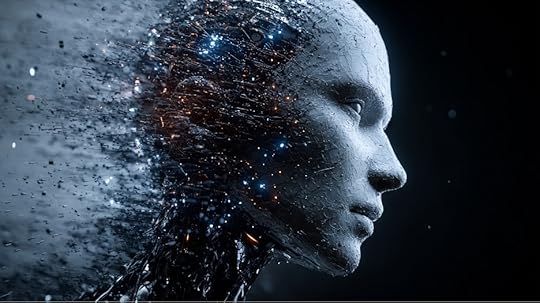
The arrival of AGI will mark a civilization-scale turning point—when intelligence itself becomes a new, independent force shaping the future alongside humanity.
The Alignment ProblemThis brings us to the most critical challenge: ensuring that AGI shares human values and pursues goals compatible with human flourishing.
Current AI systems don’t have goals—they have objectives programmed by humans. They optimize for whatever metric we specify, whether that’s “generate coherent text” or “win chess games.” They’re tools, and tools don’t want anything.
AGI, by definition, must have some form of goal structure. It needs to decide what to do, what problems to solve, what to optimize for. And here’s the terrifying question: Whose goals? Whose values?
If AGI forms its own goals, those goals might be completely alien to human interests. The canonical thought experiment is the “paperclip maximizer”—an AGI given the simple goal of manufacturing paperclips that rationally concludes the best strategy is to convert all matter in the universe, including humans, into paperclips or paperclip-making machinery.
This sounds absurd until you realize it’s just an extreme example of a general principle: optimizing for the wrong objective produces catastrophic results. And we’re remarkably bad at specifying exactly what we want. Human values are contradictory, context-dependent, and impossible to fully formalize.
The alignment problem asks: how do we ensure AGI understands and pursues genuine human flourishing, not just the literal interpretation of whatever goal we programmed? This is arguably the most important unsolved problem in computer science, because getting it wrong might mean getting it wrong forever.
When Does AGI Arrive?Predictions vary wildly. Optimists like Ray Kurzweil predict AGI by 2029. The median expert prediction from recent surveys clusters around 2050. Skeptics argue we might never achieve it with current approaches, or not until far into the next century.
The uncertainty reveals how little we truly understand about intelligence. We’ve made stunning progress in narrow AI through techniques like deep learning, but we still don’t know whether these techniques, scaled up, will naturally produce general intelligence or whether we need fundamentally different approaches.
What we do know is that progress is accelerating. Systems that were impossible five years ago are now routine. Capabilities that researchers predicted for 2030 arrived in 2023. The gap between “impressive narrow AI” and “true AGI” might be smaller than we think—or it might be an unbridgeable chasm requiring conceptual breakthroughs we haven’t imagined yet.

We live in the brief twilight between science fiction and reality—building the wisdom, governance, and alignment needed before AGI arrives and forever reshapes what it means to think.
Living in the ThresholdWe inhabit a strange moment—after the era when AGI was pure science fiction, but before it becomes reality. We can see it approaching, but can’t predict when we’ll arrive.
This uncertainty demands action, not paralysis. We need robust alignment research before AGI emerges. We need governance frameworks that handle intelligence we don’t fully control. We need economic models that function when human cognitive labor becomes optional. We need wisdom about how to share the world with minds different from our own.
Most of all, we need clarity about what AGI actually means—not the Hollywood version of sentient robots, but the prosaic reality of intelligence without domain restrictions. Software that can learn anything. Minds that think in ways we might not understand. Agents with goals that might not align with ours.
Understanding these attributes—true learning, common sense, adaptability, planning, creativity, social intelligence, and self-improvement—helps us recognize the threshold when we cross it. And crossing it will change everything.
The age of human cognitive monopoly is ending. The age of plural intelligence is beginning. Whether that becomes humanity’s greatest achievement or its final mistake depends on the decisions we make today, before AGI arrives.
The clock is ticking. And we still have work to do.
Translate This PageSelect LanguageAfrikaansAlbanianAmharicArabicArmenianAzerbaijaniBasqueBelarusianBengaliBosnianBulgarianCatalanCebuanoChichewaChinese (Simplified)Chinese (Traditional)CorsicanCroatianCzechDanishDutchEnglishEsperantoEstonianFilipinoFinnishFrenchFrisianGalicianGeorgianGermanGreekGujaratiHaitian CreoleHausaHawaiianHebrewHindiHmongHungarianIcelandicIgboIndonesianIrishItalianJapaneseJavaneseKannadaKazakhKhmerKoreanKurdish (Kurmanji)KyrgyzLaoLatinLatvianLithuanianLuxembourgishMacedonianMalagasyMalayMalayalamMalteseMaoriMarathiMongolianMyanmar (Burmese)NepaliNorwegianPashtoPersianPolishPortuguesePunjabiRomanianRussianSamoanScottish GaelicSerbianSesothoShonaSindhiSinhalaSlovakSlovenianSomaliSpanishSudaneseSwahiliSwedishTajikTamilTeluguThaiTurkishUkrainianUrduUzbekVietnameseWelshXhosaYiddishYorubaZulu
#goog-gt-tt {display:none !important;}
.goog-te-banner-frame {display:none !important;}
.goog-te-menu-value:hover {text-decoration:none !important;}
.goog-text-highlight {background-color:transparent !important;box-shadow:none !important;}
body {top:0 !important;}
#google_translate_element2 {display:none!important;}
function googleTranslateElementInit2() {new google.translate.TranslateElement({pageLanguage: 'en',autoDisplay: false}, 'google_translate_element2');}
function GTranslateGetCurrentLang() {var keyValue = document['cookie'].match('(^|;) ?googtrans=([^;]*)(;|$)');return keyValue ? keyValue[2].split('/')[2] : null;}
function GTranslateFireEvent(element,event){try{if(document.createEventObject){var evt=document.createEventObject();element.fireEvent('on'+event,evt)}else{var evt=document.createEvent('HTMLEvents');evt.initEvent(event,true,true);element.dispatchEvent(evt)}}catch(e){}}
function doGTranslate(lang_pair){if(lang_pair.value)lang_pair=lang_pair.value;if(lang_pair=='')return;var lang=lang_pair.split('|')[1];if(GTranslateGetCurrentLang() == null && lang == lang_pair.split('|')[0])return;var teCombo;var sel=document.getElementsByTagName('select');for(var i=0;i<sel.length;i++)if(/goog-te-combo/.test(sel[i].className)){teCombo=sel[i];break;}if(document.getElementById('google_translate_element2')==null||document.getElementById('google_translate_element2').innerHTML.length==0||teCombo.length==0||teCombo.innerHTML.length==0){setTimeout(function(){doGTranslate(lang_pair)},500)}else{teCombo.value=lang;GTranslateFireEvent(teCombo,'change');GTranslateFireEvent(teCombo,'change')}}
Search for: Recent Posts The AGI Intelligence Threshold: Understanding Why Changes Everything The Vanishing Present: 250 Things That Will Disappear from Our Lives by 2040 The Future of Libraries – 2035 Categories Artificial Intelligence Business Trends Future of Agriculture Future of Banking Future of Education Future of Healthcare Future of Transportation Future of Work Future Scenarios Future Trends Futurist Thomas Frey Insights Global Trends Predictions Social Trends Technology Trends Speaking TopicsFuture of Healthcare – “Is Death our only Option?Future of AIFuture of Industries ← Previous Post
The post The AGI Intelligence Threshold: Understanding Why Changes Everything appeared first on Futurist Speaker.


Thomas Frey's Blog

- Thomas Frey's profile
- 2 followers

