Why I ❤️ "Cat's Cradle" by Kurt Vonnegut
In this month’s edition of The Books We ❤️ Club, author brings a seasoned eye to Kurt Vonnegut’s apocalyptic satire Cat’s Cradle, digging into its blend of absurd humor, moral inquiry, and postwar paranoia. J.B. explores how Vonnegut distills the anxieties of his era—and now our own—with biting wisdom and black comedy. Whether you’re a Vonnegut veteran or new to his work, you’ll love this take on his lesser known classic.
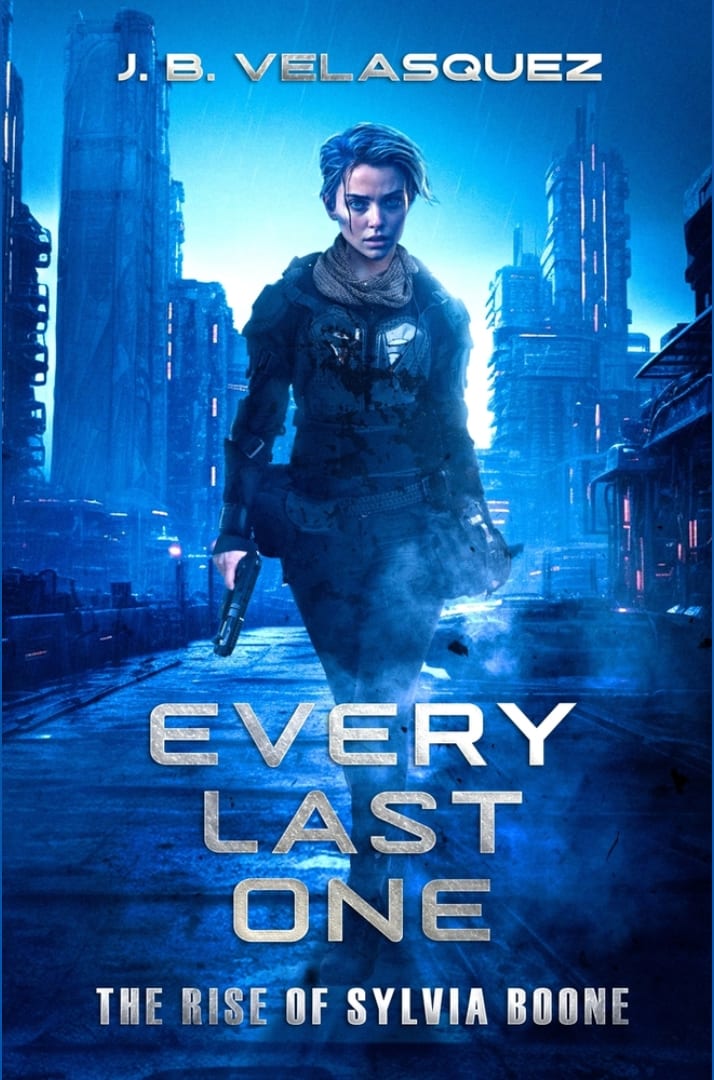
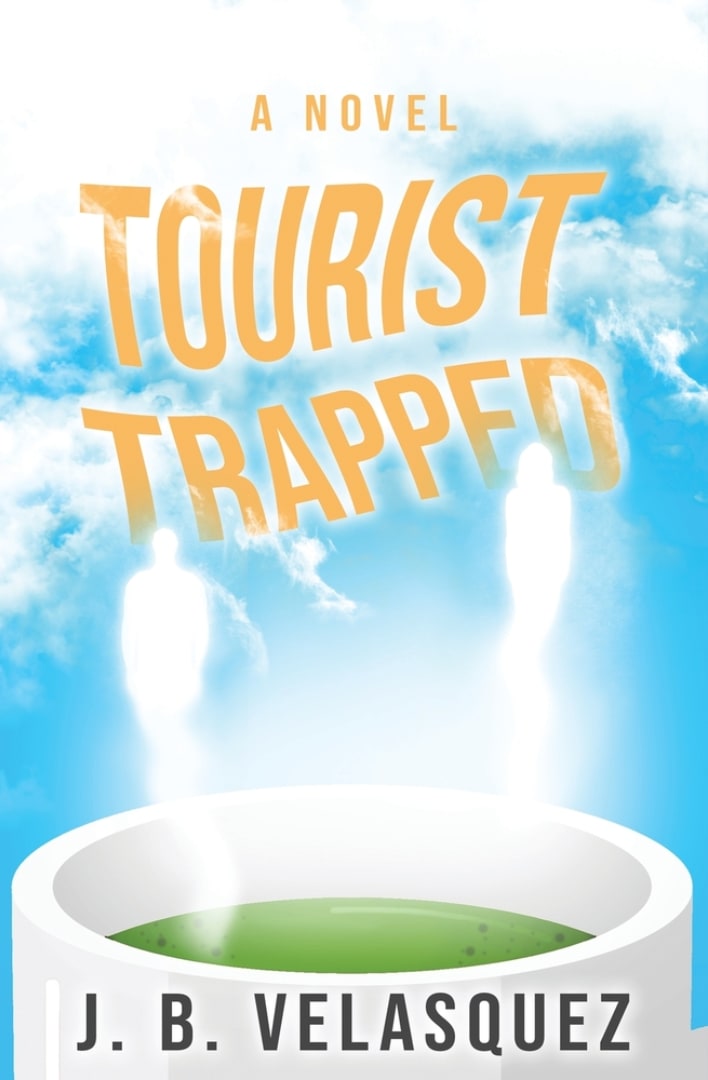
J.B.’s own fiction also has a decidedly subversive slant, from the psychedelic surrealism of Tourist Trapped, to dystopian thriller Every Last One: The Rise of Sylvia Boone. I loved woman warrior Sylvia Boone and the near-future take on ripped-from-the-headlines authoritarian themes—both books are available at major retailers in paperback or ebook.
Happy reading! ~ MTF
 Amazon - Bookshop
 Amazon - Bookshop
 The Books We ❤️ Club—the book club you don’t actually have to read the book, leave the house, or even change out of your jammies to enjoy—as writers sing the praises of books that reach into our hearts. We invite you to add your own reactions, insights, and ideas in the Comments for an impromptu book club session. Share your favorite quotes, characters, moments, and surprises in discussion with other passionate readers.(And if you’d like to feature your favorite book in a future edition, DM me.)NEXT TIME: “Why I ❤️
Giovanni's Room
by James Baldwin” with
Why I ❤️
Cat’s Cradle
by Kurt Vonnegut
The Books We ❤️ Club—the book club you don’t actually have to read the book, leave the house, or even change out of your jammies to enjoy—as writers sing the praises of books that reach into our hearts. We invite you to add your own reactions, insights, and ideas in the Comments for an impromptu book club session. Share your favorite quotes, characters, moments, and surprises in discussion with other passionate readers.(And if you’d like to feature your favorite book in a future edition, DM me.)NEXT TIME: “Why I ❤️
Giovanni's Room
by James Baldwin” with
Why I ❤️
Cat’s Cradle
by Kurt Vonnegutby of Indie Author Roadtrip
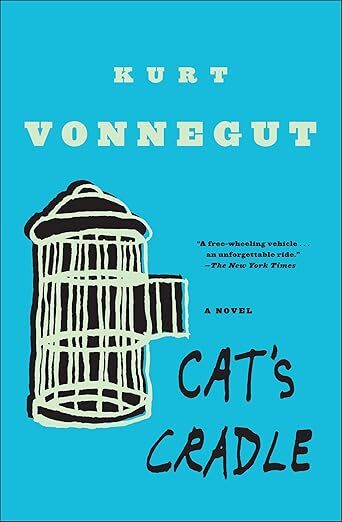 Most recent cover (birdcage)
This isn’t the cover I have at home. This is the one you’ll find at the bookstore if you buy it new. Knowing nothing of this book, one might assume the birdcage has something to do with the story. It does not. Just as there is no cat, nor cradle, in a cat’s cradle. I’ll get to that later.
This birdcage was an original Kurt Vonnegut drawing. He often includes his own illustrations, but this one doesn’t appear in any of his books, although it’s probably related most to his book Breakfast of Champions (1973).
You can get a silkscreen of this illustration signed by the late Vonnegut here for only $675. What a deal. Why is it on the cover of Cat’s Cradle (1963—ten years prior to Breakfast of Champions)? No idea.
Here’s my copy—the one I’ve read at least six times since the late nineties:
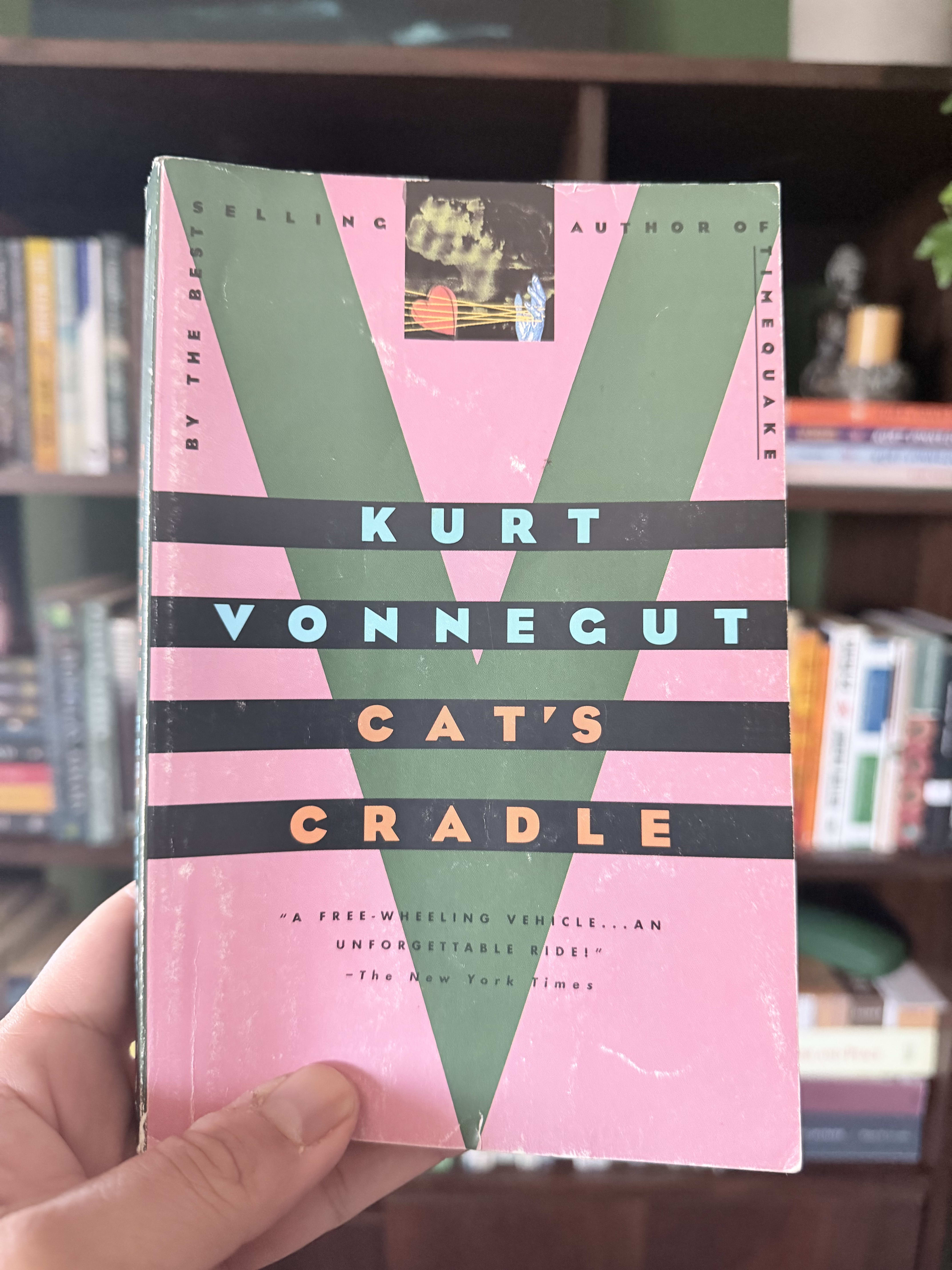 My copy of Cat’s Cradle
This was the second Vonnegut book I read after Slaughterhouse-Five (1969) and I can’t decide which one I love more. I love them both, but since you’ve probably already read or heard of the former, I’m going to shed light on this little gem and why it holds a special place in my black heart.
The PlotKurt Vonnegut’s Cat’s Cradle is a darkly hysterical and prophetic novel that explores the absurdity of human ambition and the dangers of blind faith. Through his signature wit and irony, Vonnegut crafts a postmodern fable about how easily humanity can destroy itself in pursuit of progress, often poking fun at science.
“He said science was going to discover the basic secret of life someday,” the bartender put in. He scratched his head and frowned. “Didn’t I read in the paper the other day where they finally found out what it was?”
“I missed that,” I murmured.
“I saw that,” said Sandra. “About two days ago.”
“That’s right,” said the bartender.
“What is the secret of life,” I asked.
“I forgot,” said Sandra.
“Protein,” the bartender declared. “They found out something about protein.”
“Yeah,” said Sandra. “That’s it.”
The story follows John (or Jonah), a writer researching what people were doing on the day the atomic bomb was dropped on Hiroshima. His investigation leads him to Dr. Felix Hoenikker, one of the fathers of the atomic bomb, who also invented ice-nine, a substance capable of freezing all water on Earth, thus destroying all life on the planet.
Jonah meets each of the late Hoenikker’s children: Franklin, Angela, and Newt. Each of the Hoenikker kids possessed a sliver of ice-nine (no spoilers—wink). They all travel to the fictional Caribbean island of San Lorenzo where Franklin, the eldest Hoenikker is to become the next president. Newt, an artist with dwarfism, describes a rare interaction with his scientist father who once showed him a cat’s cradle with string woven between his fingers.
“No wonder kids grow up crazy. A cat’s cradle is nothing but a bunch of X’s between somebody’s hands, and little kids look and look and look at all those X’s . . .
“And . . .”
“No damn cat, and no damn cradle.”
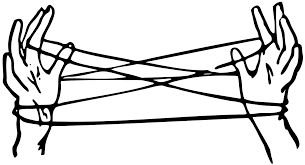 Cat’s cradle
The residents of San Lorenzo practice a strange religion called Bokononism, a belief system that openly admits it’s all lies, yet somehow provides comfort to its followers. Many of the teachings are written in the form of Calypso.
Tiger got to hunt, Bird got to fly;
Man got to sit and wonder, “Why, why, why?!”
Tiger got to sleep, Bird got to land;
Man got to tell himself he understand.
One of the strange practices in Bokononism is the act of boko-maru, where adherents sit facing each other and press the bottoms of their bare feet together to “mingle their awareness.” It looks like this:
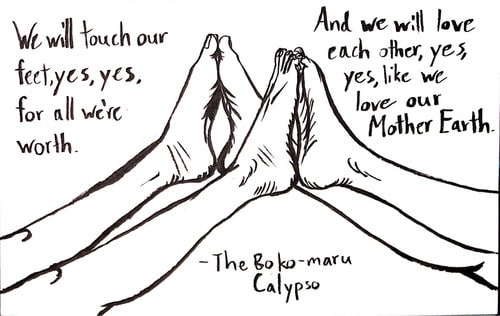
One day, when I start a band, I’m calling it Boku-maru (since Ice-Nine is already taken).
Enduring RelevanceWritten during the Cold War, Cat’s Cradle was a response to the existential dread that was pervasive at the time. But in the 21st century, ice-nine could just as easily symbolize climate change, AI, or genetic engineering—any innovation pursued without moral restraint. The novel’s warning about science divorced from ethics parallels modern debates about corporate greed, environmental collapse, and the militarization of technology.
Vonnegut also critiques the human tendency to seek solace in comforting falsehoods. Bokononism preaches:
“Live by the foma (harmless untruths) that make you brave and kind and healthy and happy.”
This reflects our own reliance on political spin, social media narratives, and capitalist consumer culture to provide meaning in an uncertain world. Just as San Lorenzo’s citizens accept contradictions to survive, we too often cling to illusions rather than face uncomfortable realities.
We turn a blind eye to foreign labor practices in order to feel content to carry iPhones and wear the latest fashions, mass produced in unthinkable working conditions around the globe. We vote for candidates who promise equality for all and then make deals that go against our best interests behind our backs every day—yes, even the “good guys.” We engage on social media platforms that promise human connection, but in reality fleece us of our privacy for the benefit of their advertisers and stockholders.
We know all this. But we keep playing our part in the game of capitalism.
Cat’s Cradle is not just satire but a moral examination of human responsibility. Vonnegut’s message is clear—knowledge without compassion, faith without skepticism, and progress without wisdom will lead to ruin. The novel’s final image remains a haunting reminder of how fragile our civilization is, and how easily it can end, not with full on malice, but with ignorance and wanton self-interest.
 Photo by Osman Rana on UnsplashCase in point
AI has already taken over our Google search results. Most people are fine with the results AI generates and don’t see a need to verify its sources. Software engineers are building AI models so that one day those AI’s can take over their jobs. New graduates in programming and finance can’t find entry level work anymore because companies are using AI to fulfill most of the tasks related to those kinds of jobs.
What happens once AI can excel at most human operations? What happens when it learns to program itself? Yes, this has been the topic of science fiction for a long time, but it’s not all that fictional anymore. I guess everyone’s okay with this?
When I first read Cat’s Cradle in the late 90’s, I had no clue what a smart phone was, and even when I did, I didn’t realize that what made it “smart” was it’s ability to collect my data. I didn’t know vacuum cleaners would not only run by themselves, but would make maps of my floor plan to sell to data brokers. Or that my television could do the same with my entertainment preferences and even listen to my conversations. By the way, you can’t buy a new TV that isn’t “smart” anymore—I checked.
In a world facing climate catastrophe, misinformation, and the unchecked juggernaut of AI technology, Vonnegut’s warning feels less like science fiction and more like prophecy. And here’s the thing about prophecy—you can’t do a damn thing to stop it.
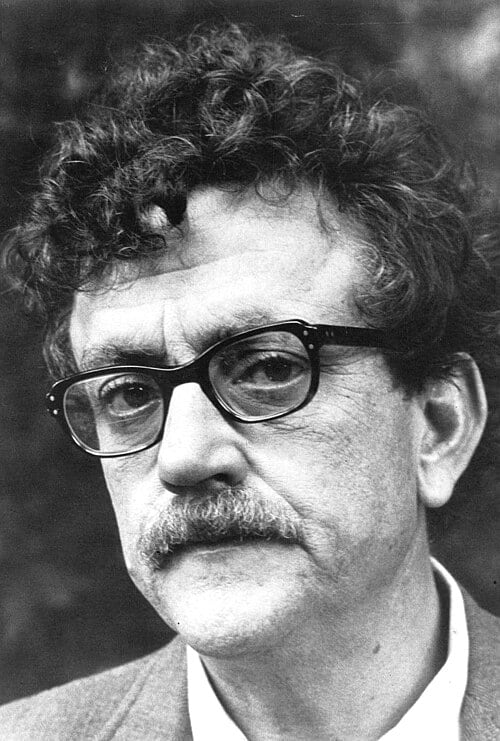
 Indie Author RoadtripSlice of life observational humor, short stories, and reflections on the writer's life from indie author J. B. Velasquez. By J. B. Velasquez

FORD KNOWS is a reader-supported publication. To receive new posts and support my work, become a free or paid subscriber.