It’s Not About You: Understanding Teens and Their Choices
“I can’t believe he’s doing this to me. He knows I hate when he watches porn.”
“She purposefully went behind my back and purchased a burner phone after I explicitly forbid any more screen time. She’s trying to drive me crazy.”
“My son ignored everything I told him and watched pornography even after I warned him about the dangers. He just wants to hurt me.”
Many parents have thoughts like these when they discover a child’s unwanted behavior—whether it’s watching inappropriate videos, ignoring screen time limits, or interacting with strangers online. We feel, at some point, as if our child stabbed us in the back.
FocusWhen I read these statements a second time, what stands out is the focus. Each one highlights the speakers’ feelings and what the child is doing to them. It’s self-focused. “I can’t believe… doing this to me.” “…trying to drive me crazy.” “…wants to hurt me.”
I get it. I’ve been there, and, truth be told, still “go there” periodically. I assume my child is purposefully trying to hurt me.
Sexpectations: Helping the Next Generation Navigate Healthy Relationships explains it this way,
“We’re apt to assume our children think about the ramifications of their actions and how those consequences affect those around them. If they’ve disregarded our advice, we believe they’ve purposefully rebelled against us. In our minds, we see our children rationally thinking through all their choices and picking the one that angers us the most because they don’t believe us and are out to get us.”
When I allow this point of view to invade my thoughts, it disrupts my interactions. My fixation hinders potentially beneficial conversations. The main thing is no longer the main thing. Understanding teen behavior reminds me that my child’s choices are rarely about me.
If we want to make progress with our children, we need to change our focus and separate our feelings from our parenting.
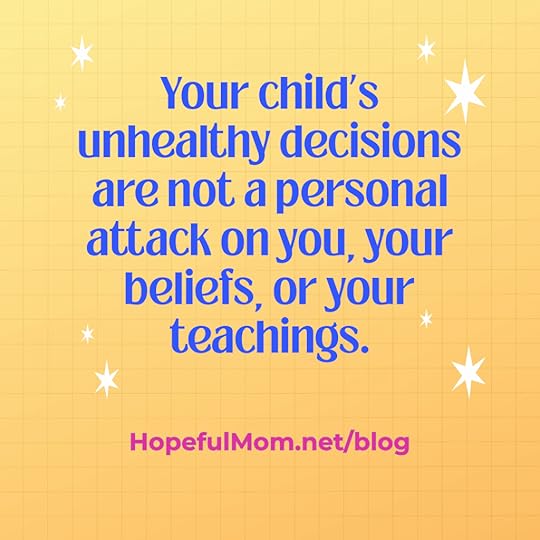
Understanding Teen BehaviorOur child’s unhealthy decisions are not a personal attack on us, our beliefs, or our teachings. When making an unhealthy decision, they rarely think, “How can I hurt my mom (or dad)?”
It’s not personal. It’s not about you.
“It’s not about you.” That truth can shift your parenting moments. Discover how understanding teen behavior can bring peace back into your home. #ParentingTeens It’s Not About You: Understanding Teens and Their Choices
Share on X
They are motivated by peer pressure, a real or perceived need, or curiosity. They (typically) haven’t plotted against us or even considered how their behavior will affect us. Their focus is on themselves and how their actions can fulfill their desires. Understanding teen behavior means learning to see past our own frustration and recognize what’s truly driving their decisions.
Once trapped in the compulsive behavior, their cravings take over. They have no control. When we realize their choices aren’t a personal attack, we’re offended less and forgive faster.
This isn’t just about disobedience—it’s about bondage. Our children are targeted by a powerful industry that profits from their curiosity and weakness. Algorithms lure preteens and teens into watching pornographic videos, which are easily accessible. Our children are not our enemies. They are victims, not villains.
Instead of seeing our child as someone working against us and our values, we can view them as someone who needs our compassion and guidance. When we respond with calm curiosity rather than anger, we create space for healing conversations.
Whether they realize it or not, they need us to come alongside them, offering truth, grace, and the confidence that freedom is possible. And as we grow in understanding teen behavior, we’re better equipped to guide them toward healthy choices.
Subscribe to receive two FREE PDF downloads. Like and follow Hopeful Mom on social media and share this message with your friends. Thank you!
The post It’s Not About You: Understanding Teens and Their Choices appeared first on HOPEFUL MOM.