Civilization Collapse: A Seneca Cliff Ahead?
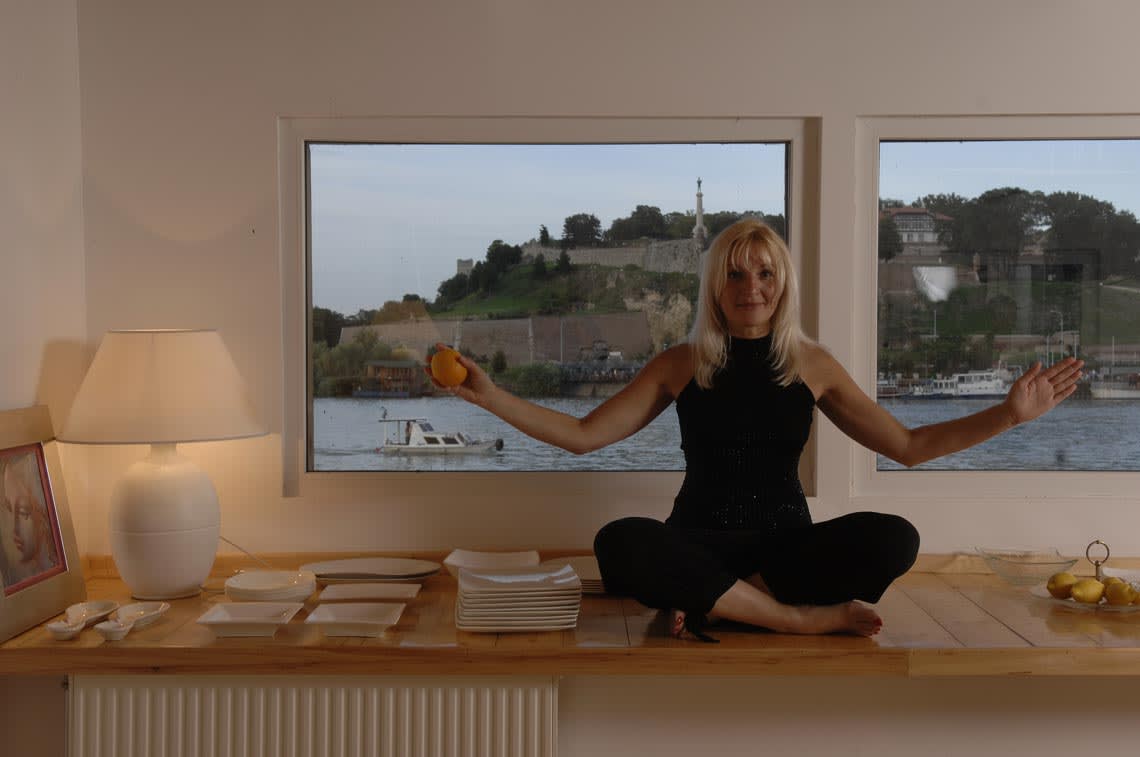
This interview was created by Vesna de Vinča, a journalist, writer, and producer from Belgrade. It was part of the World Conference on Science and Art for Sustainability held in Belgrade in October 2025 organized, among others, by Nebojsa Neskovic.
Ugo Bardi - National Interuniversity Consortium of Materials Science and Technology, University of Florence, Italy; The Club of Rome (CoR); World Academy of Art and Science (WAAS)
1. The Seneca Effect and the Global System
Questions: In your interpretation of the Seneca Effect, you show that civilizations do not disappear gradually – they collapse suddenly, as if their internal axis of energy and purpose has been exhausted. Do you believe that our global system has already entered this silent process of self-destruction? And in your view, can the Seneca Effect be applied to the current situation in the USА and Western world politics, with the rapid and unexpected changes occurring there right now? Could this sudden collapse lead us to the Third World War and shared global ruin? Or is there still the possibility of an internal rebirth – a transformation that comes not from technology, but from a shift in consciousness?
Answers: The Seneca Effect applied to societal collapses is so common in history that it is remarkable how leaders and rulers go down the cliff while swearing that their kingdom will never fall. The Western Roman Empire went down to the dustbin of history while emperors were still convinced that ‘’Rome is Eternal’‘. And there are many more recent examples: think of the Soviet Union! So, it is reasonable to say that the modern American Empire will not be an exception. Indeed, we can see some evident signs of impending collapse in the Western system: internal struggles, power grabs, economic decline, including one of the most typical symptoms: the militarization of society. That doesn’t mean the collapse will start immediately, just that it is moving in that direction.
About wars and global ruin, societal collapses often involve internal conflicts, which may be intense and destructive. But collapse usually removes the capability of a society to engage in military expansion, so a third world war can only happen while the system is still relatively healthy. If it doesn’t happen in the near future, we may never enter WW III. About a rebirth, it is not just possible: it is a feature of collapses. It is a feature of the universe that involves getting rid of the old and the unsustainable to create the new and the better adapted. It happened with the Roman Empire, which eliminated the old and parasitic imperial structure and generated the sophisticated and beautiful civilization we call the ‘’Middle Ages. It will happen for us, too. However, we can’t say yet what will come after us.
2. Science, Technology, and the Illusion of Salvation
Questions: Humanity believes that science and Artificial Intelligence will save us from the limits it has imposed on itself. Can technology – which created this hyper-complex world – really be a path toward balance? Or is, as you often suggest, the real challenge to relearn how to live in accordance with the laws of nature – simpler, humbler, and wiser?
Answers: Technologies are not instruments to create balance; they tend to do the opposite. The present predicament of our society, its ’hyper-complexity is the result of the fossil fuel technologies introduced during the past few centuries. That source of energy is now winding down because of the double challenge of depletion and pollution. It remains to be seen what kind of flow new technologies will be able to provide, while at the same time generating little pollution. A post-fossil society may be much different from the one we live in right now; rather, it may have points of contact with the European Middle Ages. Our society is ugly, wasteful, and materialistic. The Middle Ages were elegant, efficient, and spiritually oriented. The future may be similar, provided we can maintain a certain degree of energy supply to the societal structure. No energy, no society.
3. A New Narrative for Human Civilization
Questions: If, as Seneca says, “everything grows slowly, but decays quickly,” perhaps the only choice we have is to find out how to live between those two moments. In your opinion, what could be the new narrative for humanity – one in which growth is no longer a measure of power, but a measure of consciousness? And what role do art, philosophy, and what we call spiritual maturity play in this transition?
Answers: The Romans reacted to the perception of the decline of their society by developing the philosophical school called ‘’Stoicism’‘. It was a view of life that took into account how fleeting human life is. It was Emperor Marcus Verus Aurelius, also a Stoic, who lived about one century after Seneca, who noted that it doesn’t count whether one lives a long life or a short one. What one owns is only the fleeting moment of ‘’now,” which must be used to live as a human being is supposed to live: according to duty and responsibility. Later, Christianity added charity as a virtue and Islam codified it as a duty. God is said to be benevolent and merciful, and we can try to imitate Him the best we can in that fleeting moment we call “life.”
4. Truths and Misconceptions about CO2 – between Science and Dogma
Questions: In today’s public discourse, CO2 has almost become a mythological symbol – for some, a ‘’poison that destroys the planet, and for others, an innocent molecule unfairly demonized. You point out that the truth is much more complex: CO2 affects not only the climate, but also the metabolism of the biosphere and even human cognitive abilities. How can we distinguish scientific truth from ideological dogma amid such conflicting narratives? And do you believe that, in this whole climate story, it might be even more important to understand the internal biological and psychological effects of CO2 on life, rather than only its external impact on the planet’s temperature?
Answers: I do believe that some important effects of CO2 have been neglected in the debate on climate change. In particular, its direct poisoning effects on living beings and their environments have been completely missed. These effects might do more damage to us and to the whole ecosystem than the temperature rise caused by the warming effect of CO2. But that’s nothing more than a confirmation that Earth’s ecosystem, the entity in which we live and that makes us live, is one of those systems that we call ‘’complex’‘. That has a specific meaning: it doesn’t just mean it is complicated; no, it means that it reacts to perturbations in ways that are difficult or impossible to predict before they happen – typically by collapsing: think of a house of cards. That’s one of the features of the Seneca Effect: it occurs only in complex systems, and its sudden effects are often caused by small perturbations whose effect was impossible to predict. So, the current ongoing collapse has multiple causes, both physical and social. We will go through it in order to find a new social, technological, and human equilibrium. But it doesn’t have to be sudden and brutal. There is no hurry to collapse! We have to go with the flow. If we do, everything will be well.
h/t Vesna de Vinča, shown below