I’m such an imposter.
Have you ever felt like an imposter?
Fearful that, at some point, you’re going to be “found out?” Or exposed as a fraud?
Yeah, me too. 
Including last Friday, which ended up being one of my most impactful speaking engagements ever:
Speaking for the NSA Colorado Chapter in Centenniel, CO.
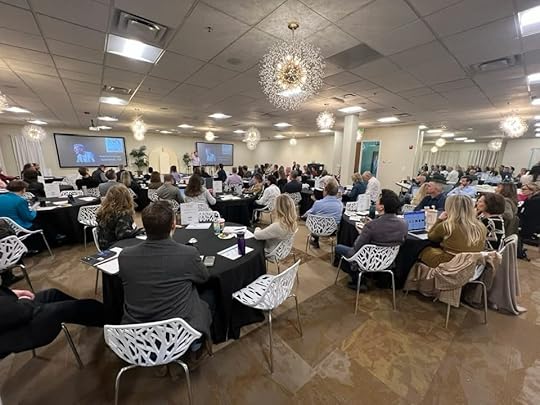
NSA, National Speakers Association, is the premier organization for professional speakers in the US. The Colorado chapter is one of the largest in the country.
My primary goal was to help fellow speakers build a sustainable speaking business. But before getting into strategies to DO that, I had to address the big elephant in the room.
Something that REALLY holds people back from playing full-out.
Imposter syndrome.
I felt it in the days leading up to the event.
Why am I the one speaking? I’m just Scott, small-town, shy kid from Albany, MN. Aren’t there more qualified people to be doing this???
We all have these voices. I talked about them after my 63-mile run in the desert. It’s such an omni-present topic, I wanted to elaborate on it.
In my experience, the only way imposter syndrome ever truly goes away is if you stop stretching yourself and pursuing uncomfortable opportunities. Otherwise, it’s always there, simmering in the crockpot.
In the NSA world, it can hit you at all levels.
A new speaker questioning whether they’re ready to speak.A breakout speaker questioning whether they’re ready for the keynote stage.A keynote speaker questioning whether they’re ready for bigger, global stages.
Imposter syndrome never goes away. And truthfully, you don’t want it to.
The feeling that you’re going to be “found out” or “exposed” can be advantageous.
It keeps you sharp, hungry, and working hard. You avoid complacency. Preparation combats fraudulence.
Where imposter syndrome DOESN’T serve you is when it prevents you from taking action.
Internal thoughts look like this:
If I just do a little more research, have a few more accomplishments, attend more meetings, watch more videos, listen to more podcasts, read more books, etc., THEN I’ll be ready.
That readiness is a moving target that never comes.
So, what can you do about imposter syndrome?
These are the three tips I shared last week. Hopefully they’ll help you, wherever this finds you:
1 – Realize imposter syndrome is NORMAL. You’re not weird or weak or less-than or broken or dysfunctional. You’re HUMAN. What you’re experiencing is a non-negotiable part of growth that countless others feel (whether they admit it or not).
2 – “Lawyer up.” Physically CREATE A LIST of supporting evidence to make a logical counter-argument for why the imposter story you’re telling yourself is BS. In my case of speaking for NSA, I have my CSP (Certified Speaking Professional) credential. I’ve been doing this for 10 years. I’ve written books. I’ve made mistakes, and learned a lot. I’ve got supporting evidence. I’m confident you do as well. You just need to look for it.
3 – Use “vicarious experiences.” This is a sport psychology term and it’s one of the primary ways we gain confidence and belief in ourselves. It’s looking out at similar others who have achieved success and saying, “if they can do it, I can do it, too.” When you say this, you’re not putting them down. You’re pulling you UP. Those who have achieved success likely didn’t do it because they HAVE something (intelligence, personality, genetics, etc.), it’s because they DID something. Hence the need to take action!
Final thought: for my coaching clients, I explain many concepts in terms of dials, not on/off switches. You’re not going to turn off imposter syndrome. The important insight is recognizing when it’s preventing you from taking action, then using the above strategies to dial it down.
Keep at it and keep Outperforming!