
My Fifteen Minutes With Bart Shirley
I had the pleasure of interviewing Bart Shirley for Before They Wore Dodger Blue, a book that is largely about 1970 Spokane Indians—one of the great minor-league teams of all time. Shirley was the club’s starting second baseman. Steve Garvey, Bobby Valentine, and Bill Buckner filled the other three infield spots. The stacked roster also included Davey Lopes, Bill Russell, Charlie Hough, Doyle Alexander, Tom Paciorek, and Geoff Zahn. Almost all of these future big-league stars were part of the Dodgers’ historic 1968 draft class. And their manager was a guy named Tommy Lasorda.
Compared to his younger teammates on the ’70 Indians, 30-year-old Bart Shirley was a grizzled veteran. He had played in parts of four big-league seasons with the Dodgers and Mets over the previous decade. That’s why Lasorda asked him to be a player-coach that year. As I began my reporting for the book, Shirley was one of the first players I contacted. He called me back on July 26, 2024. We spoke for 15 minutes.
From Corpus Christi to AustinBarton Arvin “Bart” Shirley was born on January 4, 1940, in Corpus Christi, Texas. He attended Ray High School, where he set a school record as a senior halfback, averaging nearly eight yards per carry and earning All-State honors. Shirley also starred at shortstop for the Ray baseball team and received bonus offers from multiple major-league clubs. He turned them down and enrolled at the University of Texas in Austin. Shirley said he chose Texas because legendary football coach Darrell Royal said he’d let him play baseball.
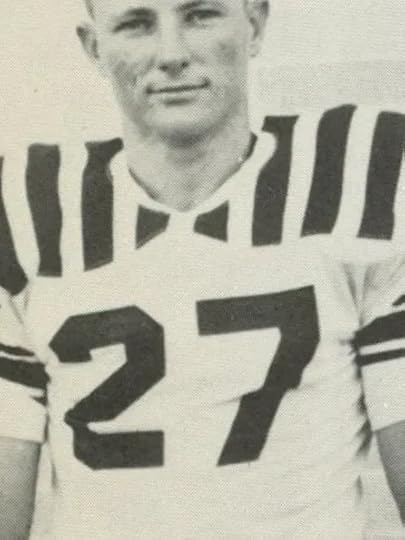 Bart Shirley at Ray High School in Corpus Christi.
 Shirley majored in business administration and played for the freshman football and baseball teams. At 5-foot-10 and 180 pounds, the blond-haired, square-jawed Texan possessed the build of a bowling ball. Some likened him to a young Mickey Mantle. “The more clothes he takes off the bigger he looks,” said one Longhorns coach.
As a sophomore, Shirley moved up to varsity and played in the Cotton Bowl. During our conversation, he recalled the thrill of returning a punt on national television. In the spring of 1961, Shirley made the All-Conference baseball team as a shortstop for the Longhorns and then played semipro ball that summer in Rapid City, South Dakota. Dodgers scout Hugh Alexander had followed Shirley’s steady progress and offered him a bonus of $60,000. It doesn’t sound like much, in retrospect, but consider this: Willie Mays—the highest paid major leaguer at the time—earned $85,000 that year. Shirley accepted the Dodgers’ offer and bought his mother a new house.
Bart Shirley’s Pro Baseball CareerThe Dodgers thought highly enough of Shirley to have him skip the lower minors, assigning him to the Double-A Atlanta Crackers. He didn’t hit much that first year, producing a slash line of .239/.292/.326. Nevertheless, the Dodgers promoted him to Triple-A Omaha the following season. He performed better at the plate a bided his time with the Dodgers’ other Triple-A club, the Spokane Indians, over the next two seasons. Shirley would get to know Spokane very well.
In September 1964, the Dodgers promoted Shirley to the big club when rosters expanded. “I’ll never forget the first time I went to bat with the Dodgers,” he recalled. “There was this lady sitting by our bat rack, and she said, ‘Come on Bart, get a hit.’ It was Doris Day.”
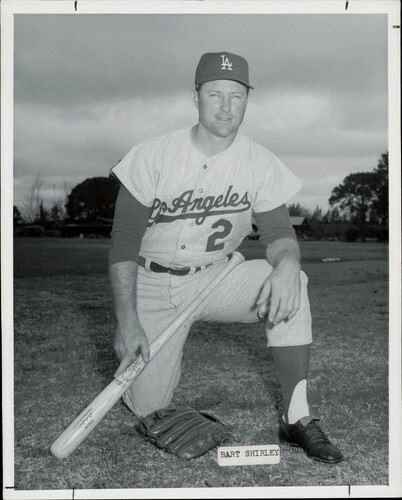 Infielder Bart Shirley played in parts of three seasons with the Dodgers in the 1960s.
Eleven days later, Shirley experienced the thrill of playing in front of hundreds of family and friends in Houston against the Colt .45s at Colt Stadium. He tripled home a run, walked twice, and drove in a second run with a groundout. In 62 at-bats down the stretch, he batted .274.
Except for a couple more cups of coffee in Los Angeles and a brief stint with the New York Mets, Shirley spent most of the next six seasons in Spokane. He played in 997 games with the Indians, a record that still stands today. “There was an Italian family named Saccmmanno who took in several players,” recalled Shirley. “They fed us and took care of when we were at home. It was a great town. I enjoyed my stay there.”
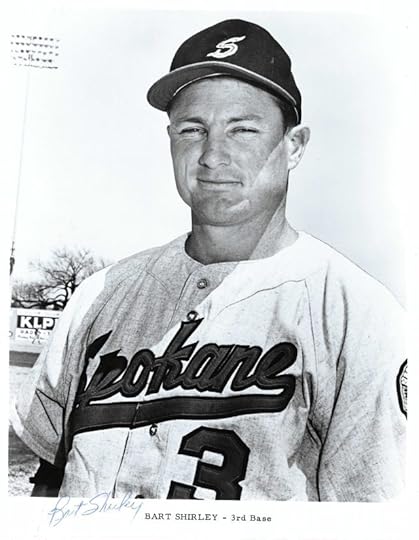 Bart Shirley holds the Spokane Indians franchise record with 997 games.
 A versatile infielder who could capably man second, third, or shortstop, Shirley hit .263 with 29 home runs over 10 seasons in the minors. “He was like a dad in the locker room,” said former Spokane clubhouse boy Kent Schultz. “He didn’t make any mistakes and was a team player. Not a rah-rah guy but consistent and professional.”
Shirley’s double-play partner from 1969-70, Bobby Valentine, found him to be the ideal mentor. “Bart was a spectacular person,” said Valentine. “To have him as a second baseman when I was trying to learn shortstop was a god-send.”
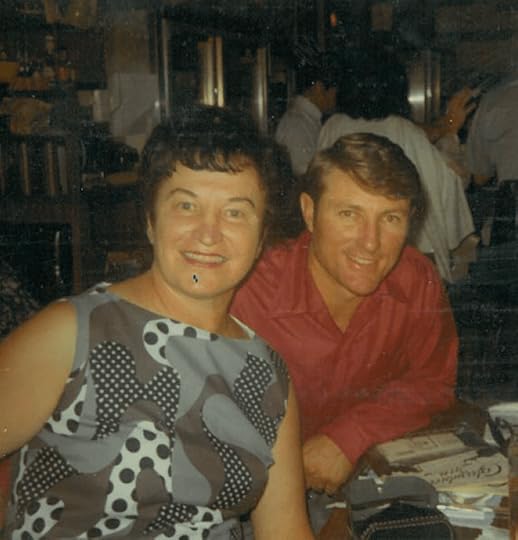 Bart Shirley with the 1970 Spokane Indians.
For most of his professional career, Dodgers star shortstop Maury Wills blocked Shirley’s path to the majors. In 75 big-league games, the Corpus Christi native batted .204 and never hit a home run. One of his 33 major-league hits came against Bob Gibson during his historic 1968 season when he posted a 1.12 ERA. “I think I hit a base hit up the middle, got my bat around,” Shirley remembered. “He could bring it up there pretty quick.”
Bart Shirley Returns HomeShirley spent his last two seasons as a player in Japan with the Chunichi Dragons. He then managed Single-A teams for three seasons in the Dodgers minor-league chain before returning home. Following his baseball career, Shirley worked in the insurance business and remained active in his church throughout his life. He and his wife, Victoria, had two children.
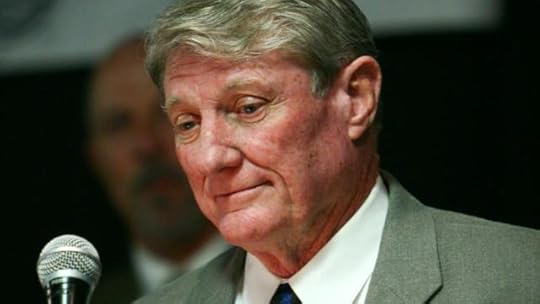 After his baseball career, Bart Shirley spent the rest of his life in his hometown of Corpus Christi.
 During our brief conversation, Shirley said he once hit a hole-in-one during a round of golf with Duke Snider. He recalled how Don Drysdale would take the Dodgers young players golfing at the Riviera Country Club and cover the bill. But the most memorable aspect of his time in The Show? “The highlight of my career was sitting on the bench watching Koufax pitch,” said Shirley.
I interviewed dozens of former players for this project, and none were more humble than Bart Shirley. He was not a man of many words, but he spoke fondly of the memories he carried from his professional baseball career.
I had looked forward to sending Bart a copy of the book. Sadly, he died on November 19, 2025—18 days before its release. He was 85. Although I wish he could have read the book, the reality is he didn’t need to. He lived it.
The post My Fifteen Minutes With Bart Shirley appeared first on Eric Vickrey.


