Widow
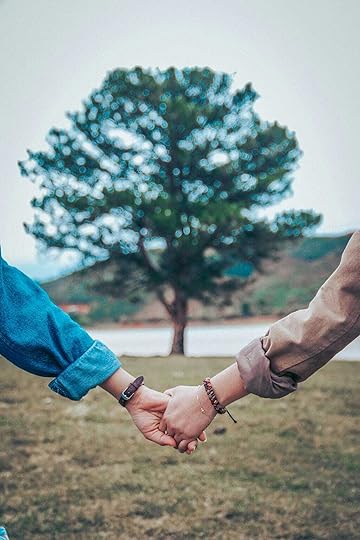 Photo by Dương Hữu on Unsplash
Am I a widow?
My wife died 10 months ago, and I am struggling to make this term apply to me. It’s not that I am not lost in the wrenching flood of grief. I am. I am reminded a hundred times a day that I cherish and miss her. The empty gray recliner that she enjoyed for only a couple of months. The pile of sympathy cards on the black credenza in the living room. Mail that comes addressed to her. Her portrait on my rosewood dresser. Her voice in my head, reminding me that she is here and that she loves me.
I accept this anguish as my current reality. It is the word “widow” that stops me short. According to Oxford University Press, a widow is “a woman who has lost her husband by death and has not married again.” It helpfully adds, “The word comes (in Old English) from an Indo-European root meaning ‘be empty.’” “Empty” rattles around my heart and is confirmed by her side of the bed, no one riding shotgun on the way to the grocery store, one plate to wash after dinner, no text notifications encouraging me through my day.
I look back at our “changes in marital status” and at the personal and cultural norms that had to be acknowledged, then challenged, then changed. The norms didn’t define our relationship, but they determined what alternatives were available to us.
In 1984, Anne and I fell irretrievably in love. It came out of nowhere. I was married and she was recovering from a brutal divorce. We were not “looking.” But after a weekend retreat on Lake Superior, we were drawn irresistibly toward one another.
First, we thought it was a “new best friends” situation. But as it became increasingly compelling, we finally had to admit that we wanted only to be together. In every way. We had no idea what that even meant. Neither of us had ever been in a love relationship with a woman, and neither identified as queer or lesbian. Still… This overpowering need and desire to be together led us forward. We did not know how to do this, but we would not be deterred.
We bought a house as “roommates” and raised my two daughters (her children being grown and out of the house). We were not “out” and wouldn’t have known what that term meant. We had no queer friends, and we worried that we might lose our jobs or our children might be discriminated against through no fault of their own. So we carried on as “friends.” We never so much as held hands in front of the kids or when in public. We did not confide in friends or colleagues. We made it up as we went along, and we read everything we could get our hands on that would help us understand.
As the years went by, we loosened up. We came out to our families and our close friends. We widened our circle to include queer friends. We stopped being coy when people asked us “how we were related.” Because there was no socially sanctioned way to validate our union, we simply decided to choose each other every day. And so we did. Every day we chose each other. Not because we had signed a contract. Not because a church had blessed it. Not because our culture would even accept it. But because we could not conceive of living without each other.
It was hard to find a model for creating the life we wanted to live together. About three years in, we experienced something that became our metaphor for every challenge we faced in our relationship. A friend of ours conducted workshops in the Dromenon. (“Dromenon” is from the Greek for “path,” and the workshop was a ritual walking of the labyrinth modeled on the one on the floor of Chartres Cathedral in France.) We decided to attend her workshop, and it forever changed how we saw our life unfolding in front of us.
The workshop began with a brief introduction. Next, we all took deep breaths and centered ourselves, then stated what we hoped to gain from walking this path. Finally, it was time to walk. The room was quiet, with some soft music — maybe Pachelbel? — playing. Everyone focused on their own experience.
Anne went into the labyrinth first. As she slowly made her way, I waited a polite amount of time before following. I stepped onto the path and just proceeded, slowly and deliberately. I felt my socks on the canvas course. There was the music, and the smell of burning sage hanging in the air. We had learned that this labyrinth was not a maze. You cannot get lost, and you cannot hit a dead end. You just stay on the path, even if it isn’t making sense to you, and you will get where you’re going.
The experience of walking the pathway — especially with another person — is that you seemingly come and go with and without each other. Sometimes you are right next to each other, walking in the same direction and at the same pace. Suddenly, one of you is led off to another quadrant of the circle, and you can’t even see each other unless you try. Then, suddenly again, you are walking toward each other, passing one another and continuing on your way. And so it goes, again and again. Close, not close. Parallel, then in opposing directions. Finally, after some time, you end up in the center. Anne was standing quietly in the center when I joined her. We stood there, noiselessly acknowledging each other and sharing the moment of calm and stillness. After a few contemplative moments, Anne re-entered the labyrinth and began the journey back to the starting point.
We repeated the entire experience, unhurried and silent. Together, not together. Parallel, then at opposite ends. We were walking in the same direction, we were walking in different directions. We were close to each other and we were far apart from each other. At last Anne was back at the beginning and stood waiting there for me. Calm. Patient. With a beautiful smile. I joined her and we turned toward the labyrinth together, bowed our thanks, and ended the walk.
Afterward, Anne said that the physical experience of walking the Dromenon with me was very powerful for her. From that time on, whatever was going on in our relationship — whether we had a rough patch, or were especially close — she would say, “I’m thinking about the Dromenon.” And we would talk about where we were and what we needed. With that as our guide, we found our way through 41 years, six houses, two states, five grown children, many grandchildren, surgeries, arguments, moments of incredible beauty, and periods of deep and nourishing closeness.
After being together 31 years, we were finally able to be legally married, and so we did. But after so many years of playing by our own rules, all the English words for marriage seemed foreign, or even wrong. Spouse? Wife? We had to practice even saying them. We had to — wanted to — apply them to ourselves. So we became “wives.” We were each other’s “spouse.” Still, though there was now a contract, we decided to choose each other every day. Years of differentiating between “needing” and “choosing” had taught us how to make each day a reminder of our great good fortune in being able to opt in again and again. We accepted the labels “wife” and “spouse,” but we continued to make it up as we went. We still chose “us.”
Now there is this new term: widow. I must apply it to myself, whether Oxford University wants me to or not. Having never counted on measuring my status by society’s rules, it feels wrong in my mouth. At first, it brings to mind old, white-haired women bent over in a “C” shape and leaning on canes. It seems like an involuntary relegation to the “what do we do with her” pile of humanity.
As time goes on, I reconsider. I find a more enlightened version of “widow.” It legitimizes the years of intimate partnership. It legitimizes this loss. It opens doors — legal, emotional, and spiritual — to a future by myself. I try it on like one of Anne’s cable sweaters that still hang in the closet. It warms me unexpectedly because it means that we belonged to each other.
My dear Anne has now returned to where everything begins. As I was when we walked the Dromenon, I am a few steps behind her. It is left to me to finish this path. Remembering the labyrinth, I reassure myself that I cannot get lost, and that I will end up where I’m supposed to. With each step, I will try doing it with as much equanimity and kindness as Anne did.
I will call myself a widow as I walk because it finally fits. It is my way of telling her that I still choose “us.” Fingers crossed that she is waiting there. Calm. Patient. With that beautiful smile.
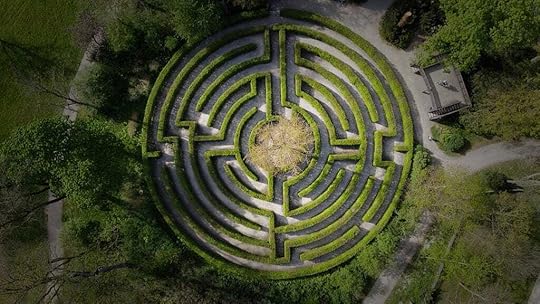 Photo by Ben Mathis Seibel on Unsplash
Sign up here to receive our free weekly newsletter featuring the best of Crow’s Feet.
[image error]Widow was originally published in Crow’s Feet: Life As We Age on Medium, where people are continuing the conversation by highlighting and responding to this story.