3 Pentecost
June 14, 2026
+This pastThursday, I celebrated the 22nd anniversary of my ordination to the Priesthood.
It’s been anamazing journey, so far.
At supper onWednesday night, after our Eucharist, Stephanie asked me if I had any regrets.
It’s always agood question.
I said, Ihave no regrets about being a priest, or about my calling.
But, I havemany regrets about my relationships with others, especially those in authorityover my career.
I joked thatI often felt like Don Quixote, fighting windmills.
Also, onWednesday night, we heard the Gospel reading for the feast of Barnabas.
That Gospelwas the Gospel read at my ordination.
And it’s alsothe Gospel we just heard Deacon John read.
It’s a good ordinationGospel.
“Jesus wentabout all the cities and villages, teaching in their synagogues, proclaimingthe good news of the kingdom, and curing every disease and every sickness.”
Ministry,then we realize, begins with Jesushimself.
Before thereare apostles, before there are priests or deacons or bishops, before there iseven a Church, there is Jesus walking back roads, entering forgotten villages,seeking out the sick, the grieving, the lonely, the lost.
And Matthewtells us something striking.
Jesus lookedupon the crowds and “had compassion for them.”
That also isministry in a nutshell.
The Greekword used here for compassion suggests being moved in the depths of one’sbeing.
I hope I’mnot being too graphic here, but it means to be moved in own’s bowels.
This is notpity from a distance.
It is notconcern offered from a position of safety.
It is divinelove aching to encounter human suffering.
Jesus seespeople as they are.
Exhausted,frightened, confused, mourning, depressed, anxious, beaten down, burdened, vulnerable.
In otherwords, he sees us.
The older Iget, the more convinced I become that much of the spiritual life begins simplywith allowing ourselves to be actually seen by God.
We spendenormous amounts of energy trying to appear stronger than we are, more faithfulthan we are, more certain than we are.
Yet Jesuslooks beneath all of that.
He sees ourfears, our regrets, our griefs, and our hidden wounds.
And he lovesus anyway.
The Gospelsays that the people were “harassed and helpless, like sheep without ashepherd.”
Thatdescription could easily be written about us.
Right here.
Right now.
Let’s faceit, we are constantly seeking information.
We arestarving for some elusive wisdom.
We areconnected to everyone and often known by no one.
We carryanxieties that previous generations could scarcely even imagine.
We worryabout the future of our nation, our communities, our families, our Church, andsometimes even our own souls.
And still Jesuslooks upon the crowds with compassion.
And still Jesussends laborers into the harvest.
Notice thatJesus does not tell the disciples to solve every problem.
He doesn’task them to save the world.
He just asksthem to go.
To go wherepeople are hurting.
To go wherehope has grown thin.
To go wherethe Kingdom of God needs to be announced once again and again.
And thedisciples themselves are not exactly impressive by any sense fo the word.
What arethey?
They’refishermen.
They’re taxcollectors.
They’reordinary people with ordinary limitations.
One of them iusgoing to deny Jesus.
Three times.
One of them willactually betray him.
Most aregoing to flee when everything gets really hard.
Yet these arethe people Jesus chooses.
That, morethan anything, should encourage every single one of us.
God called a rebellious,oftentimes bitter poet to be a priest.
And here heis!
22 yearslater!
For better orfor worse.
God’s workhas never depended upon perfect people.
It’s alwaysdepended on willing people.
When I thinkback to my ordination, that perhaps is what stands out most clearly.
I knew when Iwas ordained I was not a perfect person.
I knew I hadsome inadequacies.
But the priesthoodreally drives home those inadequacies.
Every priestdiscovers sooner or later that they cannot heal every wound, answer everyquestion, fix every broken thing.
But, then, thathas never been the point.
What is thepoint?
The point is.. . faithfulness.
Realfaithfulness.
The point is.. . .just showing up.
The point isbeing willing to stand where Jesus places us and to do what Jesus gives us todo.
And let’s beclear----
that callingbelongs not only to priests or deacons or bishops.
Oh no.
The mission wehear Jesus give today in our Gospel reading belongs to all of us who followJesus.
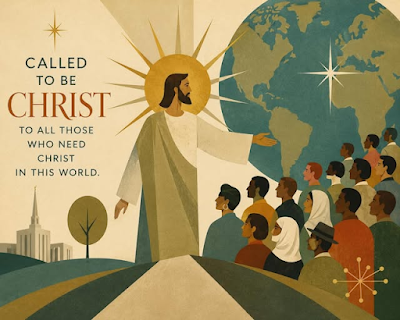
Everybaptized person is called to embody the compassion of Christ in this the world.
To be Christto those who need Christ.
To embodyChrist in very being.
How do we dothat?
For some, it’sthrough preaching.
For others,it’s through teaching.
Others, it’sthrough caregiving.
Or chaplaincy.
Or just plainfriendship.
For some, it’sthrough intercessory prayer.
For many, it’sthrough acts of quiet kindness and love that no one else ever notices.
The Kingdom happensnot only through great achievements but through all those little acts of true faithfulnessoffered up and outward every day.
Jesus tellsthe disciples: “Cure the sick, raise the dead, cleanse the lepers, cast outdemons. You received without payment; give without payment.”
In otherwords, share what you have been given.
That is theessence of what it means to follo0w Jesus, of being ministers of the Most HighGod.
We don’t haveto manufacture some kind of grace.
We don’t haveto create some kind of hope.
We don’t haveto force forgiveness.
We simplypass on what God has first given to us.
We lovebecause we have been loved.
We forgivebecause we have been forgiven.
We show mercybecause mercy has been shown to us.
As I lookback on these 22 years and think about our Gospel reading for today, I findmyself truly gratitude.
Grateful forthe people who have walked with me so far and helped shape my faith.
Grateful forthe privilege of standing at altars and baptismal fonts, and hospital bedsidesand gravesides.
Grateful formoments of great joy and truly deep sorrow shared with you---God’s loved people.
And aboveall, grateful for a God whose compassion never ends.
Let’s faceit.
The harvestis still plentiful.
The world isstill hungry for real hope.
People arestill searching for meaning, for forgiveness, for belonging.
People arestill searching and yearning for God.
And, for allof those people, Jesus is still sending us, his disciples, into the world.
Not becausewe’re perfect.
Not becausewe’re without flaws.
Not becausewe’re sufficient.
But because God’smercy is.
Amen.