The Ugly Phase
My husband and I have found a new way to get through tough times (and I don't just mean relationship-wise!). It's about recognising the Ugly Phase and learning to accept it.
Let me explain what the Ugly Phase is. To do that, I need to tell you how Isra (my husband) discovered it. Bear with me.
For 15 years, I've been creating presentations to give at conferences. I love this, I love exploring topics to create a new talk, and I love having new content to present. However, the process of creating the new talk itself is... Not always fun. My process is:
Jot down ideas for new talks when they pop into my headWhen I've given my current talks enough times at the usual conferences, I decide it's time to submit a new oneI create the new talk abstract about 3 hours before the CFP deadline (sorry about that conference organisers), treading a careful line between adding enough context that the program committee can decide if they want the talk, whilst keeping it abstract enough that there's flexibility to evolve the talk when I actually write itSubmit the talk to whichever conferences are happening in the future that I want to go toWaitGet accepted to give the talk (hopefully)Wait (well not really wait - get on with the many other bits and pieces that make up the day job and also the rest of my life as wife, mother, and human)Realise the conference is 2 weeks away and that I need to write the talkDrop everything, block out my calendar, and start working on the outline, the ideas, grabbing quotes from relevant places, and throwing things together into a slide deckSometimes, if there's time, there's a lovely procrastination phase where I decide what the new slide templates should look like. This is a luxury and I often have to stop myself from doing this.Usually "version" my slide decks about 5-8 times (create a copy of what I've done and tear it to pieces to create a new version)Around about 70% of the way into the time available (about 2-3 days before I'm due to fly) when I'm on around version 3-5, I hate the talk. Absolutely hate it. Can't remember what point I was trying to make; can't understand what I'm trying to say with my slides; don't know why I think giving presentations is fun; don't see the point of any of it.Cry all over my husband.Resist the urge to start overForce myself to sit down, work out what the central theme is, then refine the slides to get there. This usually requires me to delete around 20% of the slides. If you follow me on Twitter, you're familiar with this phase.Do a couple of run throughs to see if it makes narrative sense, usually by myself, often on the plane to the conference.Travel to the conferenceHang out with interesting peopleGive the talkSigh of relief - people seemed to like it! Or at least learn something.Step 12 is the Ugly Phase. Not all of these steps apply to every new talk. But the Ugly Phase happens Every Time. Isra pointed it out to me really recently - I've been giving presentations for 15 years, and it's only a year or two ago that he pointed out I always hate my talk and I always come out of the other side of this with a talk I'm comfortable presenting.
Since we discovered the Ugly Phase, he has had to remind me several time "this is the Ugly Phase". It's normal. You hate the talk, and you're unhappy, but you will put in the work and you'll come out of the other side. You always hate the talk. And you always get there in the end.
This has been ENORMOUSLY helpful. It doesn't make the Ugly Phase go away. If anything, it allows you to lean into it: "Oh yeah, the talk sucks, and I have many doubts, and I'm probably running out of time". But what it does is stops me meta-spiraling on top of the "The talk sucks, I hate it, I wish I'd never submitted, is it too late to pull out, will everyone hate the talk too, why am I a developer advocate, I've just been lucky so far, I'm a fraud, I can't do this, I suck..." etc etc. Embracing the Ugly Phase means I'm allowed to hate the talk. I'm expected to hate the talk. It's part of the process. The talk sucks right now, and I'm not in a great place right now, but This Too Shall Pass. Getting rid of the extra emotional toil of "and you suck and you should never have agreed to this" frees up a surprising amount of emotional energy to ride out the Ugly Phase.
One of the surprising things about the Ugly Phase is that you forget it. You forget it ever happened. I have experienced this with every talk I've written (which is a lot of talks), and I didn't even notice until Isra pointed it out to me. Even after identifying it, I need him to point it out. It's like childbirth. You really do forget the pain of childbirth when you're through it - you conceptually remember there was pain, but it's only when you do it a second time you're like "oh yeah, I forgot this really hurts". The Ugly Phase is like that: "Oh yeah, I forgot this really sucks".
OK so I've just given you an unnecessarily deep dive into my brain while I'm writing talks, and you're probably thinking 1) I don't give talks at conferences, so I don't care and 2) this is precisely why I don't give talks at conferences.
But since discovering the Ugly Phase, my husband and I have been applying it to a lot of things. These things are usually things that are:
HardWith a big payoffOften contain tasks or activities you can't control, and/or some requirement for creativity (which is also hard to control)We recently built a house. Well, not us, lots of builders and specialists built the house. This was a two-year process (and it's still ongoing, even though we moved in in February). My husband was point-man for coordinating a lot of things. There were many moments in time where we had lots of workers to coordinate and money to manage and stoppages due to "reasons". We started calling these the Ugly Phase too. This was a big project, so there was more than one Ugly Phase - you have to get good at recognising when things are going well, so that you can spot when you're in or out of the Ugly Phase.
When we moved in, we had boxes everywhere. I HATED it. I arranged the kitchen first, and bedrooms that we could all sleep in, but then after that it felt like every time I tackled a new box I created 4-5 new problems. I was drowning. I was despairing. I was wondering what we'd done all this for. Isra said "this is the Ugly Phase" and he was right. We still have boxes that haven't been unpacked, but we're doing it in phases so we can have several smaller Ugly Phases and then some time of "this isn't so bad".
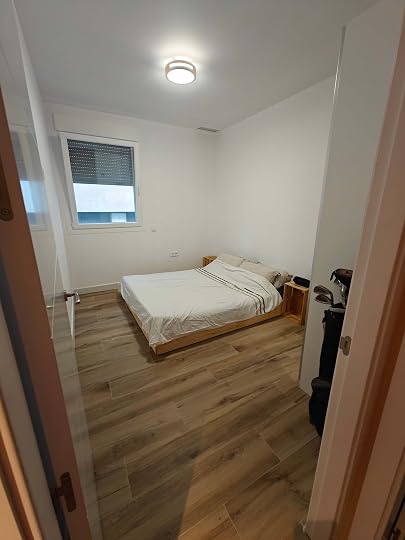
I'll tell you what else has helped me get through these Ugly Phases and appreciate that I have got through, even though the list of things to do seems endless and soul-destroying: I took photos throughout the whole process - the original house, the destruction, the building, the wiring, the final touches before moving in. I have photos of the empty house, photos of a living area full of all the boxes from our apartment, photos of the room we all camped in before we had furniture. Every time I tackle another project, like when Dad said he was coming to stay (yay!) but his room was where we were storing all the unopened boxes (boo!), I photoed the room before, during, and after. I photoed the ugliest part of the Ugly Phase, when his room wasn't done and the hallway, bathroom and kids' bedrooms were full of unsorted boxes, and I was about ready to tell Dad to cancel his flight because I would never, ever be ready. I photoed that worst case, told myself it was the Ugly Phase, and that it could literally only get better from here. And it did. And Dad stayed comfortably in his new room, and we had moved on to the next phase of fewer boxes to unpack, stored logically (more or less) in fewer places.
The Ugly Phase will be your lowest point, and it isn't just a minute or half an hour. Depending on the length of your project, it could be days or even weeks (note: cutting projects up into smaller pieces really does help). The Ugly Phase is, in my experience, closer to the end of the process than the start - it's basically when it's too late to undo what you've started, but not close enough to the finish to be able to see the light at the end of the tunnel. Really importantly: it's probably closer to the end of the project than the middle, and probably closer to the end that you realise. The closer, and more immovable, the deadline, the more you're going to feel the Ugly Phase. This is important too - when you're in the Ugly Phase and panicking about time, this is a good time to re-evaluate priorities, be realistic about time, figure out what "good enough" looks like, and see if you can iterate on getting to "barely good enough" to "a bit better" to "OK this will probably do" by the deadline.
Before I understood my own process for creating talks, before I'd done it a million times, I occasionally presented the Ugly Phase version of my talk. Usually at a User Group rather than a conference, which can actually be quite helpful because you get useful feedback to get you out of your hole. But I'm also fairly certain I've presented the Ugly Phase version of my talk at conferences because I ran out of time. Obviously, leaving enough time to prep is key to avoiding this, but sometimes it just can't be helped. What does help is 1) trying to get to the Ugly Phase as soon as possible (minimise procrastination, start throwing things together, done is better than perfect) and 2) using the Ugly Phase as motivation to cut down as much as possible so you get through the phase to something that you don't hate. But sometimes, there's nothing you can do. Sometimes, especially if you have very little control of the process (builders come when they come and there's not much you can do), the best you can do is simply recognise you're in the Ugly Phase.
Getting through the Ugly Phase is not about working harder. It's:
1) Recognising that you're there and accepting it. Minimise any self-critical thoughts ("OMG what have I done?") and focus on where you are now ("what do I need to do?").
2) Looking for anything extra that's going on that you can cut out to give you more headspace. Whether that's something in-scope for the project ("Fine, I won't go looking for that academic paper I think I heard about that might prove my point" or "I'll get the bare minimum furniture that means Dad can sleep here and not try to decorate the whole room"), or something else going on at the same time ("Dave's going to have to wait for my next YouTube video" or "Yes it's more efficient if the plumbers come that week, but I'll manage it better if they come a couple of weeks later"). Note that this is where lots of people drop fitness activities, or fun things for themselves - if you're suffering from stress, these really are the last things you should drop, even if they are the easiest, so try your best to descope something else.
3) Refocusing on the goal. One of the things that leads me into the Ugly Place is I'm trying to do too many things at once, especially if I'm using it as an excuse to get other, semi-related things done at the same time (extra research; some coding time; re-organise the boxes in the garage). Stating what the goal is for right now helps, not only to descope things (see item 2), but also to remind yourself what you're doing and why. "Dad's coming in 2 days. He needs a bed, a safe path to the bed, and somewhere to keep his clothes".
So yeah. The Ugly Phase. Try it out. Next time you're drowning in something, especially if it's deadline-driven or has scope that's out of your control, try thinking about it as the Ugly Phase. You just need to ride it out. See if it helps.
And don't forget to pat yourself on the back when you do come out of the other side. When it's over, you will forget how ugly the Ugly Phase was, you should be proud of what you achieved.
The post The Ugly Phase appeared first on Trisha Gee.