
Like a mind
Thinking of compositions often leads a creator to dwell on the required craft that is best suited for the purpose. Convinced that the ‘stream of consciousness’ is the apt technique for my next short piece, I gathered as much info I could on this style of writing in a short duration. The art of maintaining a “natural believable flow of thought(s)” while employing sensory details, including emotional journeys of characters, mimicking the natural movements of the mind via fragments, jumps, worries, so on and so forth, did not come across as a cakewalk to me, especially if one is dissuaded from editing or organizing for fear of interfering with the mental rhythm. Having said that, if thoughts in the characters’ minds must be the result of various triggers like smell, worry, etc., then these cannot be random or chaotic.
In addition, the specificity of thoughts being imperative for the success of this technique and effective characterisation, ensuring the recording of these in “short bursts, incomplete sentences, repetition, and unusual punctuation” to reveal the personality, emotional state, inner conflict, etc., and to include anchors or breathing points skilfully, becomes mandatory. As brief jumps are recommended in short compositions, maintaining the right emotions throughout the composition, for building the characters’ inner voices, becomes essential.
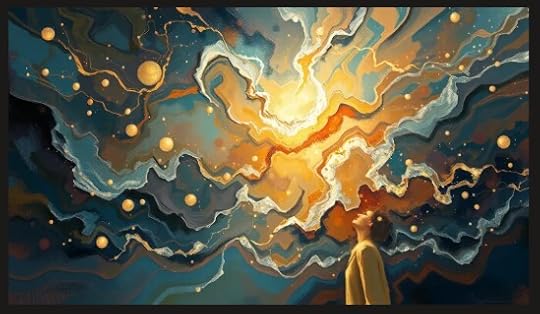
Image taken from neurolaunch.com
My next complication rose from my indecisiveness about the style of ‘stream of consciousness from a character’s perspective’ as choosing from a list of five cognitive styles – analytical, sensory-driven, emotional, chaotic/rapid, and detached/observational would help me determine “the texture of the stream”. Finalizing the style, I make up my mind about the characters’ linguistic fingerprint or the right choice of language to portray the inner voice, which is highly dependent on their profession, age, culture, vocabulary level, and emotional maturity. Next comes the task of choosing the dominant emotional state in the moment because ‘stream of consciousness’ is synonymous with ’emotionally charged’. Selecting ‘irritated’ and ‘hopeful’ from other emotional states such as anxious, grieving, excited, and numb, I proceed with my next task which is to identify the personal history relevant to the major characters’ lives. For what I have in mind, the quicker I settle on the characters’ haunted past events, their reactions shaped by previous unresolved conflicts, and the relationships that influence their monologues or thoughts, the better the outcome. As the characters’ flow of thoughts occur in their physical environments, my chore now revolves around capturing realistic sounds, movements, and interruptions which could be used as sparks for creating jumps. My characters’ thinking flaws such as mental filtering, emotional reasoning, spiraling, jumping to conclusions, etc., become my next assignment for what are humans or characters without flaws.
Giving it some thought, my focus shifts to other aspects that would help me make the thought flow intense. I am referring to my characters’ fears and motivations, their self-awareness by analysing, questioning themselves, and by arguing internally. In other words, I mean, their mental architecture. With a clear mission connected to contradictions that generate tension, a secret that cannot be said aloud, and a stylistic layer, I hope to create a stream of consciousness piece that is remarkable.


