
The Cause-and-Effect Fallacy
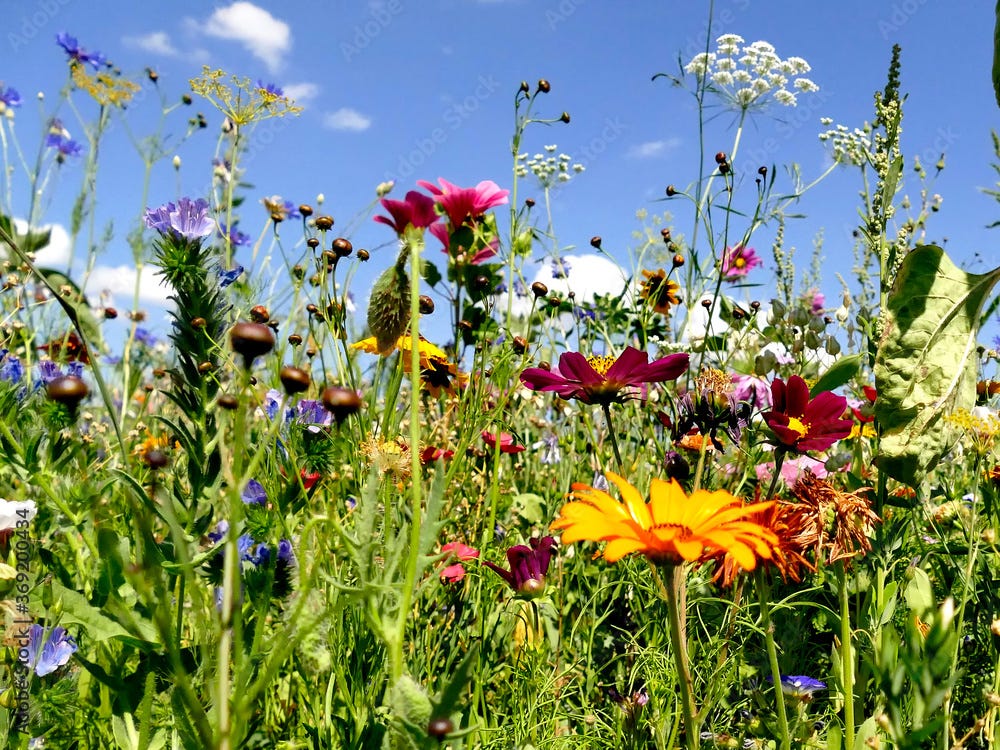
Let us cultivate our garden.
— Voltaire
I ended last week’s post with the Yiddish proverb, “Man plans, God laughs.” Let’s start there.
So much of our conversation around education has become transactional. It’s always been a little transactional—do work; get grades. But now it seems to be the entire thing. What are you getting for your tax dollars in your local schools? What are you getting for the outrageously exorbitant tuition fees you’re paying for your children? What’s the Return on Investment? And don’t give it to me in platitudes; give it to me in dollars.
Those of us in the Ed Biz have tried to engage in these conversations in good faith. We’ve tried to give people what they want, whether those people are parents, school boards, or state agencies. K-12 schools have cut out of their curriculum anything that doesn’t directly connect to what’s tested by the state. Communities have put money and time into STEM programs, because that’s where the jobs are. Colleges have eviscerated Humanities programs, because that’s not where the jobs are. Parents have encouraged their children to major only in disciplines that will be a conveyer belt into a career. We’ve all played our part.
And has it paid off? Have we all gotten what we wanted? Better test scores? Better job security? Happier and more satisfied adults? Days without rainfall or pain?
Not so much.
One of the problems underlying this whole situation is that education isn’t actually a transaction. We think we can pay X to get Y and then sue somebody if we don’t receive what we asked for. But it doesn’t work that way. There’s no money-back guarantee.
It’s not even an investment, really, where we can read a prospectus that lays out all of the necessary information, place what we think is a reasonable bet, and then sit back to watch the interest accrue. It may feel like that’s what we’re doing, but the prospectus, if there is one, is a fantasy.
Education isn’t any kind of linear path, even if it progresses from grade to grade in the systems we’ve built. Schooling may be linear, but education is not. It’s certainly not a cause-and-effect relationship. You might get out of it exactly what you put into it, or what you think you deserve, but…you might not. You might get less. Or more. Or different. And you probably won’t know what you’ve gotten until much, much later.
You simply can’t know enough as a young person—about yourself or about the world—to be certain what you’re going to do with, or get out of, the knowledge and skills you gain in your education. That’s why, when kids in Algebra class whine and say, “when am I ever going to use this?” the teacher has to scramble for an answer.
She shouldn’t have to scramble. She shouldn’t have to answer, at all. It’s not her responsibility to guarantee a meaningful use-case that will occur on such-and-such a date. Algebra is a tool. Tools are good to have, whether you know exactly when you’ll need them or not. You don’t withhold tools from people if you have tools to give. Give them what you’ve got. You don’t know.
The things we teach in our schools, from kindergarten right through college, are the tools of knowledge that we have accumulated over centuries. They are our civilizational birthright, and they contain more than any one person could recreate in a lifetime. Would you really pull a hammer from such a toolbox and then walk away, certain you’d never need a screwdriver?
The world is vast and strange and changeable—now more than ever—and even if you’re wise enough at 15 to know who you are and what you want to accomplish in life, there’s no guarantee that the adult world will be what you thought it would be or offer the opportunities you hoped it would. It’s a wild party, and you’d better bring everything to it that you can.
So, education is not a shopping mall with a variety of goods for sale, all terms clearly understood by all parties, and a limited budget and shopping cart. We structure it like it is, so on the surface, that’s what we think it is. But it’s not.
Let me propose a different metaphor. Education is a garden that we plant today, hoping for flowers and food in the future. But we plant it with an unlabeled packet of seeds. Or, no: Each packet does have a name on it—English, or history, or biology, or math. There’s just no guarantee that the plants will grow to resemble the pictures on the packet. The seeds matter, of course, but so do the soil and the weather.
The soil is you—your weird and authentic self, and the ways in which you are uniquely constructed. The weather is life and what it does to you and to the seeds that have been planted in you.
You are a strange and singular soil; what grows in you will be unique to you and will become part of you. That’s what you deserve, and it’s what the world deserves. If the things that grow within you end up looking and feeling exactly like what grows within everyone else—if the garden of the One is identical to the garden of the Million—then what’s the point of you being singular and irreplaceable?
I knew a student playwright once, years ago, who refused to read or see the work of any other writers, because she was terrified of being influenced. She wanted to be pure and original. But that’s not how things work. Your uniqueness doesn’t come from being a blank slate, untouched by the world. It comes from being touched constantly by the world. It comes from having a filter unlike anyone else’s, which sifts things in its own way, blocking out some things and letting others through. It comes from being a uniquely constructed prism, which reflects and refracts light in a way that only it can. The light is the light. Everyone sees it. The prism is you. The rainbow that emerges is what you turn the world into because of who you are.
The weather, of course, is the world and its history, politics, technology—all the things that affect what can and can’t grow, or how vibrant or shriveled it might become. Good rain nourishes a garden; acid rain kills it. You are who you are because of who your parents were, certainly, but also because of the thousand things that happen to you along the way. The world carves and shapes the prism that is you and affects how light comes into you moves out of you.
Getting back to my first metaphor, though…when we plant particular seeds in the gardens of our classrooms, we do what we do in orderly ways, in orderly rows, to produce an orderly output demanded by the state or by our communities. We think we’re going to get a row of daisies, and maybe we will. Maybe they’ll all be the same shape and size by the end of term, because that’s what we’ve expected and demanded of them. They are obedient and compliant little flowers, for the most part. But each seed has been planted in slightly different soil, and we don’t know—we can’t know—what those flowers are going to become in the long years ahead, after we’ve walked away from this particular patch of ground.
When I taught a novel to my students, I could control what I wanted them to do with it in terms of assignments and tests and so on. But could I control how they felt about it? No. Did I know for sure what it would mean to them—that day or ten years later? No. Was it any of that my business? No.
If I used garbage texts to teach them about things like main idea and supporting details, or inference clues, or complex sentences—if it was all merely raw material for developing decontextualized skills for a test—then sure, there was nothing else to get out of those texts. They were single-use tools and they did their job. There were no secrets buried in that soil.
But if there was a real story in there, with real meaning—something created not to support skill development in a classroom, but to support the exploration of what it means to be human—then what might grow from that seed was beyond my control and my authority. There was magic in those seeds.
What grows in a child from reading “To Kill a Mockingbird” or “The Outsiders?” What shoots come out of the ground and flower as part of their human development? That’s what you rarely know as a teacher and may not even learn as a parent. What thoughts and values and questions and dreams will develop? In what ways will those things inform and affect the kinds of human beings they become? What uses will young adults leaving school make of those thoughts and values and questions and dreams? What will Atticus or Ponyboy mean to them as reference points as they navigate their way through the world?
Is it possible that “To Kill a Mockingbird” could become part—albeit a small part—of what enables a person to stand up to a bully, protect the vulnerable, or raise a child well? Do the great stories and the great characters and the great questions in literature and history give us signposts that can help us know where we should stand when life tries to push us around? If so, isn’t that important? Doesn’t that contribute to making someone a good employee or a good boss, or a good spouse, or a good friend, or a good citizen? And isn’t that of more civic—and even economic—importance than answering a multiple-choice question?
I say YES (of course). But it’s a qualified Yes—a “yes, but.” Yes, it’s important. It matters. We want it. But. Reading a book isn’t a guarantee. Discussing moral and civic and philosophical ideas isn’t a guarantee. Pondering a question doesn’t guarantee a particular answer. You plant good seeds, you feed the ground well, and you hope. You hope. But you don’t know.
If you try to know—if you try to force the outcome that you want, you’ll kill that special flower. Tell a child what to think and perhaps they’ll agree to think it…for a time. But if they think something because a charismatic teacher told them to, they can just as easily think the opposite when another charismatic teacher comes along with a different point of view. Values and character are things that grow slowly and need time to shift and change and percolate. Our job is to give them their birthright, not to tell them how to spend it.
Our politics is increasingly drifting in the direction of more centralized control, more prescriptive commands and prohibitions, and more groupthink. Even outside of politics, our various cultural groups act as though there are right ways to be and wrong ways to be, and anything falling outside the norm requires an act of corrective shaming—or perhaps a medication.
Our education systems have been doing those same things for at least the past 25 years—and in some ways have led the charge. Standardization. Accountability. A mania for quantifiable results. But in the long history of adults teaching children how to grow up, these approaches are fairly new and strange.
Maybe it’s time to step back, take a breath, and think of our children as flowers again, instead of cogs in a machine.
All it takes is a rake, and a hoe, and a piece of fertile ground.


Scenes from a Broken Hand

- Andrew Ordover's profile
- 44 followers
