laab ลาบ
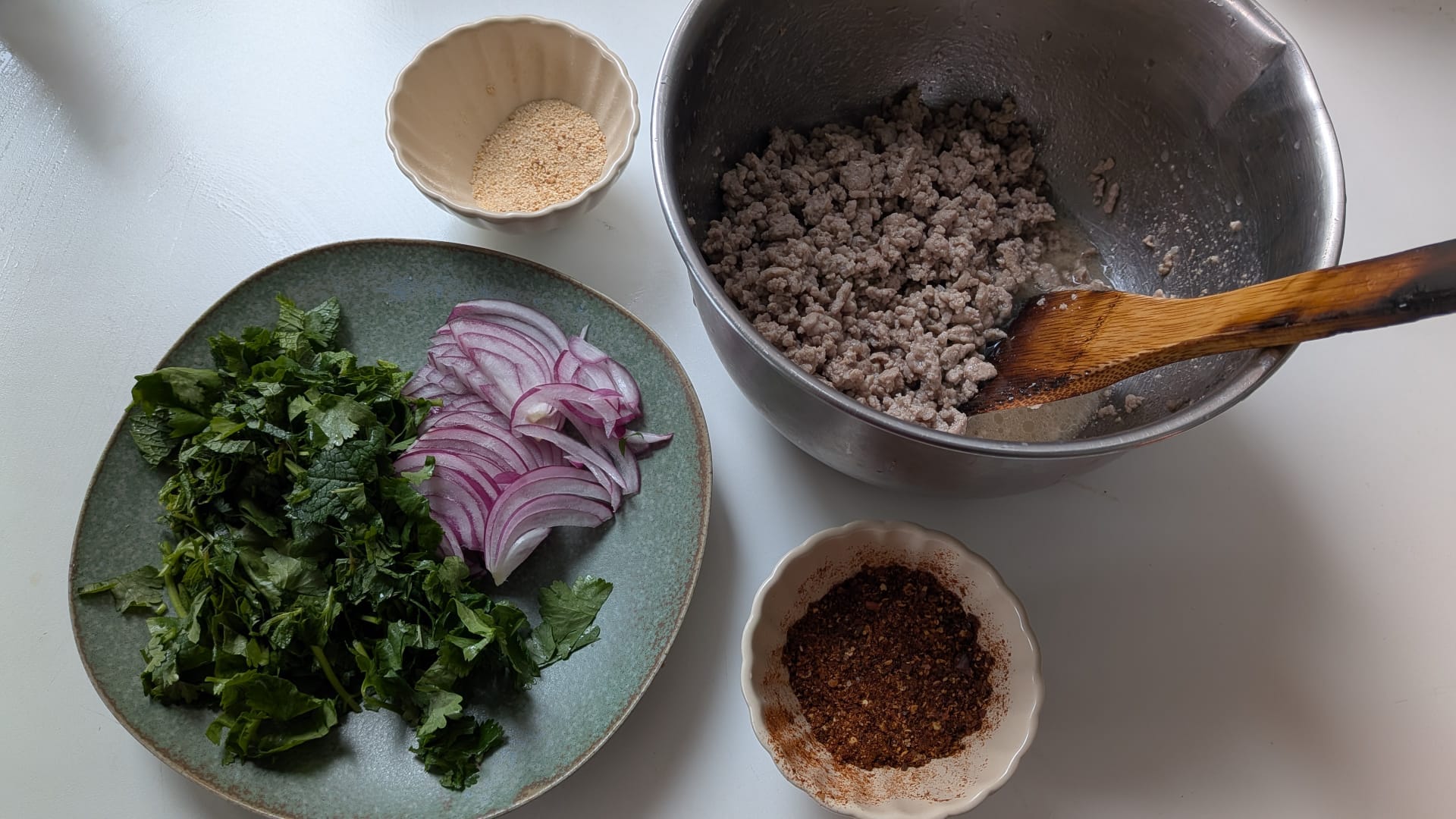
Laab is hands down one of my favourite dishes. There are two distinct styles — the Northeastern (or Isaan) version, which is fresh and herbaceous, and the Northern version, which is made with dried spices such as cumin, coriander, and prickly ash seeds. The former is more commonly found in Thai restaurants outside of the country, and is the version I’m more familiar with.
I first encountered Isaan laab in my early twenties, when the very first head chef I worked with — a devout Buddhist who occasionally went on spiritual retreats in Thailand — cooked it for staff meal. He brought a little sachet of rice powder to work and used it to season a mélange of herbs and minced meat. Simultaneously robust, rustic, and appetising, it was a revelation and expanded my ideas on what Thai food was — beyond the usual menu stalwarts of Thai restaurants in Singapore, such as tom yum, pineapple fried rice, and pandan chicken. I began seeking it out in the now-demolished Golden Mile Complex, also known as Little Thailand in Singapore, when my chef friends and I went there for supper. Years later, when my husband and I moved in Melbourne, we frequently visited Soi 38, a little Thai restaurant located in a carpark. Their laab, studded with slivers of liver and boiled pork skin, remains the gold standard to which I compare all other laab.
Even though laab generally refers to a ground meat salad, its popularity has inspired cooks to get creative; it’s now more a genre than a written-in-stone dish. Soi 38 serves a raw tuna laab, a midpoint between ceviche and laab that makes terrific sense. Vegan versions made with mushrooms or deep-fried and chopped tofu are also common. The common denominator of laab dishes, according to Pailin Chongchitnant in her book Sabai, is the inclusion of toasted rice powder, mint, fish sauce, lime juice, and roasted chilli flakes.
I’ve made laab countless times in my kitchen (there’s also a recipe for cauliflower laab in PlantAsia), and along the way, I’ve picked up a few finer points on making the dish.
1. Make your own toasted rice powder (khao khua ข้าวคั่ว) and chilli flakes (prik pohn พริกป่น).
It might seem unnecessary, especially since every supermarket stocks some version of chilli flakes. However, trust me: the difference between laab made with the fresh homemade stuff versus store-bought versions is night and day.
Khao khua refers to rice that is toasted slowly in a wok until it takes on a rich, nutty quality and a subtle crunch when ground. As for what type of rice to use, I’ve seen recipes that call for jasmine rice and others that call for glutinous rice. On her website, Chongchitnant writes that traditionally, glutinous rice is used since it is the most commonly eaten rice in the Northeast, though she uses jasmine rice. Kris Yenbamroong, author of Night + Market, exhorts readers to use whatever is on hand — both glutinous rice and jasmine rice are suitable.
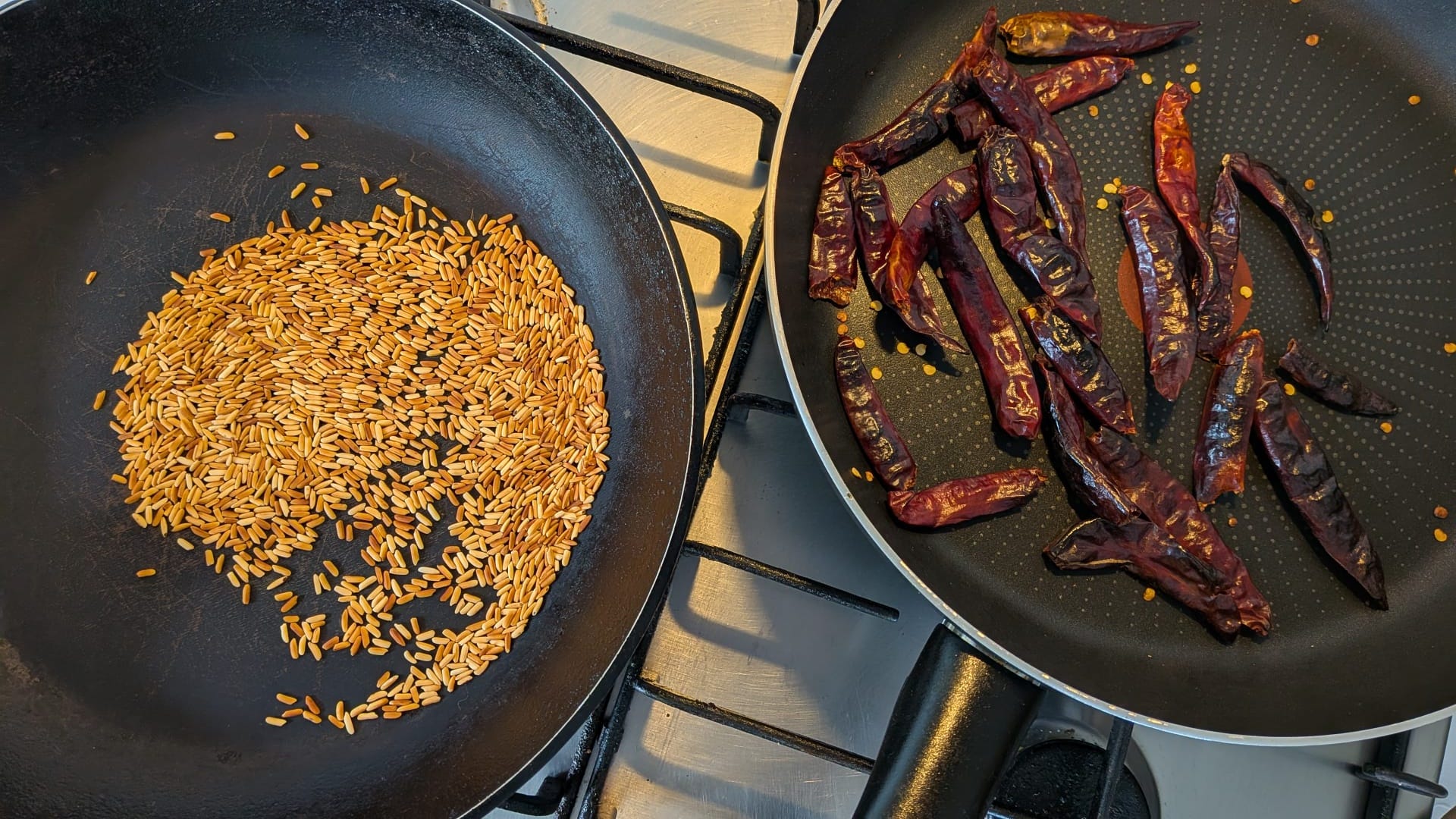
To make khao khua from scratch, place about 3 tablespoons of raw, dry rice (or more) into a frying pan and toast over low heat for 10-15 minutes, or until the grains turn a rich golden brown. Allow to cool completely, then grind to the gritty texture of fine sand (not a flour) using a spice grinder or pestle and mortar.
As for prik pohn, if you have eaten at a Thai restaurant — especially one that serves noodle dishes — chances are you would have come across these chilli flakes in a small condiment tray, alongside fish sauce, and sugar for seasoning your meal. They provide not just heat but also a deep, earthy fragrance. While you can use dried Thai bird’s eye chillies, I prefer using the larger dried red chillies from the Asian supermarket which are milder. Place them in the pan and toast over low heat for 5-10 minutes, shaking the pan frequently. Colour is not a good indication of doneness, especially if the chillies are darkly coloured. You’ll know they’re done when you can smell their fragrance even without putting your nose to the pan. They should feel dry, almost crisp to the touch once cooled. Allow to cool then grind until you get fine flakes (but not powder).
I typically toast both the dried chillies and rice at the same time, in separate pans. While it seems like a long time to be watching them, I frankly find this the best time to do some errands around the house, circling back to the pans every now and then to give them a good shake.
2. Allow the mince to cool completely before adding herbs and aromatics.
Laab recipes vary in terms of the range and type of herbs and aromatics employed — I’ve seen recipes featuring mint, coriander, spring onion, lemongrass, lime leaves, and culantro. For me, mint and coriander are enough to make an incredible laab. But if you have them, a few julienned lime leaves kick things up a notch. Thinly sliced red onions or shallots are also key, adding a bit of crunch and sweetness.
Because Isaan laab is all about freshness, it is imperative that you let the mince cool completely before adding the herbs. If you add them while the mince is still hot, the herbs will wilt and lose their potency. The red onion will also soften and lose its crispness.
3. Assemble the salad right before serving.
In Night + Market, Kris Yenbamroong writes that, when making laab, the essential thing is to dress it in the moment and serve it immediately. If added too early, lime juice can lose its sharp freshness, and the toasted rice powder can absorb too much moisture and lose its characteristically crunchy texture. Also key is not to follow a recipe slavishly, but to taste and adjust the seasonings according to your personal preference. I always like my laab slightly stronger, so that it goes nicely with the rice (sticky or jasmine) that I’m eating it with.
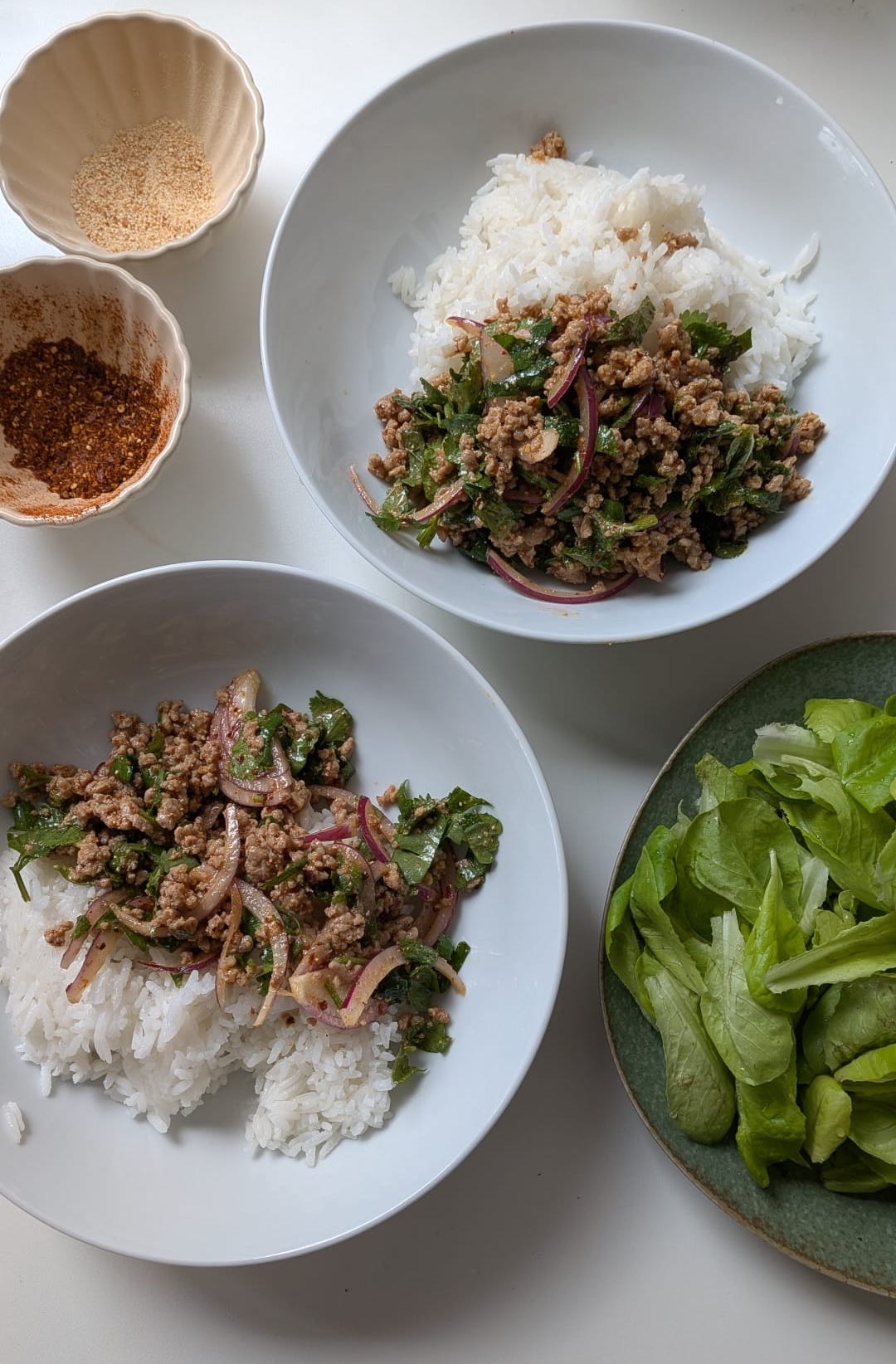
Laab
Serves 2 as a main or 4 as part of a larger meal