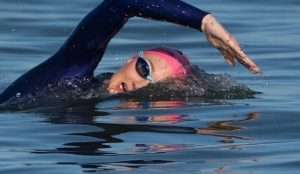
One Stroke At A Time
At only ten miles away, the mighty Pacific Ocean is ever-present here in my neck of the woods. It affects the weather, shapes the landscape, drains the river I live alongside, powers the local economy, and offers boundless recreational opportunities. For one remarkable woman, it also serves as both a personal challenge and an opportunity to call attention to fragile coastal ecosystems bearing heavy strain.
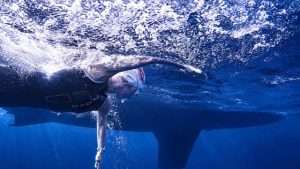
Her name is Catherine Breed, and she is the driving force behind Swim California—an unprecedented expedition to swim the entire length of the Golden State. Spanning roughly 900 miles from the Oregon border down to Mexico, her journey is one of the most daring endurance feats ever attempted in open water.
Breed began her swim on July 1, and as of this writing, is poised to complete the final leg within days. A few weeks ago, while swimming past Monterey, she stopped at Hopkins Marine Station to share her story with the public, ocean scientists, and members of the California Coastal Commission, which includes my wife.
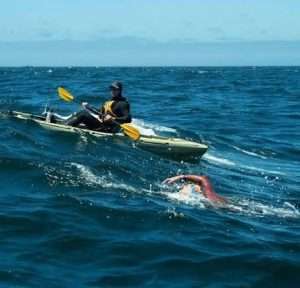
At 33, Breed is a two-time Pan American Games gold medalist and a former competitive standout at UC Berkeley. After college, she turned to the unpredictable churn of open water, discovering that the ocean demanded an entirely different relationship with the sport. She went on to shatter records across Lake Tahoe and became the fastest woman to complete the grueling 25-mile crossing of Monterey Bay. Yet those milestone swims only clarified a broader vision: a continuous voyage along the waters she calls home.
Swim California isn’t simply an athletic test—it’s a quest for marine advocacy. Through her nonprofit organization, Sea Dreamers, Breed designed the route to shine a spotlight on coastal environments facing acute ecological pressure.
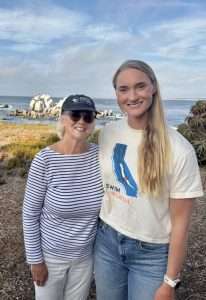
“This isn’t just about swimming,” Breed says (pictured above with California Coastal Commissioner Annie Notthoff). “It’s about listening, learning, and sharing the stories of the people and places that depend on a healthy ocean.”
As her support boat navigates offshore swells, the project documents local conservation efforts along the route:
Kelp Canopy Collapse: Spotlighting community-driven restoration projects along the rugged North Coast, where invasive purple urchins have decimated bull kelp.Marine Protected Areas: Showcasing the delicate balance within state sanctuaries where biodiversity rebounds when given breathing room.Ocean Literacy: Engaging coastal communities, youth groups, and citizen scientists at harbor stops along the journey.Breed covers about ten miles a day through open ocean—a grueling test of physical and mental endurance. She faces persistent headwinds, numbing upwelling, shifting tides, and rolling swells. During her journey, ocean currents have been impacted by an unusual surge of late-season storms roiling the Eastern Pacific. Then there is the psychological toll of swimming miles offshore while sharing territory with great white sharks, jellyfish, and sea lions. Yet there are also moments of sheer joy, like swimming alongside pods of whales and dolphins.
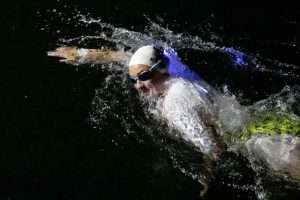
When asked how she confronts fear during long, exposed stretches, Breed’s answer is simple: “I do it scared.” Motivation is fickle, she adds; what carries her through is dedication, a disciplined crew that accompanies her on a support boat, and surrendering her ego to the rhythm of the tides. “Grit is my superpower, but you cannot do hard things alone,” she says. “I am surrounded by some of the best humans in the world to help me make this swim a reality.”
As Breed nears the finish line, each stroke celebrates the wild, untamable beauty of the California coast—and offers a forceful reminder that the places we love are worth fighting to protect.