
September/October
I was only back in Britain for four days before Marsha and I flew to France; partly to work on her book – her days at Australian Oz, at UK Oz, the Oz trial, the founding of Spare Rib and her years as editor there – and partly just to hang out together. We had only been there a few days when Ken and Maxine Weaver arrived to stay. I see then each year as they live a few hours north of me, I stayed at their place when the film about The Fugs was being shot and they came to stay last year. Ken looked in better shape than before, which was great, but he takes a terrifying number of pills – 15 at a time, in a drinking glass, just swallowing them down in one great gulp. His book A Dipper Full of Fire, will be published, by Sagging Meniscus Pres. I wrote a cover blurb for it a few months back:
Ken Weaver is an alchemist. He successfully turns base metal into gold. He has taken a traumatic childhood and forged from it a wonderful sense of humour and humility. He survives and shows us all how to be a human being.
Talk about ‘misery memoir’! But Ken came through it and his wonderful humour shows how strong the human spirt can be. I’ve known him since 1967, when he was in the Fugs, and he remains a hero of mine.
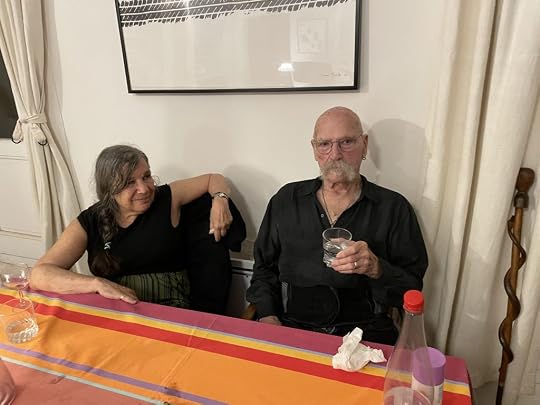
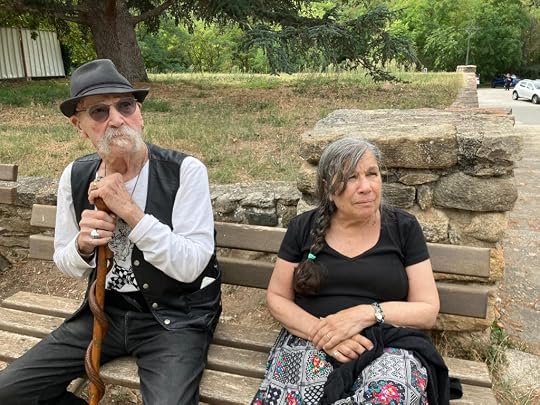
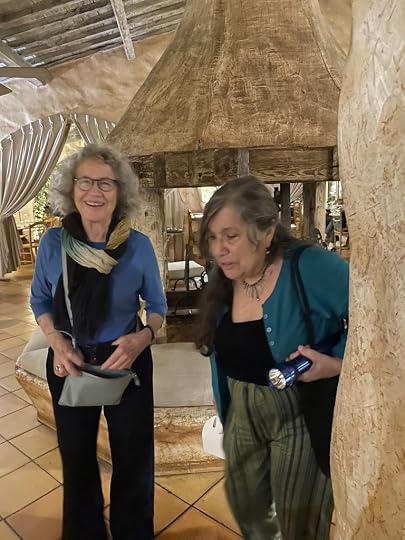
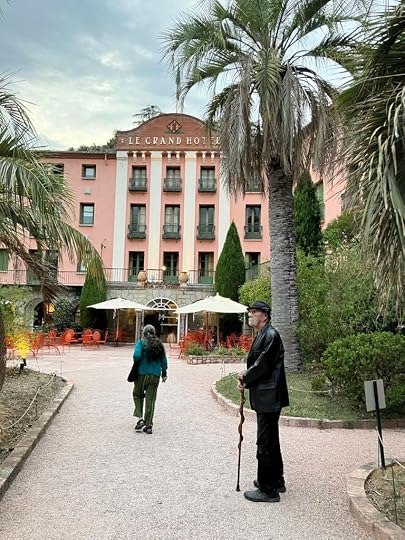
Ken and Maxine took Marsha and I to the Chateau de Riell, a remarkably pretentious but fascinating hotel restaurant in Molitg les Bains. (This is where Jeff Bezos stayed when he did a walking tour of the area some years back). It is so over the top that it’s great. The route back took some finding as the hotel has a series of winding lanes around the mountaintop, but Maxine thoughtfully brought a large, very heavy torch with her.
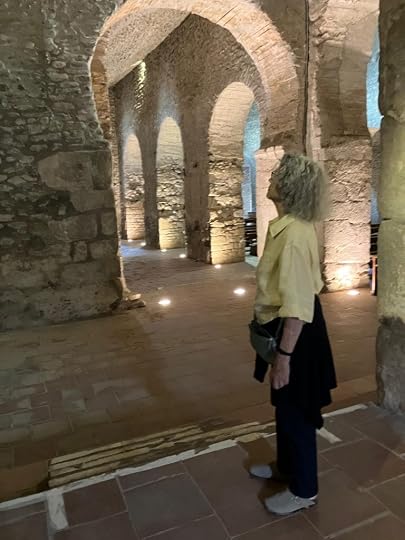
Marsha had not seen any of the local sights on her previous trips so Ken drove us around. The main one being Saint Michel de Cuxa (Coosha), built in 950. Though the Moors departed 150 years earlier, the local builders only knew Islamic building styles and so the giant monastery was built using horseshoe arches (they later chopped the sides off of some of them, crudely, to make it look less Islamic). It is where most of the concerts for the Pablo Casals Festival are held each year as the acoustics are superb.
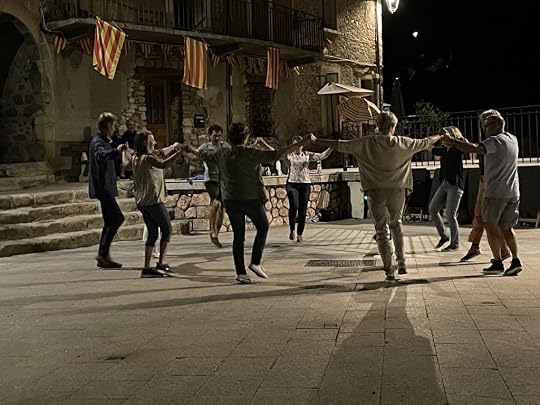
We stayed about three weeks. One evening we walked out of the local café to the empty square to find the villagers dancing the sardana, the local Catalan dance. Catllar has a reputation for being ‘the dancing village’ but this was a remarkable site. They were practicing, with no onlookers at ten at night.
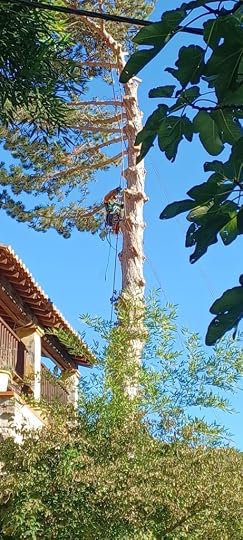
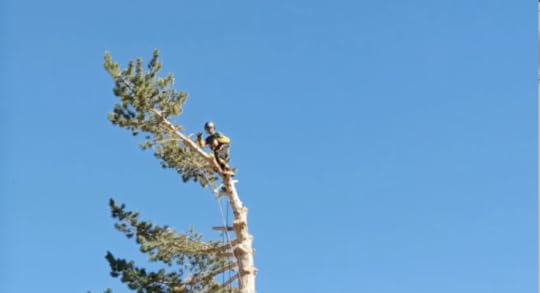
It was very hot and there had been some terrible fires nearby. Entire mountainsides were black and charred, ugly charcoal stubs where trees once stood. A new regulation was passed stating that the ends of the branches of all trees had to be more than 3 metres from a building, and that people were responsible for clearing undergrowth and scrub for 600 metres from their houses, whether they owned the land or not. Knowing the locals, they will not comply with the latter, but it made sense about the trees. Next to the house we had a large pine, whose branches stretched out over our roof and that of our neighbours. Every few years I had the branches thinned, but now it had to come down. I’ve used Jean-Baptiste for a decade or so and he was able to come at short notice, despite being inundated with calls because of the new laws. It took two days to cut it down, chop up the limbs and mulch the twigs and leaves, as well as clear the garden, but it was worth it. Theo and I have neglected the garden for years and now it is done.
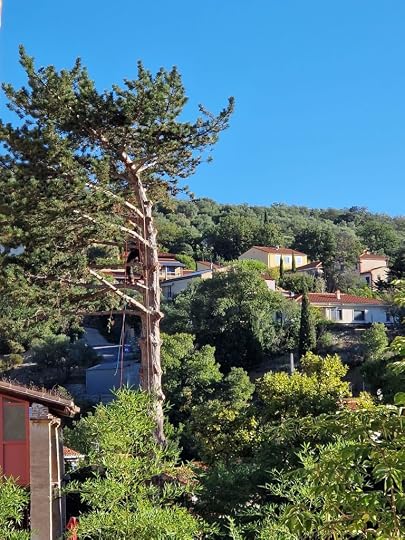
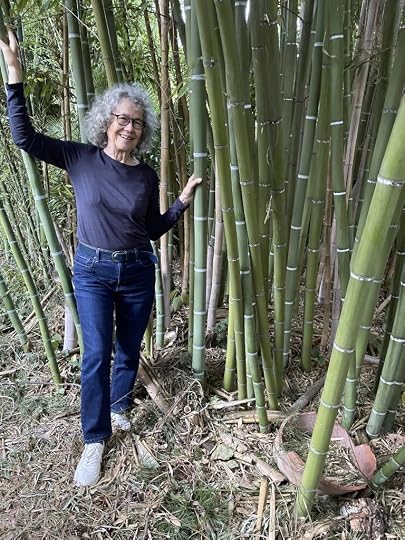
Next year I will have him clear some of the bamboo that that encroached ever closer to the house. I still love bamboo though.
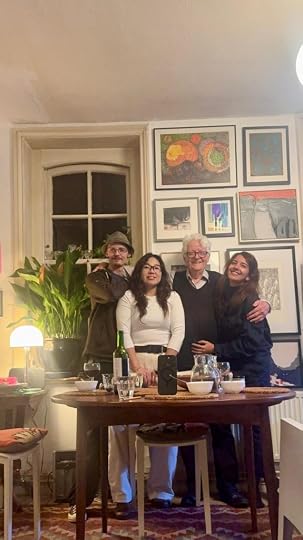
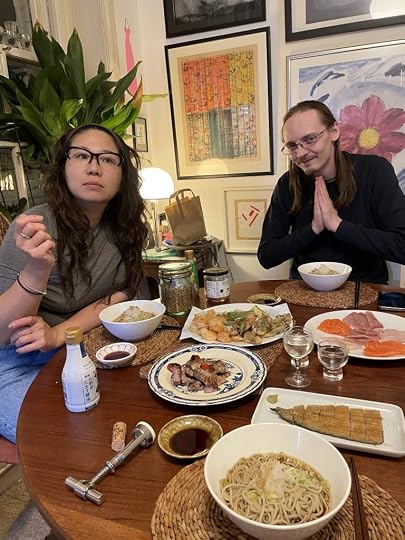
Back in London, autumn has arrived. Camila and I had a pleasant meeting with Iain Sinclair and Steve McNeilly at Swedenborg House where Steve has an exhibition, ‘Visionary Landscapes’. Mina cooked us a wonderful Japanese meal. Marsha’s friend the novelist Drucilla Modjeska, visiting from Australia, came for lunch. Her books include The Mountain; Timepieces; Second Half First; The Orchard; Exiles at Home; Sisters; Inner Cities and Stravinsky’s Lunch. It was great to meet her.
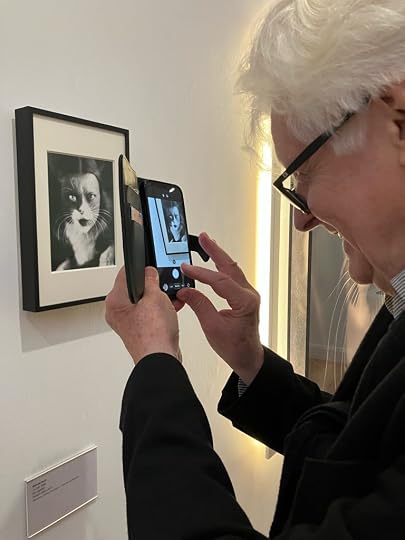
Marsha and I saw the Wanda and Marion Wulz show at the Estorick Collection, which for some stupid reason I’d never before visited (probably because it involves a tube ride, and I normally like to walk everywhere). It’s a superb show of early twentieth century Italian photography. The two sisters were taught by their photographer father, but their use of carefully positioned light sources is absolutely superb. Wanda is most famous for her superimpositions, in particular her ‘I + Cat’. She took two glass plates and superimposed them to create her iconic self-portrait. I’d never seen a proper print of it before. The exhibition demonstrates how it was done, and also shows the original cat, the original self-portrait, and the wonderful superimposition of the two, a quarter century before François Lagarde or Ian Sommerville began to merge their friends. Here’s the sequence:
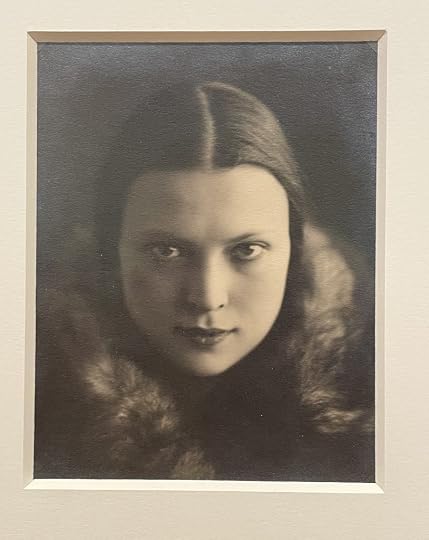
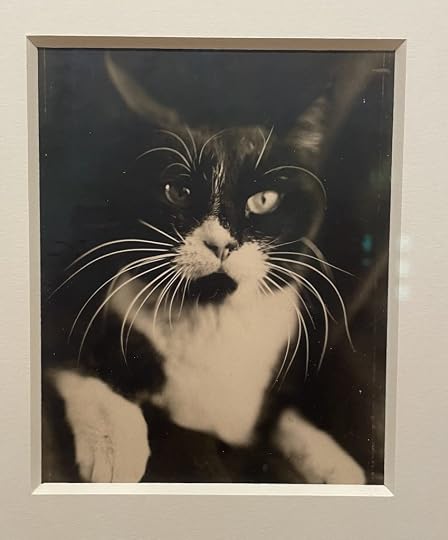
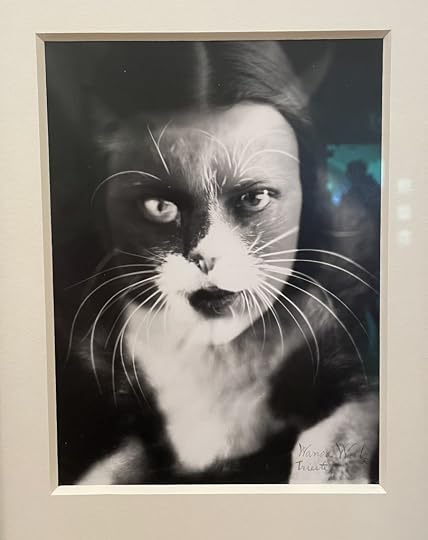
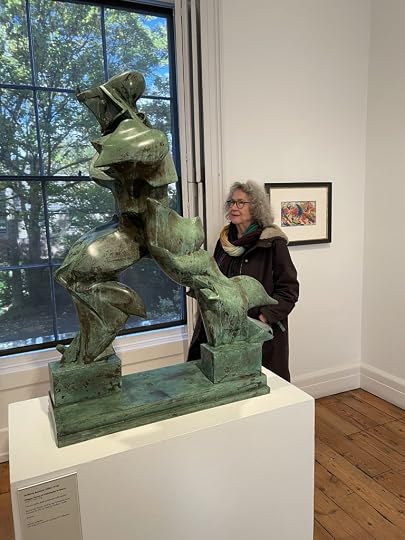
The museum, which is like a small Paris house museum set in a private garden, also has a permanent collection of remarkable Italian Futurist work including a copy of Umberto Boccioni’s ‘Unique Forms of Continuity in Space’ from 1913. I had no idea it was there. They also have a small café, though it was a bit too cold to sit outside.
James Riley came to visit and we spent a wonderful nerdy – I mean scholarly – afternoon looking at photographs by William Burroughs. There is an argument that just as Ginsberg and Kerouac had a New York and San Francisco based Beat Generation, there was an equally important one in Europe, centred initially at the Beat Hotel in Paris and involving Burroughs, Brion Gysin, Ian Sommerville, Antony Balch, Udo Breger, Carl Weissner, Jurgen Ploog, Jean-Jaques Lebel, Claude Pelieu, Sinclair Beiles and others. From it came the ‘Cut-Up Conspiracy’, and a range of experiments using tape, film, projections and performance quite separate from anything happening in the States, and in many cases much more radical.

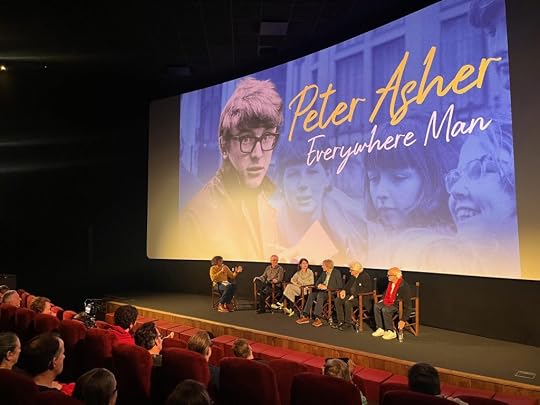
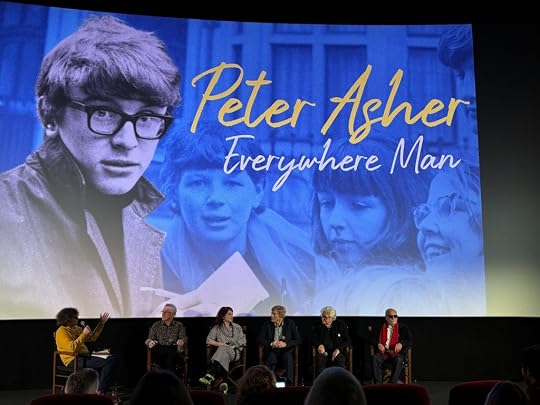
The next big event was the premiere of Peter Asher, Everywhere Man at Picturehouse Central in Soho. Directors Dayna Goldfine and Dan Geller had a full house for the screening, and John Dunbar and I were onstage afterwards for a panel discussion with them alongside Paul Jones, ex-vocalist with Manfred Mann, whom I first knew when he was studying at Oxford and was a called Paul Pond. I envied his Beat Generation collection which included some rare Dead Language Press publications. That was in 1961, so it was great to see we’re all still alive – at least. Will Hodgkinson from The Times moderated. There were drinks afterwards before we lurched out into the Soho night. I enjoyed the film; I had no idea Peter and Gordon had been so famous back in 1964 and it was great to see early footage of Carole King, James Taylor – who my sister Jen once mistook for Peter’s butler – Linda Ronstandt and all the rest of the Troubadour LA scene that I only dipped my toe into back in 1970.
Let’s not forget the 14.3 million Palestinians who all want their country back. From the river to the sea…



Barry Miles's Blog
- Barry Miles's profile
- 154 followers
