Dying to Live - Steve Emmett Guest Post
 When Julia asked me to write about zombies I had to stop and think. I rather enjoy the limelight and rarely turn down the opportunity of a guest appearance, but zombies? Those of you who are fans of the living dead may be surprised, may be horrified, to learn that zombies are my least favourite ghoul. But…
I recently watched the old film Zombie Flesh Eaters by Lucio Fulci and enjoyed it enormously. I blogged about it (sort of) and here’s the link in case you’re interested http://wp.me/p1VXgP-hM So, if I enjoyed that, I figured I could assemble a few words about the walking corpses. Anyway, I like to think that no subject can silence me.
There have been so many zombie films and books that I wonder if everyone who sees and reads them knows of the origins of the creatures. We become so familiar with certain ideas and characters that they can change imperceptibly over time to become something quite different from their original form. Like the vacuum cleaner became a hoover, and the ball point pen a biro (yes, I know it’s as feeble as a resurrected double amputee corpse in a flooded graveyard but you see what I mean). The Oxford English Dictionary defines a zombie thus:
“a corpse said to be revived by witchcraft, especially in certain African and Caribbean religions.”
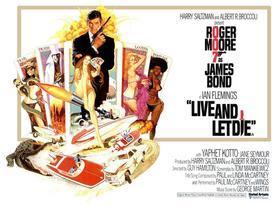
The term, and I therefore assume the zombies too, originated in 19th century Africa. From there zombification spread to the Caribbean – notably Haiti – and the southern states of North America. Fans of James Bond will remember the captivating Voodoo man in the 1973 film Live and Let Die.

What’s interesting about zombification as part of a religion is the way it exists quite happily in two forms – the rational and the magical. Some believe that the bokor (the voodoo magician/witch/sorcerer) subdues a living being with poison extracted from puffer fish. The poison causes the drinker to appear dead, at which point he (or she) is buried.
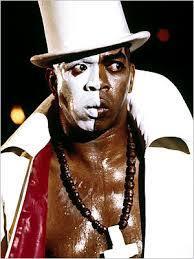
Later, presumably at dead of night, the bokor returns and exhumes the ‘corpse’. With the administration of various drugs that keep the ‘corpse’ in a detached state of mind, the bokor forces his victim to do his bidding. It is a scenario that I reckon could be applied to any tale of resurrection but I’m not expecting an announcement from Pope Francis any time soon! The magical version is preferred by some followers of voodoo, setting them clearly alongside the more mainstream Christian believers: in this case, the bokor raises the corpse from the dead when the soul has departed. Thus we have the scary zombie, the empty, animated corpse which is no more the person it resembles. But when did zombies enter the public arena?
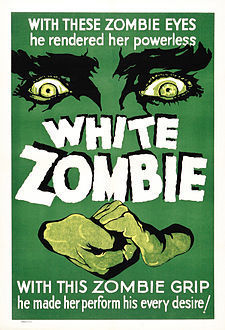
The 1932 film, White Zombie, directed by Victor Halperin and starring Bela Lugosi, is credited with making zombie a household word. White Zombie is the story of a young woman turned into a zombie by an evil voodoo master (no prizes for guessing what part Lugosi played).
Since then, despite the film being a bit of a flop at the time, we have had zombies galore. Undoubtedly, the film maker most known for the genre is George A Romero whose 1968 Night Of The Living Dead is a cult classic, but I for one prefer the Italian films. Zombie Flesh Eaters, mentioned earlier, is a gore-soaked, badly acted work of genius from Fulci, but he is just one of many masters of the art to come out of Italy. Look up Mario Bava, Umberto Lenzi, Joe d’Amato, Michele Soavi and Andrea Bianchi.
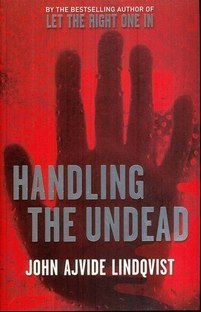
Enough of films, I hear you say, this man is a writer. What about books? Well, I hang my head in shame. I can remember reading only one zombie novel, and that was recently, the excellent Handling the Undead by one of my favourite contemporary horrorists, John Ajvide Lindqvist. The book has had some very mixed reviews, but I loved it. I liked the fact that Lindqvist’s zombies are not your typical crazed flesh eaters. I see a film is due out soon and I’ll be eager to find out if it’s as good as the book.
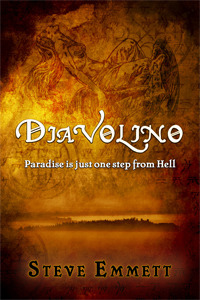
There are, of course, other types of zombies – philosophical zombies for example. That would make an interesting discussion, but not here I think. Right now we need to get to the nitty gritty. Why did Julia ask me to write about zombies? If you follow my blog and my guest appearances, you might have worked out that I like to wheedle my way round to mentioning my own work. And this is no exception. In my recently released booklet, The A-Z of Understanding Italians, I close with:
“Z is for Zombie. Not that I’m suggesting you’ll actually meet any on your travels around Italy. It’s just another sneaky way of mentioning the Italian masters of horror – so ending this little book with two cheeky segues into my real writing world (plug for Diavolino and my upcoming releases).”
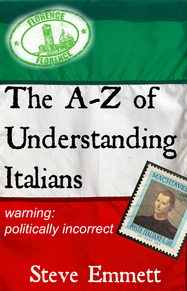
I left Italy in 2009. This means I’ve been in the middle of the Yorkshire countryside for over three years. At times it feels as if I am living with the undead, or maybe dying with the living dead. The place is so quiet we could die in the night and not be found for months – maybe three years (wink, wink). The weather is depressing. No wonder I put my fingers to the keyboard and wrote that humorous little celebration of my former neighbours. You can buy it from Amazon.
Now, if you’ll excuse me, it’s getting dark and I need to nail the floorboards back over the windows.
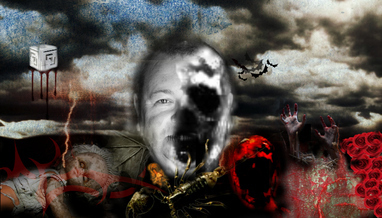
My thanks to Steve for today's post.
You can find out more about him here:
Website: http://steve-emmett.com/
Twitter: https://twitter.com/chukkie58
Facebook: https://www.facebook.com/SteveEmmettAuthor


No comments have been added yet.