
inbreathing
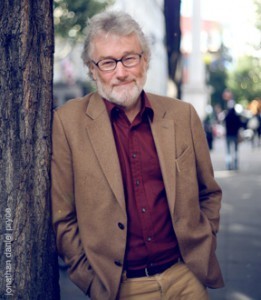 Two months after revealing, with typical candour and a little wicked wit, that he was officially ‘Very Poorly’ with inoperable cancer, Iain Banks died on June 9th 2013. He’d warned us that it was unlikely he’d live beyond a year, so of course all of his fans were hoping for the best, wishing for a faulty diagnosis, years of remission or, ironically, a ‘miracle’ cure. On a website that had been set up for family and fans to leave messages and check on his progress he wrote that that his latest novel, The Quarry, was going to be his last. It was characteristic of the man to be searingly honest with his readers and, as he said in a subsequent interview, to give people a chance to say what they felt while he was still alive rather than stand around at a funeral talking about him ‘awfully well’ when he was dead. The site received over ten thousand messages before he died. Messages of sadness, anger and shock but above all, gratitude and love - he couldn’t possibly have had time to read them all. The announcement on the 9th was brief, saying that his death was ‘calm and without pain’, which is about as much as anyone can ever hope for. It also said that he ‘absolutely loved’ the messages people had posted. At least a thousand more have felt the need to write to him and his new widow, Adele, since he died. He’ll never get to read them and he’ll never get to read this either.
So why write it?
Because, just as the funeral ritual is for those who are left to struggle on, I’m writing this for me. This is not written as an obituary, it’s a comment on how I feel about something that has touched me deeply. I have a need to say something and say it out-loud. That is the essence of publishing: it's the act of shoe-horning nebulous ideas into discrete packages and launching them out into the world. What happens after publication is very largely out of the writer’s hands. The act is complete upon publication.
It was best I didn’t write this before. If I had written sooner it would have been an emotional outpouring that was as likely to have embarrassed the reader as much as myself because I have been frequently moved to tears by Iain’s death, often when reading the shared feelings of loss and sadness from others. Why have I wept? I never met him, we never corresponded and I strongly doubt that he had ever heard of me. My emotional response to his death seems out of proportion. The answer, and fittingly, the justification for publication, lies in one word; inspiration.
That word keeps cropping up in the messages left for him and in the comments made on the obituary pages. His startling imagination and his mastery of the art form inspired thousands of his readers, maybe hundreds of thousands, and, because his work will continue to be read across many lifetimes, maybe millions more in the future. I believe that inspiration, the divine breath, is one of the most valuable gifts that can ever be given, or received.
Iain Banks inspired me.
Years ago, it was Clarke, Asimov, Heinlein and Niven who had sparked my love of science fiction, but life, the universe and everything diverted my attention for thirty-odd (and odder) years. It was Banks who reignited my passion for the genre and re-inspired my desire to write. It was his soaring imagination, his optimism, his evil nasties, his subtly embedded sense of humour and his consummate skill as a ‘proper’ writer that showed us all just how good science fiction can be. A lot of SF writers are not much more than idea wranglers, in love, or in thrall, with the possibilities that the future might allow, cobbling together plots for the sole purpose of exploring their personal visions (I include myself here). Banks was different. Banks could write anything and make it sing - a level of artistry I can only aspire to - a goal I will, almost definitely, never reach. That isn’t going to stop me from trying though because it’s the journey that matters, not the destination. He inspired me to to set foot on that journey and if I get frustrated or lost along the way I only have to pick up one of his books to be re-inspired. That's what great writers do; they don’t crush you with their talent, making you feel that you could never do what they do and that it’s pointless to even try, they move the horizon and expand the arena - then they fill it with new possibilities and invite you to join. Great writers are not competitors, they are heavyweight investors into the genres we love. They attract readers and stimulate debate. They create golden ages.
I imagined meeting him. I’d heard and seen him being interviewed and whenever he talked about his Culture novels or his ideas about a post-scarcity, non-dystopian future (albeit still a far cry from utopia though, he was no starry-eyed romantic) I used to say; ‘that’s exactly what I think!’. I was sure we’d have got on well. He was only a couple of years older than me - a sobering thought - and we’d grown up through the same times and in similar circumstances. Those who knew him talked about his generosity of spirit, his wit and his vitality. A great guy to share a few drinks with. I wanted to meet him if only to shake his hand and thank him for his work and tell him that he’d inspired me to do what I had dreamed of doing since I was a kid. The opportunity to meet your inspirer is a daunting one. I’m sure I’d have hopped from foot to foot, mumbling stupid words while the blood rushed to my cheeks and I’m sure he would have put me at my ease. I’m gutted that he’s gone.
And now I’m in a quandary. I have the hardback of The Hydrogen Sonata by my desk but it is, as yet, unread. I was using it as a combined spur and reward. I refused to allow myself the pleasure of a new Culture novel until I had put the finishing touches to my next book. It's a type of discipline and, as anyone who writes knows, writing is a world of discipline. So there it sits, goading me. I daren't even flick through the pages. But, now there is never going to be another Iain M Banks novel, my unread copy of The Hydrogen Sonata is the last chance I will ever have of immersing myself in his inspired future (for that golden first time). And that means that as long as it stays unread, there will always be another Culture novel for me to look forward to - and I don't want to give that up.
I know this is nuts (we are not always as rational as we would like to be), but I'm seriously considering not reading it. A few people have already told me I’m wrong and that he didn’t write it to have his fans not read it, but right now I don't think I could bear turning that final page.


No comments have been added yet.
Slabscape: Linktrigues

Click to start and hang on for the ride
- S. Spencer Baker's profile
- 58 followers

