Self-Editing for Everyone Part 11: Homophones
 Know more than your spellchecker. This 11th and penultimate chapter of Self-Editing for Everyone is inspired by and expands upon
The Little Book of Self-Editing for Writers
, available for the price of a 12-oz. latte from
Amazon.com
,
Amazon.co.uk
, and all Amazon stores worldwide as well as
Barnes & Noble
and
Kobo
.
Know more than your spellchecker. This 11th and penultimate chapter of Self-Editing for Everyone is inspired by and expands upon
The Little Book of Self-Editing for Writers
, available for the price of a 12-oz. latte from
Amazon.com
,
Amazon.co.uk
, and all Amazon stores worldwide as well as
Barnes & Noble
and
Kobo
.Homophones: Sounds Like…
Just three days ago, I was eagerly reading a new book—a winner of no fewer than three literary awards, originally published by one of the world’s largest publishing companies. The writing engaged me, and the author was doing a bang-up job with his story and characters. Before I got to the end of the first chapter, however, a band arrived on the scene. They unpacked and began playing their instruments, including a drum and a pair of clashing symbols. “How appropriate,” I thought as I bookmarked an error that had gotten past its author, an acquiring editor, a copyeditor, a proofreader, and the author again correcting page proofs, “that my next article will be about homophones.”
Homophones are words that sound alike but have different meanings. Unlike ordinary misspellings and mis-typings, homophones will walk right past the watchful eye of your spellchecker without even slowing down to show ID. They require careful reading and re-reading to pin down and destroy. The fact that some survive the editorial process to appear in published works means they have escaped the notice of any number of people, including but not limited to the author, a copyeditor, and—amazingly enough—a proofreader. Never assume someone else will find them for you.
 Peek, peak, pique Some homophones, like there, their, and they’re, or to, too, and two, pane and pain, sail and sale, ad and add, and even its and it’s are easy to mis-type and easy to miss on a casual editing pass, especially of your own work. Your mind can know the difference, but that won’t stop your fingers from tripping you up and your eyeballs from letting it happen. Be vigilant.
Homophone errors can also result from the writer’s or editor’s confusion over meaning. There are worlds of difference between affect and effect, peak, peek, and pique, born and borne, or discreet and discrete, but you’d be surprised how often they’re used incorrectly by authors and how often they remain uncorrected by any number of people who are being paid to correct them.
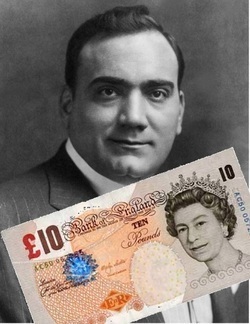 Sounds like... But of course YOU know the difference between a miner and a minor, naval and a navel. You know your sachet from a sashay, rain from reign, a taper from a tapir, and a tenner from a tenor. You know whether you’re wreaking or reeking. You do, don’t you? It’s important to know more about the nuances of the language you’re writing in than your spellchecker does, because if the word you need is altar and you use alter, advanced word-processing technology won’t save you. What might is putting extra eyeballs on the job in the form of an eagle-eyed beta reader, a pass by a copyeditor, and a final independent proofing before publication. If you’re hoping for the skills of a traditional publishing house to correct your homophone errors, you should know that the vast majority of the ones I and readers like me have encountered have been in the pages of books from traditional publishers—from professionals whose day job it was to produce clean copy for the finished product. Virtually no book is free of errors, but you can take responsibility for ensuring yours comes as near that elusive (not illusive) goal as your efforts will allow.
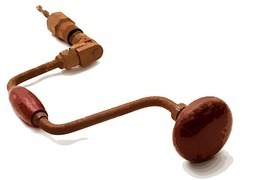 It foretold the coming of his enemies. If you’re at all fuzzy on the definition of any word you’re using, look it up and confirm you have the right one, lest your hero travel to Cypress, cash his extra passport under the mattress, pour over the secret documents, auger the coming of his foes, fight a dual with several combat-trained Unix, take to the heir dodging flack, land his plain on the wield, be bitten by tics, escape upriver in a skull rowed by experienced semen, and give in to the temptations of vise while awaiting his true love with baited breath.
Here’s a short list of the most common homophones not mentioned in the article above.
breach/breech
canvas/canvass
complement/compliment
dental/dentil
desert/dessert
elicit/illicit
fain/feign
faze/phase
fate/fête
filter/philter
gaff/gaffe
gamble/gambol
gibe/jibe
grill/grille
hangar/hanger
hoard/horde
immanent/imminent
lightening/lightning
loath/loathe
palate/pallet/palette
pistil/pistolpsalter/salter
rack/wrack
retch/wretch
rhyme/rime
sear/sere
sensor/censer
sight/site/cite
sink/sync
sight/site
stanch/staunch
straight/strait
trooper/trouper
vale/veil
valance/valence
venous/Venus
vial/vile
wrang/rang
There are hundreds of homophones in English. Take a few minutes to peruse the lists at www.homophone.com . Some are nearly as far-fetched as the adventure above, but many lay avoidable traps for the unwary writer.
TL;DR
Homophones plot your destruction. They won't stop until they've embarrassed you.
It's a good idea to know more about the nuances of the language you're writing in than your spellchecker does.
If you use the wrong word out of ignorance, advanced word-processing technology won't save you. COVER ART
All the fabulous pulp magazine covers on this article series were created using the amazing Pulp-O-Mizer from art by its creator, Bradley W. Schenck.
Be sure to read the earlier Self-Editing for Everyone articles.
Part 1: The Most-Hated Writing Advice Ever
Part 2: Vampire Verbs, Zombie Verbs, and Verbs that Kick Ass
Part 3: Attack of the Adverbs!
Part 4: The Weakeners
Part 5: When Words Get in the Way
Part 6: Secrets of Relative Velocity
Part 7: Two Languages
Part 8: Dialogue Tags
Part 9: Dangling Modifiers


No comments have been added yet.