
In honour of bookshops and booksellers: A memory
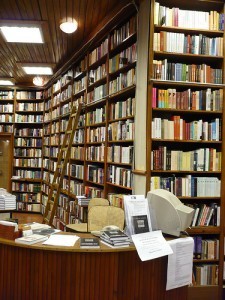 I say ‘bookshop life’ because that is what bookshops have always been for me: a context for life. In the same way that a house becomes a home due in part to the colours of paint chosen to adorn certain rooms, the memories and impressions hung on walls, the conversations had on this settee or at that table — in the same way, the day-to-day becomes life, at least in part, by what we choose to let into our imaginations and thoughts. And that is the terrain of the bookshop: the den of limitless possibilities for imagination, for thought, for wonder — for decorating life in ways that make it truly unique, wonderful and exciting.
I’ve been fortunate enough never to have been deprived of the many contours of life that bookshops can provide. I remember vividly the tiny bookshop I would frequent as a boy, which had a ‘children’s corner’ tucked away at the back, where all the books with coloured, pastel illustrations were gathered together and a set of undersized chairs provided, so that we never had to wait to get home to start in on what we discovered.
I was entranced. There was the immediate, overwhelming knowledge that I could fill a lifetime with the wonderful things these pages contained. There was wisdom, there was foolishness, there was beauty and ugliness, adventure and solemnity. All of it right there, tucked neatly onto shelves, waiting for me to grab and begin.
Years passed and I returned to that bookshop many times. Hundreds. I don’t think it an exaggeration to say thousands (and I’m not finished yet!). And what has struck me more and more, is how my relationship to that bookshop has changed over the years. I visited it first as a bleary-eyed undergraduate, mystified and amazed. Later, I visited its familiar shelves as a graduate student, working to make my own name. In the years that followed, I visited as a professor — and I remember the first time I found one of my own books on those shelves, stuffed amongst other stodgy, scholarly things. Then novels began, and a novelist I became, and I remember seeing my first novel there on the shelves at the front, where I’d first entered the Blackwell’s Bookshop as a student and thought how amazing and wonderful everything looked.
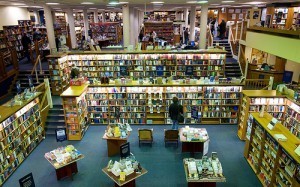 And as I stared there at my own book, tucked away amongst so many others, the most amazing reality struck me deeply. I was still amazed. It still looked so wonderful, all of it. And though I know every inch of that bookshop — which stairs creak between which floors, which sections house which authors I most long to read — and though I’ve watched heaven only knows how many coffee shops stake their claim on the first floor, I’m struck by the fact that this one bookshop on this one street in one city of England, still holds more possibilities and wonder than I could ever fit into a single lifetime.
So let us cherish what we possess in these cultural gems of our society. There are places in this word, murky and dysfunctional as it may otherwise be, where we still have heroes and adventures and loves and losses and joys and pains and sorrows and groans and creations and dragons and conspiracies and . . . and . . .
And it’s all right there: in every bookshop, in the hands of every bookseller, in every corner of this country. So go out on Saturday, whether you’re a student or a scholar, a child or a youth-challenged ‘grown up’, and prepare to be filled with wonder, all over again.
A.M. Dean is the author of the just-released thriller The Keystone and last year’s The Lost Library. He tries to visit a bookshop at least once a week, but often fails and spends most of his life in them instead.
Photo credits: Ben Clinch, Istvan, and noodlepie, all via photopin cc


Wandering Authorial Thoughts

- A.M. Dean's profile
- 441 followers

