Saying good bye to Kringle: How did I know it was time?
Last night I had to day goodbye to my wonderful 20+ year old, Kringle (the tabby and white kitty in the picture.) Kringle showed up at my home in rural Pennsylvania one cold day right before Christmas in 1994. He smelled awful, like cow manure and had a big scratch on his nose. We took him inside and offered him food but as thin and hungry as he was, all he wanted was to be held and loved. We thought for sure he must be someone's cat and later tracked down his origin to a farm down the road. But they had many cats and didn't mind us keeping him. (Can you imagine?) So in a very short time he went from being Chester the surplus farm cat to Kringle Babaloo Bingle, beloved and spoiled rotten house cat. Everyone loved Kringle and commented on on his huge eyes and sweet personality. He loved every single person he met and was always in the middle of everything. I would joke that my arm could fall off before he got enough pets and now I miss him so very much.
It became obvious that Kringle's quality of life had quickly deteriorated to the point that I knew that any attempts to keep him alive would only be because I didn't want to say good bye to him. And because I loved him so much, and did not want to him to suffer at all, I made the difficult decision to let him go. Putting Kringle's quality of life first, it was not a hard decision to make in some ways. But it was no less painful. Kringle was ready to go and his passing, thanks to a very compassionate veterinarian, was gentle and calm. Right up to the end, he was purring, laying his head on my shoulder and looking me, while making biscuits. He knew how incredibly loved he was right up to his last breath.
In putting Kringle's welfare first, I knew I made the right decision. But in some cases, making this final decision, is not so clear cut. It begs the question, how do I know when it's time? One concept that may help in making a decision is ‘What is my ‘bottom line’? This is a guideline by which to measure your pet’s quality of life and/or level of deterioration. For some, the bottom line is consistently refusing food, for others it is difficulty breathing or hiding from and/or avoiding loved ones.
Examples of other situations to help gauge by:
Refusal to eat, no matter what is offered
Incontinence, especially if the animal is immobile
Inability to get up and walk
Struggle to get comfortable or inability to get restful sleep
Lack of interest/interaction with family members and/or other pets
Determining if your pet is in pain or feeling unwell can be difficult as animals by nature try to hide this from us. Some signs to look for are:
Dilated pupils (a sign of pain)
Lack of appetite. Some animals may turn their head or move away from food put down near it. Food may make them feel nauseous. They may vomit and/or have diarrhea.
Restlessness (a sign of pain)
Panting or heavy breathing (signs of pain)
Vocalizing: moaning, growling, crying (signs of pain or severe discomfort)
Painful or pinched look to face (a sign of pain or discomfort)
Hunched up back (a sign of abdominal pain)
Stumbling and/or falling down
Lethargy
Not paying attention to detail, sound, or movement in the room
Unusual aggressive behavior, such as growling or biting people or other pets. This could indicate pain or fear of pain when being touched.
And although vocalizing can be a sign of pain, current thinking is that it may also be a way that dying animals communicate with us and other animals. By observing your pet's overall condition and attitude, you may be able to differentiate the two. So while no one can (or should) make the decision for you, there are questions to ask yourself that may be helpful in guiding you through this difficult decision making process:
How much time will additional treatments give my pet? What will the quality of life be during this time?
Is there a reasonable chance for cure? For comfort?
Do I have the emotional and financial resources to handle a long-term illness?
Do I have the physical and emotional energy to attend to the extra care my pet will need?
Is my relationship with my pet decreasing as I anticipate this loss?
How many of my pet’s usual activities are still possible?
Is my pet suffering although physical pain may not be obvious?
(The preceding info in included in my books Sugarbabies – A Holistic Guide to Caring for Your Diabetic Pet and in The Feel Better Book for Cats & Dogs – Nursing Care for All Life Stages. Excerpts have been used with permission from Mary and Herb Montgomery's wonderful book A Final Act of Caring.)
It's never easy to say goodbye but by giving thoughtful attention to what is best for your pet, it may be just a little easier. I'm missing my little Kringle tonight. But he's close by in a lovely place in my garden. And just now as it was getting dark, I left writing this to go bring inside my cat Chuck (more about him in future blog entries.) Chuck was sitting there, right next to Kringle's final resting place. I'm convinced Kringle hasn't gone far and know he'll always be in our hearts - right around the corner or maybe up in heaven where there are, to his delight, his old friends Scotty, Choppy and Astro Boy and 24 hour petting services where nobody's arm ever gets tired.
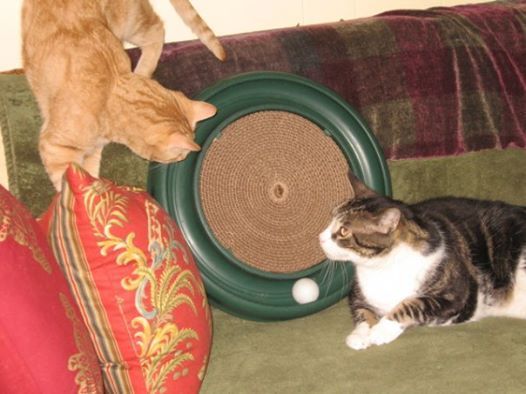
Jimmy Jet and Kringle