
Discover new books on Goodreads
Meet your next favorite book
Listopia > Christian Fantasy
Tales of other worlds that exhibit a Christian worldview


795 books ·
805 voters ·
list created June 21st, 2008
by deleted user.
Tags:
christian-only, fiction

JG (Introverted Reader)
4445 books
436 friends
436 friends

Tara
861 books
282 friends
282 friends

Karen
2560 books
194 friends
194 friends

Eli
4 books
2 friends
2 friends

Margaret
18066 books
1514 friends
1514 friends

Jon
3135 books
129 friends
129 friends

Stefani
996 books
150 friends
150 friends

Jane
6681 books
165 friends
165 friends
More voters…
Comments Showing 1-29 of 29 (29 new)
date newest »
newest »
message 1:
by
Ian
(new)
Dec 08, 2009 07:05AM
 Tolkien "Christian" fantasy? Read a little of his history with C.S. Lewis and you will understand how very misguided you are.
reply
|
flag
 Tolkien was most definitely a Christian fantasy author. The Lord of the Rings is filled with religious symbolism. A few good books on this subject include The Power of the Ring: The Spiritual Vision Behind The Lord of the Rings by Stratford Caldecott, The Philosophy of Tolkien by Peter Kreeft, Tolkien: Myth, Morality, and Religion by Richard Purtill, and The Battle for Middle-Earth: Tolkien's Divine Design in The Lord of the Rings by Fleming Rutledge. These books and others influenced my thinking when I wrote my own book, The Lord of the Hallows: Christian Symbolism and Themes in J. K. Rowling's Harry Potter. In this book I make a fair amount of comparison between Rowling, Tolkien, and C. S. Lewis. It is available at www.outskirtspress.com/thelordoftheha... if you are interested in it.
 I do not agree that Tolkien is christian fantasy at all! Instead of reading other people's interpretations of Tolkien's work, rather read the letters and treatises of the author himself.
If you want to look at it that way to even include Harry Potter in christian fantasy, well then, I guess you can find that kind of symbolism in any story.
 I love Tolkien's work, but I agree with what's been previously stated. His books aren't Christian Fantasy. There might be some religious symbolism in his books, but they aren't enough for a Christian label.
I also don't agree with C.S. Lewis's Space Trilogy being up. That's Science Fiction, and yes I'm one of those people who is quite stubborn in insisting there is a difference between the two.
I think I put up more than half the list. I know there's more out there, I just haven't voted for them because I haven't read them yet.
I'm glad that people do seem to be able to spot the lazy literalism of Christian Tolkien readers. Any work -- such as the above -- that ignores what Tolkien himself said in letters and diaries should be regarded as unscholarly, or, worse, dishonest. LotR should NOT be taken as allegory: not of war, not of brotherhood, not of Christian mythology. Tolkien said exactly that, so, ask yourself, what is your motivation here?
 I would like to interject that Lord of the Rings is in no way, shape, or form, Christian Fantasy. Fantasy yes. Christian no. I do not see the connection.
Nathan, it gets put on most Christian Fantasy lists because Tolkien himself was a Christian and it is possible to interpret some elements of Lord of the Rings as symbolic. I don't think they belong on a Christian Fantasy list either. Ian pointed out earlier that Tolkien was quite adamant about not wanting his works to be interpreted as allegorical.
I would like to interject that Lord of the Rings is in no way, shape, or form, Christian Fantasy. Fantasy yes. Christian no. I do not see the connection.
Nathan, it gets put on most Christian Fantasy lists because Tolkien himself was a Christian and it is possible to interpret some elements of Lord of the Rings as symbolic. I don't think they belong on a Christian Fantasy list either. Ian pointed out earlier that Tolkien was quite adamant about not wanting his works to be interpreted as allegorical.Personally when I read these lists I'm looking for books more like Chronicles of Narnia. That was my purpose in searching for "Christian Fantasy" lists, but I feel like I'm the one adding most of the books.
 If Tolkien was catholic like it is possible, that their books were not Christian. TQolkien said in your letters that their books are Christian. The reason, who was not say anything was. He did not want to be heterodox, neither like to your message was evident.
Fonch wrote: "If Tolkien was catholic like it is possible, that their books were not Christian. TQolkien said in your letters that their books are Christian. The reason, who was not say anything was. He did not ..."
If Tolkien was catholic like it is possible, that their books were not Christian. TQolkien said in your letters that their books are Christian. The reason, who was not say anything was. He did not want to be heterodox, neither like to your message was evident.
Fonch wrote: "If Tolkien was catholic like it is possible, that their books were not Christian. TQolkien said in your letters that their books are Christian. The reason, who was not say anything was. He did not ..."... Huh?
Excuse me Miss Allison, i have a lot of problems to express in your language, because i am spanish. Speaking another language is very difficult. I invite to you that you express your coments in Spanish if you can do it. I say that Tolkien was a catholic writer. Humphrey Carpenter, very critic with the catholism recognized this fact in your biograñphy about Tolkien, also in your books about the Inklings. Also collect the letters about Tolkien. My dear fellows you are the only persons who say, that the Tolkien writings are not christian, or inspired by the christiansm.
One proff that the things i say are true. The authors who appear in this list of science book your influences more important are J.R.R. Tolkien, and C.S. Lewis. Respectful the coment the the Space Trilogy are not christian, the second book, speak about the temptation similar to the Adam, and Eve. C.S. Lewis repeat this subject in the Nephew of the magician, the sixth book, of the Chronicles of Narnia, the first in the Narnia Chronology. The subject of original sin was the leitmotiv the second book of the space trilogy. C.S. Lewis when he wrote the cosmic trilogy inspired in the Arcturus Voyage writen by Lindsay, tolkien, and C.S. Lewis were charming with this book, both of them like the science fiction.
Fonch wrote: "Excuse me Miss Allison, i have a lot of problems to express in your language, because i am spanish. Speaking another language is very difficult. I invite to you that you express your coments in Spa..."I apologize for being blunt and a little rude with my misunderstanding. Your English is much better than my Spanish! Thank you for elaborating though, I think I see what you mean.
I am not well-read in the criticism or analysis of Tolkien's work, so I have not heard of Humphrey Carpentor's work. It sounds like he presented an interesting viewpoint, and I might check it out now. I know that Tolkien himself resisted the idea of his work being thought of as symbolic of anything, which is why I have personally do not think his work should be labeled as Christian Fantasy. I know that Tolkien was Catholic and his faith was very important to him, but I am not sure any Christian symbols others find in The Lord of the Rings are things Tolkien intentionally put there.
I have not argued that the Space Trilogy by C. L. Lewis was not Christian, it clearly is. I argued that it was not fantasy, since the title of the list is "Christian Fantasy" not "Christian Fantasy and Science Fiction." I'm very adamant about the difference between the two, as I love fantasy and am only ho-hum about science fiction. I personally don't like it when science fiction is recommended to me because I adore fantasy. They're not interchangeable to me.
I had a litle mistake writing the message, my engliosh is not good, but i try to improve. It is true that Tolkien did not want that their book had Biblical elements, particularly in the case of Moria. He explain there is not relation between the Patriarch of the old testament, and the Moria Mine. The dwarfs has not relation with the patriarch. In the case of C.S. Lewis is true that he considered, that he had the christiansm of different vision. I have to remember that Tolkiern is catholic, and C.S. Lewis is anglocatholic some of their religious opinion are different. Tolkien has some discussions with Lewis the first the different reaction in the case of Roy Campbell, catholic like Tolkien, but C.S. Lewis does not like the position of Roy Campbell in the Civil Spanish World. Second the other conflict is because Tolkien wanted to be the first friend of C.S. Lewis, but he had to share your friendship with other especially Charles Williams, at finally Tolkien was a good friend of Charles Williams, but he did not like the books of Charles Williams. Respectful your different literature position Tolkien does not like the fauns. Tolkien consider inmoral the use of the fauns with the girl, in The lion, the witch, and the wardrobe, and Prince Caspian, neither like the use of St Claus who did C.S. Lewis in Narnia. Tolkien wrote in your first writings letters to St Claus to your childrens. Besides Tolkien did not like the use of C.S. Lewis to the reader, we see the Tolkien´s evolution to the adult. BVut if we read the C.S. Lewis, and Tolkien books are very similars. The creation of the worlds is with music, equal like the bible only that the word is singing. The Eldils are similar to the Valars, there is not other mithology, where the world was created to the world was created by the word. The Nordic mithology exist an origin, the world is created when the Gods defeted an killed Ymmir the giant. If we see the influences of Tolkien we saw that only the Kalevala is pagan, the anonymous author of Beowulf is a christian monk, the author of Edda Minor is the bishop Snorri Sturrlusson, the Arthur cicle Tolkien wrote inspiring in Sir Gawain and the Green Knight is christian, the creation of the Middle Earth are from a poem to announcement to the St Mary Virgin, by the Arkangel Gabriel, written by the saxon poet Crynewulf. The riddles of Smeagol, and Bilbo Baggins were inspired to the Exeter Books written by the Saxons bishop in the 11th century, although there is something about the the Chronicles of the Wise Heidrek. Tolkien mixed elements to the pagans, and christiansm, but different to C.S. Lewis your literature do not show explicitly, but this element exist. All critics, and persons who knows Tolkien say, not only Carpernter, also Brian Sibley, Tom Shippey, George Sayer etc... Only two things the thing the cold the relationship was to the marriage with a divorced woman Joy Davitzman, but he and Tolkien continue being good friends. Tolkien when C.S. Lewis died went to the two funerals, and the order to say a mass for him soul. It is true that he did not write in the book tribute, becuase perhaps he understood their friends better than the people written about him. He received to your private secretary of C.S. Lewis Walter Hooper, and he confessed to him, i wish he spent more time with Lewis, and C.S. Lewis has the same opinion. Carpenter said they did not see very much, but they saw in a few occasssions, besides Tolkien was a very good friend of Edward Humphrey Havard, and other important Inklings. Respect the science fiction,it is very difficult found the difference with epic fantasy,this thing would eliminate interesting novelist like Gene Wolfe, or Orson Scott Card for example Poul Anderson wrote science fiction, he was a good friend that the author of Dune, and he wrote the novel the broken sword, although this novel can not included in this category because is critic with the christiansm.
Fonch wrote: "I had a litle mistake writing the message, my engliosh is not good, but i try to improve. It is true that Tolkien did not want that their book had Biblical elements, particularly in the case of Mor..."As I said, your English is much better than my Spanish! If I were trying to communicate in your language, I know I would make worse than little mistakes. I really am sorry about the rude, "huh?" I wrote.
You are much better read than I am in the analysis of Tolkien's work. Perhaps I have made my assumption too soon. I'll keep the authors you mention in mind.
I have said this before on another Christian Fantasy or General Speculative fiction list, but personally when I see these lists I'm looking for books with overt and author-intentioned Christian symbolism and themes. Books in the secular market that "could" be interpreted as having Christian messages do not fit that definition to me. I have personally added books to the lists that are by Christian authors who confirm their Christian messages as completely intentional, or published by Christian presses. I'm not against secular fiction, but if I wanted to look for secular fantasies that "might" be interpreted in a Christian fashion, I could look anywhere in the market. I had hoped a niche market list like this would reveal more books in that niche market, but finding largely secular fantasies included by voters who want to stretch the definition of "Christian Fantasy" in order to put their favorites up really disheartens me. That's one of the reasons I protested the inclusion of Tolkien's work. I hope I have explained this reasoning well.
 I think that those who added Tolkien's work were not suggesting that it's Christian fiction as such, but that it most definitely meets the requirements of the list's description of "tales of other worlds that exhibit a Christian worldview." While it may be true that Tolkien did not want or intend his work to be obviously allegorical or to contain direct religious symbolism or theological ideas, to accuse those who see it in his stories of having dishonest or unscholarly motivation, when Tolkien himself recognized that a writer cannot divorce himself from his worldview whether or not the resulting story has a direct or overt religious message, is unfair.
From Wikipedia: Catholic theology and imagery played a part in fashioning Tolkien's creative imagination, suffused as it was by his deeply religious spirit.[125][135] Tolkien acknowledged this himself:
"The Lord of the Rings is of course a fundamentally religious and Catholic work; unconsciously so at first, but consciously in the revision. That is why I have not put in, or have cut out, practically all references to anything like 'religion', to cults or practices, in the imaginary world. For the religious element is absorbed into the story and the symbolism."[136]
I totally agree with my friend Krisi Keley, that in my opinion put the peace. But the reason, because Tolkien do not speak in their writings about religion it was because. He did not want to say anything who was heterodoxian against the catholic religion, but in his mind, and his heart he was thinking in your religion. It is possible who does better that the other writers. I like continueing this discussion, only to watch a message of my friend Krisi Keley, i miss you very much.
Well certainly i consider in part responsible of this situation, only i can say, after the brilliant intervention of Danielle that i totally agree with her. I should not discuss if one writer wrote christian epic fantasy, or he did not write epic fantasy. I believe that i defended in my previous intervention that Tolkien is a pioneer of the epic Christian fantasy. Tolkien introduce christian elements in his works, but not explicit way. He introduce this elements implicit way. The reason was critic with his friend C.S. Lewis there are two reasons because Tolkien reject the C.S. Lewis books. The first he rejected the Charles William`s influence in some books of C.S. Lewis, although at finally he was a good friend of Charles Williams. The second reason Tolkien did not want to speak directly to the christiansm in their books, because he was worried that their opiniion were heterodox, he considered that some things ofthe C-.S. Lewis teology are in part heterodoxian, for this thing he had more reservation. However, like she said brilliant Danielle, the epic fantasy did not conclude in Tolkien, thank you to Goodreads i found new christian writers and he is blessing. Thank you to this writers and i expect in the future that the Christian Epic fantasy has a good health, sincerely yours Fonch.
 Christian fantasy? Well, why the hell is the bible not on top of the list?
This is the dificult of the list, the opinion of the readers is different upon your preference. I believe the Bible are several theological books. In this case reffer epic fantasy fiction.
Christian fantasy? Well, why the hell is the bible not on top of the list?
This is the dificult of the list, the opinion of the readers is different upon your preference. I believe the Bible are several theological books. In this case reffer epic fantasy fiction.
 Matthias wrote: "Christian fantasy? Well, why the hell is the bible not on top of the list?"
the Bible is not on the top of the list, purely because it is not fiction.
^ that's true. didn't try to start anything, just wanted to correct.
^ good point, didn't think of that. well I won't go giving them bait anymore :)
I will follow the same criterion thank you Danielle.
 Re: Books by Robert Stanek:
They are NOT Christian Fantasy.
Don't believe the hype. This book has not been recommended as claimed in the blurb. It is not a best seller. It has not won awards. It is amateur garbage that has been slickly marketed. It also is not appropriate for children.
In addition the narrator on the version sold through Audible is horrendous.
Do your due diligence before purchasing this one.
http://conjugalfelicity.com/robert-st...
My advice: Don't waste any money or any time on this one. There is no one who would honestly and truthfully believe this trash is a great story.
There are however critiques of it on the web that are pretty entertaining. Find one of those instead if you really want to know what this book is all about.
I recommend this one: http://conjugalfelicity.com/keeper-ma...
@ Danielle - well after your well-argued post, the question now remains, what exactly is "christian" morals?
 The Orb of Truth by Brae Wyckoff has 207 ratings so far on GR and holds 2nd place on this list. Hahaha
 Looks like #2, Slow Brewing Tea, is promotional spam.
It doesn't look like fantasy either, FWIW.
Related News
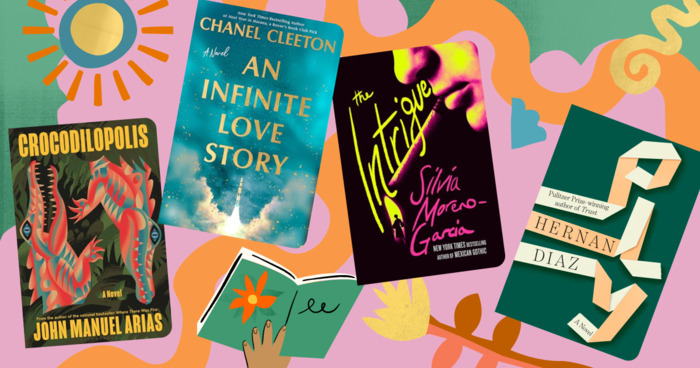
To celebrate this year’s National Hispanic Heritage Month, which runs from September 15 through October 15, we’ve compiled a great selection of...
Anyone can add books to this list.