
Find & Share Quotes with Friends
Berlin Conference Quotes
Quotes tagged as "berlin-conference"
Showing 1-13 of 13

“The Spirit of Berlin was embodied in two principles. First, colonial powers, whatever else they did, had a responsibility to improve the lives of native populations.”
― In Defense of German Colonialism: And How Its Critics Empowered Nazis, Communists, and the Enemies of the West
― In Defense of German Colonialism: And How Its Critics Empowered Nazis, Communists, and the Enemies of the West
“The Spirit of Berlin was embodied in two principles. First, colonial powers, whatever else they did, had a responsibility to improve the lives of native populations. The second principle insisted that any colonial claim needed to be backed up by “the existence of an authority sufficient to cause acquired rights to be respected.”
― In Defense of German Colonialism: And How Its Critics Empowered Nazis, Communists, and the Enemies of the West
― In Defense of German Colonialism: And How Its Critics Empowered Nazis, Communists, and the Enemies of the West

“I do not want to miss a good chance of getting us a slice of this magnificent African cake.”
―
―

“The labours which we are about to undertake to regulate and develop the commercial relations of our countrymen with that Continent, and to render a service alike to the cause of peace and humanity. (Berlin Conference)”
― Correspondance Diplomatique De M. De Bismarck (1851-1859)
― Correspondance Diplomatique De M. De Bismarck (1851-1859)

“The doctrine of state ownership of land established since 1890 is the exact opposite of free trade, the new doctrine is reprehensible, going against both the natural rights of the indigenous people who will be deprived, and the rights of the Imperial powers as determined in the act of Berlin.”
―
―
“Everything seems to indicate that a decisive hour has sounded in the history of the world, the hour when an almost virgin continent and ignored races will cooperate in the work of humanity.”
―
―

“It is experience, which will then inspire the interested Powers with the most favourable resolutions for the development of commercial progress in their possessions.”
―
―

“The powers of the time had first rushed to the city of the most powerful man in the world, the German Chancellor, Otto von Bismarck. But five years later, they came to Leopold II. In 1890, Brussels became the capital of colonizing Europe. The city held an anti-slavery conference, to strengthen Berlin-1885 and "to put an end to the Negro Slave Trade by land as well as by sea, and to improve the moral and material conditions of the natives". It was, in accordance with the mentalities of the time, a proclamation of "fundamental rights of populations", starting with the most basic: the right to life. Berlin-1885 had already expressed similar rights in the search for " the preservation of the native tribes, and to care for the improvement of the conditions of their moral and material well-being, and to help in suppressing slavery, and especially the slave trade". The Treaty of Brussels-1890 was also contracted "in the name of God Almighty". It ordered to put an end to the crimes and devastation of the slavers and to provide the benefits of peace and civilization on the continent.”
― The Greatest Fake News of All Time: Leopold II, The Genius and Builder King of Lumumba
― The Greatest Fake News of All Time: Leopold II, The Genius and Builder King of Lumumba
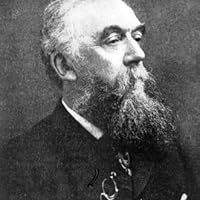
“The present condition of Central Africa reminds one much of that of America when that continent was first opened up to the European world. How are we to avoid a repetition of the unfortunate events, to which I have just alluded, amongst the numerous African tribes? How are we to guard against exposing our merchants, our colonies and their goods to these dangers? How shall we defend the lives of our missionaries and religion itself against the outburst of savage customs and barbarous passions? Finding ourselves in the presence of those whom we are urging to undertake the work of civilization in Africa, it is our duty to save them from such regrettable experiences as marked the corresponding phase in America.”
― Acte général de la conférence de Berlin de 1885
― Acte général de la conférence de Berlin de 1885
“Modern international law follows closely a line which leads to the recognition of the right of native tribes to dispose freely of themselves and of their hereditary territory. In conformity with this principle, my Government would gladly adhere to a more extended rule, to be based on a principle which should aim at the voluntary consent of the natives whose country is taken possession of, in all cases where they had not provoked the aggression.”
― Acte général de la conférence de Berlin de 1885
― Acte général de la conférence de Berlin de 1885
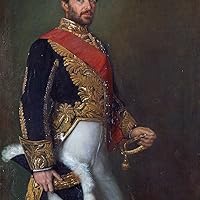
“The Conference, should draw up a separate convention, applicable throughout the world, and destined to form a complement of the international law on this subject.”
― Acte général de la conférence de Berlin de 1885
― Acte général de la conférence de Berlin de 1885
“As to the question whether this modification is opportune, the fact must not be lost sight of that the Berlin Conference never intended to fix unalterably the economic system of the Free State, which, as was already then foreseen, would undergo radical modifications under the influence of progress, nor of establishing for an indefinite period regulations which may hinder, check, and even arrest its development. Provision was wisely made for the probability of future changes, which would require a certain latitude in economic matters in order to secure their easy realization... The moment has now come when the marvellous progress made by the infant State is creating fresh needs, when it would be only in accordance with wisdom and foresight to revise an economic system primarily adapted to a creative and transitional period. Can we blame the infant State for a progress which, in its rapidity, has surpassed the most optimistic forecasts? Can we hinder and arrest this progress in refusing her the means necessary for her development? Can we condemn the Sovereign who has already made such great sacrifices to support for an indefinite period a burden which daily becomes heavier, and at the same time impose upon him new and heavy expenses necessitated by the suppression of the slave-trade? We are convinced that there will be but one answer to these questions.”
― Acte général de la conférence de Berlin de 1885
― Acte général de la conférence de Berlin de 1885
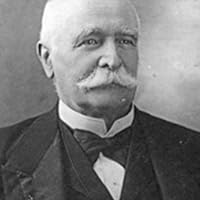
“It would never do, to renew the colonial experience gained in the sixteenth century, when Colonies were brought to ruin by those who pretended to fix in Europe, from a purely metropolitan point of view, their financial and administrative existence.”
― Acte général de la conférence de Berlin de 1885
― Acte général de la conférence de Berlin de 1885
All Quotes
|
My Quotes
|
Add A Quote
Browse By Tag
- Love Quotes 102.5k
- Life Quotes 81k
- Inspirational Quotes 77.5k
- Humor Quotes 45.5k
- Philosophy Quotes 32k
- Inspirational Quotes Quotes 28.5k
- God Quotes 27k
- Wisdom Quotes 25k
- Romance Quotes 25k
- Truth Quotes 25k
- Poetry Quotes 24.5k
- Life Lessons Quotes 23k
- Quotes Quotes 21.5k
- Death Quotes 21k
- Happiness Quotes 19k
- Hope Quotes 19k
- Faith Quotes 18.5k
- Inspiration Quotes 18k
- Relationships Quotes 16k
- Spirituality Quotes 16k
- Motivational Quotes 16k
- Religion Quotes 15.5k
- Life Quotes Quotes 15.5k
- Writing Quotes 15k
- Love Quotes Quotes 15k
- Success Quotes 14.5k
- Motivation Quotes 14k
- Time Quotes 13k
- Science Quotes 12.5k
- Motivational Quotes Quotes 12k