
Find & Share Quotes with Friends
Commodity Fetishism Quotes
Quotes tagged as "commodity-fetishism"
Showing 1-13 of 13

“This is what the bourgeois political economists have done: they have treated value as a fact of nature, not a social construction arising out of a particular mode of production. What Marx is interested in is a revolutionary transformation of society, and that means an overthrow of the capitalist value-form, the construction of an alternative value-structure, an alternative value-system that does not have the specific character of that achieved under capitalism. I cannot overemphasize this point, because the value theory in Marx is frequently interpreted as a universal norm with which we should comply. I have lost count of the number of times I have heard people complain that the problem with Marx is that he believes the only valid notion of value derives from labor inputs. It is not that at all; it is a historical social product. The problem, therefore, for socialist, communist, revolutionary, anarchist or whatever, is to find an alternative value-form that will work in terms of the social reproduction of society in a different image. By introducing the concept of fetishism, Marx shows how the naturalized value of classical political economy dictates a norm; we foreclose on revolutionary possibilities if we blindly follow that norm and replicate commodity fetishism. Our task is to question it.”
― A Companion to Marx's Capital, Volume 1
― A Companion to Marx's Capital, Volume 1

“What does it mean to be a proletarian, really? [...] It means you are a cog in a process of production that relies on what you do and think, while excluding you from being anything but its product. It means the end of sovereignty, the conversion of all experiential value to exchange value, the final defeat of autonomy.”
― Another Now: Dispatches from an Alternative Present
― Another Now: Dispatches from an Alternative Present
“American culture is a sheep culture—long on talk about individualism, but even longer on absolute conformity. Most still believe that individuality is based on which model car you like best—commodity identity, a selection of personalities on a shelf full of products approved by the Federal Identity Administration. I’m a Taurus aspiring to be a Lexus.”
― Full Spectrum Disorder: The Military in the New American Century
― Full Spectrum Disorder: The Military in the New American Century

“What every society looks for in continuing to produce, and to overproduce, is to restore the real that escapes it.”
― Simulacra and Simulation
― Simulacra and Simulation

“Cuando no se produce ya para el valor de uso sino únicamente para el valor de cambio, cuando el trabajo no sirve para satisfacer ninguna necesidad concreta sino solamente para fabricar unos objetos cualesquiera para venderlos en el mercado (lo que Marx llamó "trabajo abstracto"), entonces la abstracción, lo puramente cuantitativo, el predominio de la forma, y concretamente de la forma-mercancía, sobre cualquier contenido, determinan la entera vida social. El valor de cambio, la simple cantidad de trabajo social que se ha incorporado a una mercancía, es el triunfo de la cantidad, de la abstracción de toda cualidad.”
― El absurdo mercado de los hombres sin cualidades: Ensayos sobre el fetichismo de la mercancía
― El absurdo mercado de los hombres sin cualidades: Ensayos sobre el fetichismo de la mercancía

“Hay que liberar este mundo unificado de la forma-mercancía, conservando a la vez su nivel civilizatorio, sus fuerzas productivas y sus conocimientos.”
― El absurdo mercado de los hombres sin cualidades: Ensayos sobre el fetichismo de la mercancía
― El absurdo mercado de los hombres sin cualidades: Ensayos sobre el fetichismo de la mercancía

“La forma-mercancía, o sea la determinación social de las cosas como mercancías, en la moderna sociedad burguesa se ha convertido en forma universal debido a que el capitalismo ha hecho de la fuerza de trabajo una mercancía de la cual sus portadores disponen libremente: esto es, libres de dependencias personales, libres de toda coacción, menos de la que los obliga a ganar dinero. Pero esa coacción impersonal es universal, de modo que el dinero se ha convertido en la sola finalidad de todo trabajo y la venta de la propia fuerza de trabajo en forma predominante de reproducción. En la sociedad mercantil, la satisfacción de cualquier necesidad concreta depende del dinero. La necesidad de disponer del máximo posible de dinero se convierte así en el primer "interés propio", igual para todos los miembros de la sociedad, aunque lo tengan que perseguir compitiendo unos con otros como mónadas económicas. Los sujetos del intercambio mercantil, libres e iguales en tal sentido abstracto, se imaginan a sí mismos como individuos autónomos que se ganan honradamente el sustento con su trabajo.”
― El absurdo mercado de los hombres sin cualidades: Ensayos sobre el fetichismo de la mercancía
― El absurdo mercado de los hombres sin cualidades: Ensayos sobre el fetichismo de la mercancía
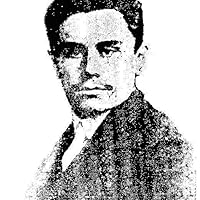
“The contradiction between the individual and the social, between the private and the universal, which bourgeois philosophy is unable to do away with, despite all its efforts, is the very basis of life in bourgeois society as a society of commodity-producers.
This contradiction is embodied in the actual interrelations of people who cannot regard their private endeavors as social aspirations except in the absurd and mystified form of the value of commodities.”
― The General Theory of Law and Marxism
This contradiction is embodied in the actual interrelations of people who cannot regard their private endeavors as social aspirations except in the absurd and mystified form of the value of commodities.”
― The General Theory of Law and Marxism
“La forma-mercancía, o sea la determinación social de las cosas como mercancías, en la moderna sociedad burguesa se ha convertido en forma universal debido a que el capitalismo ha hecho de la fuerza de trabajo una mercancía de la cual sus portadores disponen libremente: esto es, libres de dependencias personales, libres de toda coacción, menos de la que los obliga a ganar dinero. Pero esa coacción impersonal es universal, de modo que el dinero se ha convertido en la sola finalidad de todo trabajo y la venta de la propia fuerza de trabajo en forma predominante de reproducción. En la sociedad mercantil, la satisfacción de cualquier necesidad concreta depende del dinero. La necesidad de disponer del máximo posible de dinero se convierte así en el primer "interés propio", igual para todos los miembros de la sociedad, aunque lo tengan que perseguir compitiendo unos con otros como mónadas económicas. Los sujetos del intercambio mercantil, libres e iguales en tal sentido abstracto, se imaginan a sí mismos como individuos autónomos que se ganan honradamente el sustento trabajando.”
― El absurdo mercado de los hombres sin cualidades: Ensayos sobre el fetichismo de la mercancía
― El absurdo mercado de los hombres sin cualidades: Ensayos sobre el fetichismo de la mercancía

“Not the shattered or slashed works to which Alena thrilled, but those objects in the archive that both were and weren't different moved me: they had been redeemed, both in the sense that the fetish had been converted back into cash, the claim paid out, but also in the messianic sense of being saved from something, saved for something. An art commodity that had been exorcised (and survived the exorcism) of the fetishism of the market was to me a utopian readymade–an object for or from a future where there was some other regime of value than the tyranny of price.”
― 10:04
― 10:04
“The ideologists of the bourgeoisie - the bourgeois economists - failed to perceive the real nature of the capitalist mode of production and capitalist society because their class interests and class narrow-mindedness made them regard the historically transient social form as being eternal, natural and supra-historical. They could not discern behind the relations of things - commodities - the relations of people. Bourgeois ideologists are in the power of commodity fetishism. They attribute to things and products of human activity, supra-sensuous, mystical properties. This fetishism, this false viewpoint, inherent in capitalist society, bourgeois ideologists extend to the entire domain of social relations: to the relations of economy and politics, economy and law, being and consciousness. Bourgeois ideology represents these relations in a false topsy-turvy way.”
― Role of advanced ideas in development of society
― Role of advanced ideas in development of society

“The consumption celebrity superficially represents different types of personality and shows each of these types having equal access to the totality of consumption and finding similar happiness there. The decision celebrity must possess a complete stock of accepted human qualities. Official differences between stars are wiped out by the official similarity which is the presupposition of their excellence in everything.”
― The Society of the Spectacle
― The Society of the Spectacle

“Elevated to the status of a credit subject, the consumer believes [in the myth of credit] to see in this fact his own human realization and that of his social dignity. The commodity fetishism embodies in his person as the fetish of being, to whom credit gives a sensible and objective reality: the consumer sees himself in credit as in a mirror reflecting all the human attributes emanating from possession - respectability, honesty, occupational activity, recognized and weighed by social consensus...”
―
―
All Quotes
|
My Quotes
|
Add A Quote
Browse By Tag
- Love Quotes 102.5k
- Life Quotes 81k
- Inspirational Quotes 77.5k
- Humor Quotes 45.5k
- Philosophy Quotes 32k
- Inspirational Quotes Quotes 28.5k
- God Quotes 27k
- Wisdom Quotes 25k
- Romance Quotes 25k
- Truth Quotes 25k
- Poetry Quotes 24.5k
- Life Lessons Quotes 23k
- Quotes Quotes 21.5k
- Death Quotes 21k
- Happiness Quotes 19k
- Hope Quotes 19k
- Faith Quotes 18.5k
- Inspiration Quotes 18k
- Relationships Quotes 16k
- Spirituality Quotes 16k
- Motivational Quotes 16k
- Religion Quotes 15.5k
- Life Quotes Quotes 15.5k
- Writing Quotes 15k
- Love Quotes Quotes 15k
- Success Quotes 14.5k
- Motivation Quotes 14k
- Time Quotes 13k
- Science Quotes 12.5k
- Motivational Quotes Quotes 12k