
Find & Share Quotes with Friends
Existencialism Quotes
Quotes tagged as "existencialism"
Showing 1-25 of 25

“The Beginning is lost;
the End stretches into eternity.
Don't bother with them, they're all irrelevant.
And since all is really nothing,
then nothing is truly everything.”
― The Conference of the Birds
the End stretches into eternity.
Don't bother with them, they're all irrelevant.
And since all is really nothing,
then nothing is truly everything.”
― The Conference of the Birds

“There is an ancient story that King Midas hunted in the forest a long time for the wise Silenus, the companion of Dionysus, without capturing him. When Silenus at last fell into his hands, the king asked what was the best and most desirable of all things for man. Fixed and immovable, the demigod said not a word, till at last, urged by the king, he gave a shrill laugh and broke out into these words: ‘Oh, wretched ephemeral race, children of chance and misery, why do you compel me to tell you what it would be most expedient for you not to hear? What is best of all is utterly beyond your reach: not to be born, not to be, to be nothing. But the second best for you is—to die soon.”
― The Birth of Tragedy
― The Birth of Tragedy

“Rats died in the street; men in their homes. And newspapers are concerned only with the street.”
―
―

“These...xistential qualms you suffer, they just mean you're truly human. I aked how I might remedy them. "You don´t remedy them. You live thru them.”
― Cloud Atlas
― Cloud Atlas

“High as it may be, the number of victims is always measurable; and each one taken one by one is never anything but an individual: yet, through time and space, the triumph of the cause embraces the infinite, it interests the whole collectivity. In order to deny the outrage it is enough to deny the importance of the individual, even though it be at the cost of this collectivity: it is everything, he is only a zero.”
― The Ethics of Ambiguity
― The Ethics of Ambiguity

“¿Crees que no lo entiendo? El sueño imposible de ser. No de parecer, sino de ser. Consciente en cada momento. Vigilante. Al mismo tiempo, el abismo entre lo que eres para los otros y para ti misma, el sentimiento de vértigo y el deseo constante de, al menos, estar expuesta, de ser analizada, diseccionada, quizás incluso aniquilada. Cada palabra una mentira, cada gesto una falsedad, cada sonrisa una mueca. ¿Suicidarse? ¡Oh, no! ¡Eso es horrible! Tú no harías eso. Pero puedes quedarte inmóvil y en silencio. Por lo menos así no mientes. Puedes encerrarte en ti misma, aislarte. Así no tendrás que desempeñar roles, ni poner caras ni falsos gestos. Piensas. Pero, ¿ves? La realidad es atravesada, tu escondite no es hermético. La vida se cuela por todas partes. Estás obligada a reaccionar. Nadie pregunta si es real o irreal, si tú eres verdadera o falsa. La pregunta sólo importa en el teatro. Y casi ni siquiera allí. Te entiendo, Elisabeth. Entiendo que estés en silencio, que estés inmóvil, que hayas situado esta falta de voluntad en un sistema fantástico. Te entiendo y te admiro. Creo que deberías mantener este papel hasta que se agote, hasta que deje de ser interesante. Entonces podrás dejarlo. Igual que poco a poco fuiste dejando los demás papeles.”
―
―
“One can not, without absurdity, indefinitely sacrifice each generation to the following one; human history would then be only an endless succession of negations which would never return to the positive.”
―
―

“They cut the umbilical cord, give you a slap on the ass, and presto! you're out in the world, adrift, a ship without a rudder. You look at the stars and then you look at your navel. You grow eyes everywhere–in the armpits, between the lips, in the roots of your hair, on the soles of your feet. What is distant becomes near, what is near becomes distant. Inner-outer, a constant flux, a shedding of skins, a turning inside out. You drift around like that for years and years, until you find yourself in the dead center, and there you slowly rot, slowly crumble to pieces, get dispersed again. Only your name remains.”
― Tropic of Cancer
― Tropic of Cancer
“Cada manhã, antes mesmo de abrir os olhos, ela reconhecia sua cama, seu quarto. Mas, às vezes, quando dormia de tarde, experimentava ao acordar aquela estupefação pueril: por que eu sou eu? Como se a consciência, emergindo despercebida do sono, hesitasse antes de se reencarnar. O que a surpreendia — como a criança quando toma consciência de sua própria identidade — era se encontrar no âmago de sua própria vida e não na de outra pessoa: por qual acaso? Ela poderia não ter nascido: então não teria havido questão. “Eu poderia ter sido uma outra, mas então teria sido uma outra que se interrogaria sobre si.” Isto lhe provocava a vertigem de sentir de uma só vez sua contingência e a necessária coincidência com sua história.”
― Misverstand in Moskou
― Misverstand in Moskou
“Yet, there is hardly a sadder virtue than resignation. It transforms into phantoms and contingent reveries projects which had at the beginning been set up as will and freedom.”
―
―
“This is what democratic societies understand; they strive to confirm citizens in the feeling of their individual value; the whole ceremonious apparatus of baptism, marriage, and burial is the collectivity's homage to the individual; and the rites of justice seek to manifest society's respect for each of its members considered in his particularity.”
―
―

“The rain had spared him from all emergencies of passion and had filled him with the spongy serenity of a lack of appetite.”
― One Hundred Years of Solitude
― One Hundred Years of Solitude

“Perhaps Senkovi would have approved; he who had once seen himself as the trickster god of the pantheon, before there were no more gods left to trick. Perhaps Senkovi would have recalled ancient human myth figures whose outsize griefs and loves and rages were applauded by ancient audiences as noble, right and true.”
― Children of Ruin
― Children of Ruin

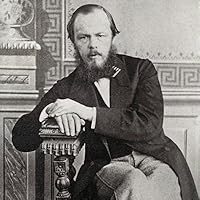
“I have a friend for instance . . . Ech! gentlemen, but of course he is your friend, too; and indeed there is no one, no one to whom he is not a friend! When he prepares for any undertaking this gentleman immediately explains to you, elegantly and clearly, exactly how he must act in accordance with the laws of reason and truth. What is more, he will talk to you with excitement and passion of the true normal interests of man; with irony he will upbraid the short- sighted fools who do not understand their own interests, nor the true significance of virtue; and, within a quarter of an hour, without any sudden outside provocation, but simply through something inside him which is stronger than all his interests, he will go off on quite a different tack — that is, act in direct opposition to what he has just been saying about himself, in opposition to the laws of reason, in opposition to his own advantage, in fact in opposition to everything . . . I warn you that my friend is a compound personality and therefore it is difficult to blame him as an individual.”
―
―
“¿Para qué ha y que molestar a la gente que se muera, si de muerte es el final normal y legítimo de todo? ¿Qué esl o que cambia si un triste comerciante o un funcionario vive unos cinco o diez años de más? Incluso si consideramos que el objeto de la medicina está en que los medicamentos alivian los sufrimientos, sin querer salta la pregunta: ¿para qué aliviarlos? En primer lugar, se dice que los sufrimientos abren al hombre el camino de la perfección, y en segundo lugar, si de verdad la humanidad aprendiese a aliviar sus sufrimientos con pastillas y gotas, entonces abandonaría definitivamente la religión y la filosofía, en las cuales ha encontrado hasta ahora no solo protección ante todo género de desgracias, sino incluso la felicidad."
- El Pabellón N. 6”
―
- El Pabellón N. 6”
―

“O "chaísmo" é um culto que se fundamenta na veneração da beleza em meio à sordidez dos acontecimentos diários. Incute a pureza e a harmonia, o mistério da caridade mútua, o romantismo da ordem social. É essencialmente a veneração do imperfeito, uma tentativa singela de conquistar o possível em meio a esta coisa impossível que conhecemos como vida.”
― The Book of Tea
― The Book of Tea
“dadas las circunstancias, debo asumir a la vez los papeles de demandante y demandado, de juez y parte, y encuentro toda esa farsa de la naturaleza totalmente absurda, considerando incluso humillante tener que soportarla.
En consecuencia, en mi indiscutible calidad de demandante y demandado, de juez y parte, condeno a esa naturaleza, que con tanta desconsideración y rudeza me ha traído al mundo para sufrir, a perecer conmigo… Y como no puedo aniquilar a la naturaleza, me aniquilo a mí mismo”
― Diario de Un Escritor y Otros Escritos
En consecuencia, en mi indiscutible calidad de demandante y demandado, de juez y parte, condeno a esa naturaleza, que con tanta desconsideración y rudeza me ha traído al mundo para sufrir, a perecer conmigo… Y como no puedo aniquilar a la naturaleza, me aniquilo a mí mismo”
― Diario de Un Escritor y Otros Escritos
“Я всегда оставался среди людей, на поверхности одиночества, в твердой решимости при малейшей тревоге укрыться среди себе подобных – по сути дела, до сих пор я был просто любителем.”
― Nausea
― Nausea

“Paradox: When the intellectual part of the brain, is merely a servant in the hands of the animal part of the brain.”
― Error: The Hidden Programs of the Human Body - Break Free from Autopilot and Redefine Conscious Living
― Error: The Hidden Programs of the Human Body - Break Free from Autopilot and Redefine Conscious Living
“Homo sapiens is an animal that has acquired the ability to perceive that it is an animal…”
― ERROR: The Hidden Programs of the Human Body - Break Free from Autopilot and Redefine Conscious Living
― ERROR: The Hidden Programs of the Human Body - Break Free from Autopilot and Redefine Conscious Living
“Give an animal better intelligence and you get… man…”
― ERROR: The Hidden Programs of the Human Body - Break Free from Autopilot and Redefine Conscious Living
― ERROR: The Hidden Programs of the Human Body - Break Free from Autopilot and Redefine Conscious Living
All Quotes
|
My Quotes
|
Add A Quote
Browse By Tag
- Love Quotes 102.5k
- Life Quotes 81k
- Inspirational Quotes 77.5k
- Humor Quotes 45.5k
- Philosophy Quotes 32k
- Inspirational Quotes Quotes 28.5k
- God Quotes 27k
- Wisdom Quotes 25k
- Romance Quotes 25k
- Truth Quotes 25k
- Poetry Quotes 24.5k
- Life Lessons Quotes 23k
- Quotes Quotes 21.5k
- Death Quotes 21k
- Happiness Quotes 19k
- Hope Quotes 19k
- Faith Quotes 18.5k
- Inspiration Quotes 18k
- Relationships Quotes 16k
- Spirituality Quotes 16k
- Motivational Quotes 16k
- Religion Quotes 15.5k
- Life Quotes Quotes 15.5k
- Writing Quotes 15k
- Love Quotes Quotes 15k
- Success Quotes 14.5k
- Motivation Quotes 14k
- Time Quotes 13k
- Science Quotes 12.5k
- Motivational Quotes Quotes 12k