
Find & Share Quotes with Friends
Folktales Quotes
Quotes tagged as "folktales"
Showing 1-30 of 60

“Finally, I’d say to anyone who wants to tell these tales, don’t be afraid to be superstitious. If you have a lucky pen, use it. If you speak with more force and wit when wearing one red sock and one blue one, dress like that. When I’m at work I’m highly superstitious. My own superstition has to do with the voice in which the story comes out. I believe that every story is attended by its own sprite, whose voice we embody when we tell the tale, and that we tell it more successfully if we approach the sprite with a certain degree of respect and courtesy. These sprites are both old and young, male and female, sentimental and cynical, sceptical and credulous, and so on, and what’s more, they’re completely amoral: like the air-spirits who helped Strong Hans escape from the cave, the story-sprites are willing to serve whoever has the ring, whoever is telling the tale. To the accusation that this is nonsense, that all you need to tell a story is a human imagination, I reply, ‘Of course, and this is the way my imagination works.”
― Fairy Tales from the Brothers Grimm: A New English Version
― Fairy Tales from the Brothers Grimm: A New English Version


“If a story does its job, it doesn't ever end. Not really. But it can change. This is the nature of folktales. They shift to fit each teller. Take whatever form suits the bearer best. What begins as a story of sorrow can be acknowledged, held like a sweetheart to the chest, rocked and sung to. And then it can be set down to sleep. It can become an offering. A lantern. An ember to lead you through the dark.”
― Thistlefoot
― Thistlefoot
“[A] folktale can never be forgotten because it wriggles and rearranges until it sits neatly on the heart. It is fluid and changing, able to adapt to whatever setting it finds itself in. It shifts in the mouth of every teller and adapts to the shape of each listener's ear. The facts can change (place names, the color of a character's woolen coat, the particular flowers in a small, circular garden), but the core remains the same. So the folktale survives. Assimilates. And with it--so survives the memory.”
― Thistlefoot
― Thistlefoot

“Folk art is, indeed, the oldest of the aristocracies of thought, and because it refuses what is passing and trivial, the merely clever and pretty, as certainly as the vulgar and insincere, and because it has gathered into itself the simplest and most unforgettable thoughts of the generations, it is the soil where all great art is rooted. Wherever it is spoken by the fireside, or sung by the roadside, or carved into the lintel, appreciation of the arts that a single mind gives unity and design to, spreads quickly when its hour is come.”
― The Celtic Twilight
― The Celtic Twilight
“These were young people having their fun. Old age comes quickly. If you don’t enjoy life at that time, you will never get another chance. At our age you only get afflictions.”
―
―

“A beverage of leisure is a serious business,” Shane Bowermaster was known to declare. “There can be no product of pleasure without the inverse on the end of the producer.”
― Whiskey Pike: A Bedtime Story for the Drinking Mankind
― Whiskey Pike: A Bedtime Story for the Drinking Mankind

“There were good places and bad places to tell stories and there were of course stories that could not be told in any place on earth and these were reserved for heaven. ”
― Not Since Mark Twain - Stories: Newly Revised
― Not Since Mark Twain - Stories: Newly Revised
“His gaze was different – it was like the narration of a thousand heavenly folktales.”
― A Play of the Cosmos: Script of the Stars
― A Play of the Cosmos: Script of the Stars

“SELKIE
Alone, the cold body of the selkie man lay upon the sand, so like the drowned one the widow had called for.
For her longing, he was hauled upon the sand, exposed to the moonlight.
The selkie strained in fraught movements and human form broke from the gleaming seal fur.
Undeniably he bore the image of the widow’s lost husband and spoke with the sounds of the dead man’s voice.
She hailed back from the rocks.
Shadows accumulating beyond the moon’s ability to reform.
Colours were washed from sight and silver crashed through her, colder than snow dreams of being.
In the dark, the ocean became the rolling flanks of a great beast drifting back across the horizon.
Out deep soon, the land’s drop sharp.”
― Mystical Tides
Alone, the cold body of the selkie man lay upon the sand, so like the drowned one the widow had called for.
For her longing, he was hauled upon the sand, exposed to the moonlight.
The selkie strained in fraught movements and human form broke from the gleaming seal fur.
Undeniably he bore the image of the widow’s lost husband and spoke with the sounds of the dead man’s voice.
She hailed back from the rocks.
Shadows accumulating beyond the moon’s ability to reform.
Colours were washed from sight and silver crashed through her, colder than snow dreams of being.
In the dark, the ocean became the rolling flanks of a great beast drifting back across the horizon.
Out deep soon, the land’s drop sharp.”
― Mystical Tides

“I was made of weeds and dark water and unbreakable ice. I was not made to loose.”
― A Feather So Black
― A Feather So Black

“Now hear me. Before the end,
you will pluck snowdrops at
midwinter, die by your own
choosing, and weep for a
nightingale.”
― The Bear and the Nightingale
you will pluck snowdrops at
midwinter, die by your own
choosing, and weep for a
nightingale.”
― The Bear and the Nightingale

“I’d forgive you for not having an inkling of who I am if you glimpsed me from a distance. You have your own idea of what a Gypsy is, I’m sure. We all make instant judgements. ’Tis our second thoughts that count. But I’m confident you’d be wrong with first, and second, impressions.”
― A Gypsy's Curse
― A Gypsy's Curse

“The Fairy Story (or Folk-tale if you prefer that name) has at any rate been altered: for in this case it has been welded into the 'history'. And not, I think, for the first time by our poet. Beowulf and the Monster were already grafted onto the court of Heorot before ever he made this poem. But however it was done, by one poet or a succession of them, it caused great changes not only of detail but of tone. And it did not leave the history unaffected. You have only to consider how different is magic, faerie, and the like when it takes place in the court of Camelot in the time of Arthur, that are placed in history and geography, from a mere fairy-tale; and how different is the atmosphere of Arthur's court for all its atmosphere of 'history' because of this fairy-element, to understand what I mean.”
― Beowulf: A Translation and Commentary, together with Sellic Spell
― Beowulf: A Translation and Commentary, together with Sellic Spell

“Folk-tales and ballads conceive of Elfland with a different notion of time to our own. Its people mirror the activities of our world as if to mock or distort them, and to our eyes seem immortal. They affect our world, bringing benefit or harm, but these results are not consonant with our rules, and may resemble the arbitrary operation of luck or chance. Although men may interact with these folk, they can neither understand nor trust them.
The Border Ballads in general are ready to accommodate similtaneously a theology of expiation, reward and punishment, and an Elfland which has no moral imperatives, and interpenetrates our own in unpredictable ways, even inserting off-spring among us by means of the changeling.”
― The Great Shadow House: Essays on the Metaphysical Tradition in Scottish Fiction
The Border Ballads in general are ready to accommodate similtaneously a theology of expiation, reward and punishment, and an Elfland which has no moral imperatives, and interpenetrates our own in unpredictable ways, even inserting off-spring among us by means of the changeling.”
― The Great Shadow House: Essays on the Metaphysical Tradition in Scottish Fiction
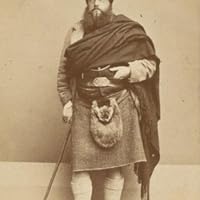
“Among curious rubbish you will find sound sense if you look for it. You will find the creed of the people, as shewn in their stories, to be, that wisdom and courage, though weak, may overcome strength, and ignorance, and pride: that the most despised is often the most worthy; that small beginnings lead to great results. You will find perseverance, frugality, and filial piety rewarded; pride, greed and laziness punished... That you may go on acquiring knowledge, selecting the good, and rejecting the evil; that you, like Conal in the story, may gather gold, and escape unharmed from the giant's land, is the earnest wish of your affectionate Kinsman.”
― Popular Tales of the West Highlands, Volume 1
― Popular Tales of the West Highlands, Volume 1

“As a girl, she’d lived on folktales. They were the water to her family’s roots, and she’d grown up on stories of bargains and broken hearts. Even Dad’s stories often ended in tragedy. When she was young, Eva thought it terribly romantic to love what you were destined to lose.
Now she called bullshit. It was easy to say that you’d die for someone, but what Eva really wanted was the kind of love that stood its ground when things got difficult, the kind of love that chose to live.
For years, she’d fed her anger to survive, picturing her heart like a garden made to wither in the cold, and she’d blamed Arthur for killing the part of her that had believed in their story.
But his touch awakened something in her again.
As Arthur moaned into the skin of her neck, pressing his lips to her body and making goose bumps erupt down her arms, Eva wondered if maybe she’d been wrong all this time. Gardens never really die, after all. Seeds lie dormant, and soil goes fallow, all in the faith that one day, when the conditions are right, it will bloom again.”
― Honey in Her Veins
Now she called bullshit. It was easy to say that you’d die for someone, but what Eva really wanted was the kind of love that stood its ground when things got difficult, the kind of love that chose to live.
For years, she’d fed her anger to survive, picturing her heart like a garden made to wither in the cold, and she’d blamed Arthur for killing the part of her that had believed in their story.
But his touch awakened something in her again.
As Arthur moaned into the skin of her neck, pressing his lips to her body and making goose bumps erupt down her arms, Eva wondered if maybe she’d been wrong all this time. Gardens never really die, after all. Seeds lie dormant, and soil goes fallow, all in the faith that one day, when the conditions are right, it will bloom again.”
― Honey in Her Veins

“Most folks don't know it, but the animals didn't always live on earth. Way back before "In the beginning" and "Once upon a time," they lived next door to the Moon. They'd probably still be there if Brer Rabbit and Sister Moon hadn't started squabbling with one another like they were married.”
― The Tales of Uncle Remus: The Adventures of Brer Rabbit
― The Tales of Uncle Remus: The Adventures of Brer Rabbit
“When the animals started living here on Earth, something seemed to happen to them. Where before they had gotten along with each other, now they started having little arguments and disagreements. It was only a matter of time before they weren't much different from people.”
― The Tales of Uncle Remus: The Adventures of Brer Rabbit
― The Tales of Uncle Remus: The Adventures of Brer Rabbit
“When the shadows were at their shortest, Brer Rabbit went over to Brer Fox's. He'd scarcely set one foot on the porch when he heard groaning from inside. He opened the door and saw Brer Fox sitting in his rocking chair, a blanket over his shoulder, looking like Death eating soda crackers in the graveyard.”
― The Tales of Uncle Remus: The Adventures of Brer Rabbit
― The Tales of Uncle Remus: The Adventures of Brer Rabbit
“Brer Rabbit allowed as to how he was too sick, and Brer Fox said he couldn't be too sick to go partying. (God knows, that's the truth! I ain't never been too sick to party. Even when I'm dead, I'll get up out of the grave to party. And when I get sick, the blues are the best doctor God put on earth. The blues can cure athlete's foot, hangnail, and the heartbreak of psoriasis.)”
― The Tales of Uncle Remus: The Adventures of Brer Rabbit
― The Tales of Uncle Remus: The Adventures of Brer Rabbit
“Brer Rabbit went into training. He bought a red jogging suit, a green sweatband, and some yellow Adidas sneakers, and he jogged ten miles every day. Then he'd come home and do a whole mess of push-ups, sit-ups, and skip rope to his records. Some folks wondered if he was training for a race or "Soul Train.”
― The Tales of Uncle Remus: The Adventures of Brer Rabbit
― The Tales of Uncle Remus: The Adventures of Brer Rabbit
“He tied Brer Rabbit to a tree alongside the road and went to get a stick. He was going to beat the Devil out of Brer Rabbit and whup some Jesus in.”
― The Tales of Uncle Remus: The Adventures of Brer Rabbit
― The Tales of Uncle Remus: The Adventures of Brer Rabbit
“How you today, Gran'sir' Gray Fox?" Brer Rabbit greeted him.
"Not doing too well," Gran'sir' Gray Fox said. "I got the old age in my teeths.”
― The Tales of Uncle Remus: The Adventures of Brer Rabbit
"Not doing too well," Gran'sir' Gray Fox said. "I got the old age in my teeths.”
― The Tales of Uncle Remus: The Adventures of Brer Rabbit
“Brer Bear said he was going to fish for mud-cats. Brer Wolf said he was going to fish for horneyheads. Brer Fox wanted to catch some perch for the ladies. Brer Turtle said he'd fish for minnows, and Brer Rabbit looked at Brer Turtle and said he was going to fish for suckers.”
― The Tales of Uncle Remus: The Adventures of Brer Rabbit
― The Tales of Uncle Remus: The Adventures of Brer Rabbit
“Back in them times people looked alike to the animals, so they called all of them Mr. Man.”
― The Tales of Uncle Remus: The Adventures of Brer Rabbit
― The Tales of Uncle Remus: The Adventures of Brer Rabbit
“When Brer Rabbit saw Mr. Man with the wagon full of money he looked around and noticed that he didn't have a wagon full of money. There was something wrong with that. If there wasn't, he'd have the money and Mr. Man wouldn't have any.”
― The Tales of Uncle Remus: The Adventures of Brer Rabbit
― The Tales of Uncle Remus: The Adventures of Brer Rabbit
“I wonder what's in that sack Brer Fox got slung over his shoulder?" Brer Rabbit wondered. He wondered and he wondered, and the more he wondered, the more he didn't know. He knew this much: Brer Fox had absolutely no business walking up the road singing and carrying something which nobody but him knew what it was.”
― The Tales of Uncle Remus: The Adventures of Brer Rabbit
― The Tales of Uncle Remus: The Adventures of Brer Rabbit
“Now, before I go any further I can hear you thinking that Brer Wolf been killed off twice. What that got to do with anything? Am I the tale? Is the tale me? Or is the tale the tale? Well, you can figure that out.”
― The Tales of Uncle Remus: The Adventures of Brer Rabbit
― The Tales of Uncle Remus: The Adventures of Brer Rabbit
“Like I said at the beginning, if there was one thing the animals agreed on, it was partying. If the sun came up on time, they had a party! If the rain was wet, they partied! If the grass was green, they partied!”
― The Tales of Uncle Remus: The Adventures of Brer Rabbit
― The Tales of Uncle Remus: The Adventures of Brer Rabbit
All Quotes
|
My Quotes
|
Add A Quote
Browse By Tag
- Love Quotes 102.5k
- Life Quotes 81k
- Inspirational Quotes 77.5k
- Humor Quotes 45.5k
- Philosophy Quotes 32k
- Inspirational Quotes Quotes 28.5k
- God Quotes 27k
- Wisdom Quotes 25k
- Romance Quotes 25k
- Truth Quotes 25k
- Poetry Quotes 24.5k
- Life Lessons Quotes 23k
- Quotes Quotes 21.5k
- Death Quotes 21k
- Happiness Quotes 19k
- Hope Quotes 19k
- Faith Quotes 18.5k
- Inspiration Quotes 18k
- Relationships Quotes 16k
- Motivational Quotes 16k
- Spirituality Quotes 16k
- Religion Quotes 15.5k
- Life Quotes Quotes 15.5k
- Writing Quotes 15k
- Love Quotes Quotes 15k
- Success Quotes 14.5k
- Motivation Quotes 14k
- Time Quotes 13k
- Science Quotes 12.5k
- Motivational Quotes Quotes 12k