
Find & Share Quotes with Friends
Fugue Quotes
Quotes tagged as "fugue"
Showing 1-13 of 13
“Theirs was the eternal youth of an alternating self, a youth with the constant although unfulfilled promise of growing up”
― Sybil: The Classic True Story of a Woman Possessed by Sixteen Personalities
― Sybil: The Classic True Story of a Woman Possessed by Sixteen Personalities
“It all made sense — terrible sense. The panic she had experienced in the warehouse district because of not knowing what had happened had been superseded at the newsstand by the even greater panic of partial knowledge. And now the torment of partly knowing had yielded to the infinitely greater terror of knowing precisely”
― Sybil: The Classic True Story of a Woman Possessed by Sixteen Personalities
― Sybil: The Classic True Story of a Woman Possessed by Sixteen Personalities

“Amnesia, which is a loss of memory, is a symptom of many different trauma and/or dissociative disorders, including PTSD, Dissociative Fugue, Dissociative Disorder Not Otherwise Specified and Dissociative Identity Disorder. Amnesia can affect both implicit and explicit memory.”
― The Impact of Early Life Trauma on Health and Disease: The Hidden Epidemic
― The Impact of Early Life Trauma on Health and Disease: The Hidden Epidemic
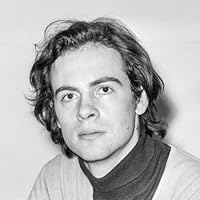
“Je pense à Dora Bruder. Je me dis que sa fugue n'était pas aussi simple que la mienne une vingtaine d'années plus tard, dans un monde redevenu inoffensif. Cette ville de décembre 1941, son couvre-feu, ses soldats, sa police, tout lui était hostile et voulait sa perte. A seize ans, elle avait le monde entier contre elle, sans qu'elle sache pourquoi.”
― Dora Bruder
― Dora Bruder

“He sat in the chapel for hours picking his way through fugues. A dozen notes, hardly music. But then those few notes spoke to each other, subject and answer, by repetition, by diminution, by augmentation, even looping backwards on themselves in a course like the retrograde motion of Mars. He listened as if he had as many ears as fingertips, and, like a blind man, could feel textures that were barely there. At the end of two or three pages of music he would hear all the voices twining together in a construction of such dizzying power that the walls of the chapel could barely contain it.”
― The Lieutenant
― The Lieutenant
“Traumatic experiences in adults generally do not produce multiple personality disorder but rather states of catatonic withdrawal, out-of-body experiences, fugue states, or psychogenic amnesias.”
―
―

“In this chapter I restrict myself to exploring the nature of the amnesia which is reported between personality states in most people who are diagnosed with DID. Note that this is not an explicit diagnostic criterion, although such amnesia features strongly in the public view of DID, particularly in the form of the fugue-like conditions depicted in films of the condition, such as The Three Faces of Eve (1957). Typically, when one personality state, or ‘alter’, takes over from another, they have no idea what happened just before. They report having lost time, and often will have no idea where they are or how they got there. However, this is not a universal feature of DID. It happens that with certain individuals with DID, one personality state can retrieve what happened when another was in control. In other cases we have what is described as ‘co-consciousness’ where one personality state can apparently monitor what is happening when another personality state is in control and, in certain circumstances, can take over the conversation.”
― Trauma, Dissociation and Multiplicity: Working on Identity and Selves
― Trauma, Dissociation and Multiplicity: Working on Identity and Selves
“La fugue – paraît-il – est un appel au secours et quelquefois une forme de suicide. Vous éprouvez quand même un bref sentiment d’éternité. Vous n’avez pas seulement tranché les liens avec le monde, mais aussi avec le temps. Et il arrive qu’à la fin d’une matinée, le ciel soit d’un bleu léger et que rien ne pèse plus sur vous. Les aiguilles de l’horloge du jardin des Tuileries sont immobiles pour toujours. Une fourmi n’en finit pas de traverser la tache de soleil.”
―
―
“Identity confusion... is as if somebody lost their mental road map and has no appreciation of who they are or what is going on in their life. They may know they know but become blustered or baffled as to why they don't. The information is inaccessible and likely would remind a person about things that have gone on in their life that are simply unacceptable and unknowable, in a given moment, because of the emotional gravity involved.”
― Intensive Psychotherapy for Persistent Dissociative Processes: The Fear of Feeling Real
― Intensive Psychotherapy for Persistent Dissociative Processes: The Fear of Feeling Real
“Les gens malheureux devraient s'autoriser à fuguer de leur vie. Les médecins, les psychologues, les conseillers d'orientation devraient prescrire des fugues.”
― Ma fugue chez moi
― Ma fugue chez moi
“Ce que cherchait Glenn Gould dans la musique de BACH, par son jeu staccatissimo - et les innombrables commentateurs ne l'ont pas vu - ce n'est rien d'autre que la lisibilité des voix contrapuntiques de ladite musique. En d'autres termes, Gould voulait rendre le plus nettement possible la spécificité de chacune des voix qui composent, par exemple, une fugue. La forme-fugue incarnant la quintessence de la musique du Kantor. Hélas, cela était impossible, comme c'est impossible pour tout instrument à clavier dont la nature sonore, l'identité sonore, est trop uniforme, le piano en tête ! L'orgue a bien quelques sonorités (jeux) à sa disposition, mais ce la ne suffit pas. La seule solution pour rendre aussi fidèlement que possible l'esprit contrapuntique de la musique de BACH, c'est de transcrire sa musique pour divers instruments ayant chacun une voix - une sonorité - très identifiable. C'est ce que j'ai modestement tenté par le moyen de diverses formations musicales (trios, quartets, quintets...) inventées spécialement à cette fin, savoir, redonner vie aux différentes voix du contrepoint. Un unique instrument ne pourra jamais même s'approcher de l'essence du contrepoint : il erre dans les limbes de l'harmonie et ne peut atteindre à aucune horizontalité - linéarité - des voix. Glenn Gould, cet anachorète des studios, n'a de cesse de chercher par quel biais technologique on pourrait rendre lisible ce fameux agencement des voix. Il se heurte à un problème de départ, insoluble : le son uniforme du piano. Ergo, cet instrument est sans aucun doute le dernier, avec le clavecin, qui convienne à la musique de BACH. Il existe, Dieu merci, d'autres compositeurs dont la musique ne pose pas le problème de la superposition de voix contrapuntiques purement linaires. L'ironie du sort voulut que Gould jouât du piano et ne goûtât pas Chopin, lequel était pourtant le seul qui a écrit - à ce jour - un musique qui épouse totalement la sonorité même du piano.”
―
―
“Simple linear logic, in which principles come first and deductions
follow, is not very useful when it comes to comprehending a vidya,
because the sages who developed these vidyas employed an entirely
different mode of thinking. 'They thought rather in terms of what
we might call a fugue, in which all the notes cannot be constrained
into a single melodic scale, in which one is plunged directly into the
midst of things and must follow the temporal order created by their
thoughts' (de Santillana, p. xi). Probably the most essential condition
for becoming a capable jyotishi, which happens to be the most
difficult one for the average Westerner to fulfill, is to learn how to
think in this holistic, non-linear way. Because it is also very difficult
to write or teach non-linearly - it is simply impossible to 'square the
circle' - imperfections in books on Jyotish that are written in
modern languages are inevitable.
One reason why Jyotish's texts are written in Sanskrit is that
Sanskrit helps facilitate holistic thought. The Seers taught that
Sanskrit's very sounds are sacred, and they held that Sanskrit (when
properly intoned) speaks directly to the soul of living creatures,
transmitting, as does music, a universal meaning which does not
depend on its composition or lyrics. Because the essence of the
Vedas is believed to be transferred to the listener when Vedic
hymns are recited correctly, the Vedas must be studied vocally in
their original Sanskrit if they are to be truly understood. This also
applies to the Vedas' satellite vidyas such as Jyotish and Ayweda
(India's traditional medical system). Other languages may convey
the vidyas' theoretical meaning, but only Sanskrit captures and
conveys their quintessence. Anyone who wishes to become a master
jyotishi must eventually possess and be posscsscd by Sanskrit, and
although theoretical or book learning can be helpful, Sanskrit, like
Jyotish, can only be truly learned orally from a competent teacher.”
― Light On Life
follow, is not very useful when it comes to comprehending a vidya,
because the sages who developed these vidyas employed an entirely
different mode of thinking. 'They thought rather in terms of what
we might call a fugue, in which all the notes cannot be constrained
into a single melodic scale, in which one is plunged directly into the
midst of things and must follow the temporal order created by their
thoughts' (de Santillana, p. xi). Probably the most essential condition
for becoming a capable jyotishi, which happens to be the most
difficult one for the average Westerner to fulfill, is to learn how to
think in this holistic, non-linear way. Because it is also very difficult
to write or teach non-linearly - it is simply impossible to 'square the
circle' - imperfections in books on Jyotish that are written in
modern languages are inevitable.
One reason why Jyotish's texts are written in Sanskrit is that
Sanskrit helps facilitate holistic thought. The Seers taught that
Sanskrit's very sounds are sacred, and they held that Sanskrit (when
properly intoned) speaks directly to the soul of living creatures,
transmitting, as does music, a universal meaning which does not
depend on its composition or lyrics. Because the essence of the
Vedas is believed to be transferred to the listener when Vedic
hymns are recited correctly, the Vedas must be studied vocally in
their original Sanskrit if they are to be truly understood. This also
applies to the Vedas' satellite vidyas such as Jyotish and Ayweda
(India's traditional medical system). Other languages may convey
the vidyas' theoretical meaning, but only Sanskrit captures and
conveys their quintessence. Anyone who wishes to become a master
jyotishi must eventually possess and be posscsscd by Sanskrit, and
although theoretical or book learning can be helpful, Sanskrit, like
Jyotish, can only be truly learned orally from a competent teacher.”
― Light On Life
All Quotes
|
My Quotes
|
Add A Quote
Browse By Tag
- Love Quotes 102.5k
- Life Quotes 81k
- Inspirational Quotes 77.5k
- Humor Quotes 45.5k
- Philosophy Quotes 32k
- Inspirational Quotes Quotes 28.5k
- God Quotes 27k
- Wisdom Quotes 25k
- Romance Quotes 25k
- Truth Quotes 25k
- Poetry Quotes 24.5k
- Life Lessons Quotes 23k
- Quotes Quotes 21.5k
- Death Quotes 21k
- Happiness Quotes 19k
- Hope Quotes 19k
- Faith Quotes 18.5k
- Inspiration Quotes 18k
- Relationships Quotes 16k
- Spirituality Quotes 16k
- Motivational Quotes 16k
- Religion Quotes 15.5k
- Life Quotes Quotes 15.5k
- Writing Quotes 15k
- Love Quotes Quotes 15k
- Success Quotes 14.5k
- Motivation Quotes 14k
- Time Quotes 13k
- Science Quotes 12.5k
- Motivational Quotes Quotes 12k