
Find & Share Quotes with Friends
Historical Science Quotes
Quotes tagged as "historical-science"
Showing 1-2 of 2

“But having developed productive forces to a tremendous extent, capitalism has become enmeshed in contradictions which it is unable to solve. By producing larger and larger quantities of commodities, and reducing their prices, capitalism intensifies competition, ruins the mass of small and medium private owners, converts them into proletarians and reduces their purchasing power, with the result that it becomes impossible to dispose of the commodities produced. On the other hand, by expanding production and concentrating millions of workers in huge mills and factories, capitalism lends the process of production a social character and thus undermines its own foundation, inasmuch as the social character of the process of production demands the social ownership of the means of production; yet the means of production remain private capitalist property, which is incompatible with the social character of the process of production. These irreconcilable contradictions between the character of the productive forces and the relations of production make themselves felt in periodical crises of overproduction, when the capitalists, finding no effective demand for their goods owing to the ruin of the mass of the population which they themselves have brought about, are compelled to burn products, destroy manufactured goods, suspend production, and destroy productive forces at a time when millions of people are forced to suffer unemployment and starvation, not because there are not enough goods, but because there is an overproduction of goods.”
― Dialectical and Historical Materialism
― Dialectical and Historical Materialism
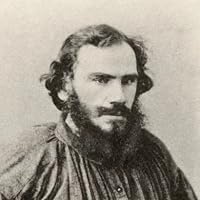
“The same thing happens in the search for the laws of historical movement.
The movement of mankind, proceeding from a countless number of human wills, occurs continuously.
To comprehend the laws of this movement is the goal of history. But in order to comprehend the laws of the continuous movement of the sum of all individual wills, human reason allows for arbitrary, discrete units. The first method of history consists in taking an arbitrary series of continuous events and examining it separately from others, whereas there is not and cannot be a beginning to any event, but one event always continuously follows another. The second method consists in examining the actions of one person, a king, a commander, as the sum of individual wills, whereas the sum of individual wills is never expressed in the activity of one historical person.
Historical science in its movement always takes ever smaller units for examination, and in this way strives to approach the truth. But however small the units that history takes, we feel that allowing for a unit that is separate from another, allowing for the beginning of some phenomenon, and allowing for the notion that all individual wills are expressed in the actions of one historical person, is false in itself.
Any conclusion of historical science, without the least effort on the part of criticism, falls apart like dust, leaving nothing behind, only as a result of the fact that criticism selects as an object for observation a larger or smaller discrete unit, which it always has the right to do, because any chosen historical unit is always arbitrary.
Only by admitting an infinitesimal unit for observation—a differential of history, that is, the uniform strivings of people—and attaining to the art of intigrating them (taking the sums of these infinitesimal quantities) can we hope to comprehend the laws of history.”
― War and Peace
The movement of mankind, proceeding from a countless number of human wills, occurs continuously.
To comprehend the laws of this movement is the goal of history. But in order to comprehend the laws of the continuous movement of the sum of all individual wills, human reason allows for arbitrary, discrete units. The first method of history consists in taking an arbitrary series of continuous events and examining it separately from others, whereas there is not and cannot be a beginning to any event, but one event always continuously follows another. The second method consists in examining the actions of one person, a king, a commander, as the sum of individual wills, whereas the sum of individual wills is never expressed in the activity of one historical person.
Historical science in its movement always takes ever smaller units for examination, and in this way strives to approach the truth. But however small the units that history takes, we feel that allowing for a unit that is separate from another, allowing for the beginning of some phenomenon, and allowing for the notion that all individual wills are expressed in the actions of one historical person, is false in itself.
Any conclusion of historical science, without the least effort on the part of criticism, falls apart like dust, leaving nothing behind, only as a result of the fact that criticism selects as an object for observation a larger or smaller discrete unit, which it always has the right to do, because any chosen historical unit is always arbitrary.
Only by admitting an infinitesimal unit for observation—a differential of history, that is, the uniform strivings of people—and attaining to the art of intigrating them (taking the sums of these infinitesimal quantities) can we hope to comprehend the laws of history.”
― War and Peace
All Quotes
|
My Quotes
|
Add A Quote
Browse By Tag
- Love Quotes 102.5k
- Life Quotes 81k
- Inspirational Quotes 77.5k
- Humor Quotes 45.5k
- Philosophy Quotes 32k
- Inspirational Quotes Quotes 29k
- God Quotes 27k
- Wisdom Quotes 25.5k
- Romance Quotes 25k
- Truth Quotes 25k
- Poetry Quotes 24.5k
- Life Lessons Quotes 23k
- Quotes Quotes 21.5k
- Death Quotes 21k
- Happiness Quotes 19k
- Hope Quotes 19k
- Faith Quotes 18.5k
- Inspiration Quotes 18k
- Spirituality Quotes 16k
- Relationships Quotes 16k
- Motivational Quotes 16k
- Religion Quotes 15.5k
- Life Quotes Quotes 15.5k
- Writing Quotes 15k
- Love Quotes Quotes 15k
- Success Quotes 14.5k
- Motivation Quotes 14k
- Time Quotes 13k
- Science Quotes 12.5k
- Motivational Quotes Quotes 12k