
Find & Share Quotes with Friends
Hugh Macdiarmid Quotes
Quotes tagged as "hugh-macdiarmid"
Showing 1-13 of 13
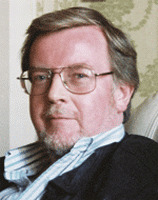
“For Scotland is made out of cities and the country and the sea, which means
It's so much more, as an imagined space, a geography of the mind,
Than its centres of population. Demographics are never enough
And the way in which this might best be imagined starts
In the work of Hugh MacDiarmid. And the poets and artists
Who followed from that. Not as disciples. As students. As witnesses
As thinking men and women, who understand the depths, complexities
Subtleties and strengths and the cosmic clock,
All the resources there, and all the risks required.
from 'Scotland's Voices”
― Landmarks: Poets, Portraits and Landscapes of Modern Scotland
It's so much more, as an imagined space, a geography of the mind,
Than its centres of population. Demographics are never enough
And the way in which this might best be imagined starts
In the work of Hugh MacDiarmid. And the poets and artists
Who followed from that. Not as disciples. As students. As witnesses
As thinking men and women, who understand the depths, complexities
Subtleties and strengths and the cosmic clock,
All the resources there, and all the risks required.
from 'Scotland's Voices”
― Landmarks: Poets, Portraits and Landscapes of Modern Scotland

“Wan decade frae wir last self-defeatin referendum, we're close tae hae the centenary ae MacDiarmid's masterpiece, A Drunk Man Looks at the Thistle. Oan the man's daith, Norman MacCaig said they should observe twa minutes' pandemonium. Fine description ae MacDiarmid himself, as much as whit he unleashed. MacDiarmid wiss Scotland's ultimate political poet. We winna rehearse the man's mony faults here - "problematic", says Heaney. Aye. And in spite ae this, MacDiarmid's mair important tae the cause ae Scots and Scotland than ony ither poet frae the previous century. "My job, as I see it, has never been to lay a tit's egg, but to erupt like a volcano, emitting not only flame, but a lot of rubbish." And that's hou Mount MacDiarmid maun be regarded: tempted as we may be tae tak oot the rubbish, we canna thraw the hail lot awa, as wull shairly be settin the bins ablaze. An whit's mair self-defeatin nor a bin fire?”
― Irish Pages, Vol. 12, No. 2: Scotland
― Irish Pages, Vol. 12, No. 2: Scotland

“Yes, I go along with the idea of a Scottish Spring. It was genuinely a time of beginnings, a time of openings, and I always felt that those who left Scotland then - eg. Kenneth White, Douglas Dunn - were too impatient and should have stayed. New international configurations - Sottish-American, Scottish-Russian, Scottish-Brazilian - appeared. New genres like concrete poetry and sound-poetry challenged a fair amount of opposition. I remember Hugh MacDiarmid growling in 1970 "I'd hate an Ian Finlay poem on my gravetstone." Publishers like Wild Hawthorn, Migrant, Eugen Gomringer, Hansjörg Mayer, encouraged Scotland to see the world and the world to see Scotland.”
― Justified Sinners: An Archaeology of Scottish Counter Culture, 1960 - 2000
― Justified Sinners: An Archaeology of Scottish Counter Culture, 1960 - 2000

“To read Hugh MacDiarmid is a searing test of one's honesty. Can one be a believer and yet say, as the misbelieving men say, that he writes much pretentious nonsense. Love his work, yet confess his failures? The difficulty arises from the fanatical nature of the responses his work has evoked. Between 'the only major poet writing in Europe to-day' and 'the fellow's no poet - the merest charlatan' there seems no plain path for the feet. He is in fact a daimon, whether diabolic or divine, and to be sober in its presence is past praying for. One is under the influence at once, drunk with delight or furious in denunciation. Only the calm souls who don't know a daimon when they see it can read him calmly; and they, of course, have not read him at all.”
― Wild Geese: A Collection of Nan Shepherd's Writing
― Wild Geese: A Collection of Nan Shepherd's Writing

“A Drunk Man Looks at the Thistle by Hugh MacDiarmid was something else I loved. But then everybody knows he's a genius, so it's silly for me to even try to explain why I like him. Someone told me that he liked my stuff and it blew my head off, I couldn't believe it. I like being respected by people I respect.”
― Billy Connolly: The Authorized Version
― Billy Connolly: The Authorized Version

“It intrigued me that literary people raved about the poems MacDiarmid wrote while living in Shetland, especially 'On a Raised Beach', while I found them hard to appreciate. As a Shetlander and a geographer who knew the place fairly intimately, including the steep storm beaches (and lack of post-glacial isostatic uplift necessary for raised beaches), I found his battering-ram approach to using geological terminology a bit indigestible. We all have moments of epiphany when we discover something profound, and I suppose that may have been the feeling he tried to convey but, along with what felt like garbled geomorphology, theology and - in my 'book' - the heinous crime of exoticising the Shaetlan tongue and its ancestry in the Norn language, it all felt a bit contrived, as if skiting the surface. But meanwhile, living and working in Edinburgh, I was learning to keep my mouth shut, and that any criticism of MacDiarmid's poetry was unthinkable. So I ungraciously joined the ranks of those who 'quite liked a few of his early lyrics' to get me off the hook.”
― Ayont the Thistle: A gallimaufry of poetry and prose to mark the centenary (1926 - 2026) of Hugh MacDiarmid's 'A Drunk Man looks at the Thistle'
― Ayont the Thistle: A gallimaufry of poetry and prose to mark the centenary (1926 - 2026) of Hugh MacDiarmid's 'A Drunk Man looks at the Thistle'

“MacDiarmid's words were composed, to a startling degree, out of words that had, indeed, been written before. A Drunk Man Looks at the Thistle does not go as far as the copy-and-paste collages of his later work in English, but his great Scots poem is nevertheless made up of lines that are routinely borrowed or extracted, quoted or adapted, compiled or found or lifted: from Burns, Child, Wordsworth, Nietzsche, Shestov, Blok, Dostoevsky, H.G. Wells, A.R. Orage, Sachervell Sitwell...”
― Ayont the Thistle: A gallimaufry of poetry and prose to mark the centenary (1926 - 2026) of Hugh MacDiarmid's 'A Drunk Man looks at the Thistle'
― Ayont the Thistle: A gallimaufry of poetry and prose to mark the centenary (1926 - 2026) of Hugh MacDiarmid's 'A Drunk Man looks at the Thistle'
“Drunk Man views life as inseparable from a tension which expresses itself in conflicts and periodic crises, and the nature of which was already clearly enough perceived by Adam Smith and Dugald Stewart when they pointed out that the very same thing, this specialisation which is responsible for the material enrichment of the community also tens to create a spiritual and intellectual impoverishment.”
― Cencrastus No. 25: Spring 1987
― Cencrastus No. 25: Spring 1987
“While Grieve was at Hillsborough Barracks, he was overwhelmed by the news of the Easter Rising in Ireland... 'If it had been possible at all,' he revealed in an interview, 'I would have deserted at that time from the British Army and joined the Irish.' Henceforth, he closely connected the Scottish and Irish struggles for autonomy.”
― MacDiarmid
― MacDiarmid

“My job, as I see it, has never been to lay a tit's egg, but to erupt like a volcano, emitting not only flame, but a lot of rubbish.”
― The Letters of Hugh MacDiarmid
― The Letters of Hugh MacDiarmid
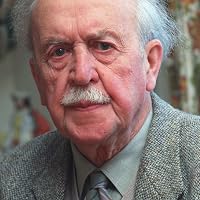
“Thug a' Bheurla Ghalida Albannach leum aiste on làithaich anns an roh a bàrdachd fad iomadh bliadhna, agus sheas i air àrd-mhullaichean ealain na Rionn Eòrpa. Is còir dhuinne mar Ghàidheil a bbhith uasal às ar càirdean, ar comh-cheiltich air a' Ghalldachd.
Scots language leapt up from the sludge in which its poetry was mired for many years, and it stood on the peaks of European art. We, as Gaels, should be proud of our friends, our fellow Celts in the Lowlands.”
― Gairm 6: Winter 1953
Scots language leapt up from the sludge in which its poetry was mired for many years, and it stood on the peaks of European art. We, as Gaels, should be proud of our friends, our fellow Celts in the Lowlands.”
― Gairm 6: Winter 1953

“Mercifully, at BBC Scotland, there was still some boldness about.
Five years earlier, BBC Scotland Controller Pat Chalmers had refused to had over tapes of a series by Duncan Campbell about 'Zircon', a secret £500 million spy satellite programme being implemented behind the backs of MPs. The tapes were impounded anyway. But there was still smeddum about - and production staff totally immersed in Scotland's cultures. One was Radio Scotland boss and Gaelic speaker Neil Fraser, another was arts producer and jazz trombonist Dave Batchelor. Dave was put in charge of the whole highly ambitious three-hour programme, commemorating the life of Hugh MacDiarmid, to be broadcast live from Studio One in the Beeb's old base at 5 Queen Street, Edinburgh. Unbelievably, within a decade, this fabulous, acoustic space was mothballed thanks to the internal market imposed by Director General John Birt. No BBC programme could afford to use the corporation's own finest studio space. Nice one, John.”
― Ayont the Thistle: A gallimaufry of poetry and prose to mark the centenary (1926 - 2026) of Hugh MacDiarmid's 'A Drunk Man looks at the Thistle'
Five years earlier, BBC Scotland Controller Pat Chalmers had refused to had over tapes of a series by Duncan Campbell about 'Zircon', a secret £500 million spy satellite programme being implemented behind the backs of MPs. The tapes were impounded anyway. But there was still smeddum about - and production staff totally immersed in Scotland's cultures. One was Radio Scotland boss and Gaelic speaker Neil Fraser, another was arts producer and jazz trombonist Dave Batchelor. Dave was put in charge of the whole highly ambitious three-hour programme, commemorating the life of Hugh MacDiarmid, to be broadcast live from Studio One in the Beeb's old base at 5 Queen Street, Edinburgh. Unbelievably, within a decade, this fabulous, acoustic space was mothballed thanks to the internal market imposed by Director General John Birt. No BBC programme could afford to use the corporation's own finest studio space. Nice one, John.”
― Ayont the Thistle: A gallimaufry of poetry and prose to mark the centenary (1926 - 2026) of Hugh MacDiarmid's 'A Drunk Man looks at the Thistle'
“It is a kind of irrepressible energy that strikes us most in MacDiarmid's work, an energy which at times outruns the reader's patience or the demands of the subject but which always recovers unexpectedly, pauses, and strikes like a cobra. His methods are his own, and he is a model for no one, but he is one of the great twentieth-century poets, and a writer whose individuality it will take the next century to sift and define.”
― Hugh MacDiarmid
― Hugh MacDiarmid
All Quotes
|
My Quotes
|
Add A Quote
Browse By Tag
- Love Quotes 102.5k
- Life Quotes 81k
- Inspirational Quotes 77.5k
- Humor Quotes 45.5k
- Philosophy Quotes 32k
- Inspirational Quotes Quotes 29k
- God Quotes 27k
- Wisdom Quotes 25.5k
- Romance Quotes 25k
- Truth Quotes 25k
- Poetry Quotes 24.5k
- Life Lessons Quotes 23k
- Quotes Quotes 21.5k
- Death Quotes 21k
- Happiness Quotes 19k
- Hope Quotes 19k
- Faith Quotes 18.5k
- Inspiration Quotes 18k
- Relationships Quotes 16k
- Spirituality Quotes 16k
- Motivational Quotes 16k
- Religion Quotes 15.5k
- Life Quotes Quotes 15.5k
- Writing Quotes 15k
- Love Quotes Quotes 15k
- Success Quotes 14.5k
- Motivation Quotes 14k
- Time Quotes 13k
- Science Quotes 12.5k
- Motivational Quotes Quotes 12k