
 Sign in with Facebook
Scottish Culture Quotes
Quotes tagged as "scottish-culture"
Showing 1-13 of 13
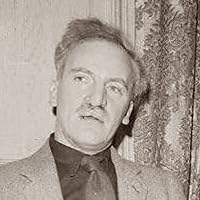
“Today finds Scotland in an extraordinary muddle. First she was free in body, romantic, cultured, and uncivilised, till her government was taken over by a usurious Kirk, weilding power through superstition. The boor for a century, she was repopularised by Scott, adopted as a plaything by a foreign queen, suffered worse than any nation in the industrial upheaval, and finally left an abortive carcase rotting somewhere to the North of England.”
― Scotland in Quest of Her Youth
― Scotland in Quest of Her Youth

“Whilst wishing to be associated with the current renaissance in Scottish art, I am actually a recessionist and have only joined to see if that's where the real money is.”
―
―

“The disjuncture from politics, on the other hand, springs from something which concerns all these poets: the shattered nature of Scottish consciousness, which isn't a low flat floor of peasant culture on which all stand together but a wild junk-yard of high culture fragments, English imports, oral traditions of 'the Scots commons' and proletarian 'socialist realism' from the thirties.”
― Seven Poets: Hugh MacDiarmid, Norman MacCaig, Iain Crichton Smith, George Mackay Brown, Robert Garioch, Sorley MacLean, Edwin Morgan
― Seven Poets: Hugh MacDiarmid, Norman MacCaig, Iain Crichton Smith, George Mackay Brown, Robert Garioch, Sorley MacLean, Edwin Morgan

“The attempt to separate Lowland from Highland Scotland ignores the extent to which Lowland Scots are the descendants of Highlanders, and how many Lowland Scots, like Nan Shepherd, made the country's mountains the focus of their spiritual aspirations. 'Highlandism' is not simply the ersatz adoption of a stereotypical version of Scottish culture which is entirely unconnected with the reality of modern Scottish life: the Highlands are both the geographical and the historical backdrop with which 'Lowland' Scottish culture interacts.”
― The Wealth of the Nation: Scotland, Culture and Independence
― The Wealth of the Nation: Scotland, Culture and Independence

“Perhaps more than anything in The Maggie, the 'Spirit of Scotland' image is troubling, particularly for those concerned with the way women are represented in films about Scotland. In Ouainé Bain's apt phrase, the 'fey, winsome lass' who consummates Marshall's entry into the film's Celtic world offers one of the two ultimately limiting images of women which dominate Scottish culture (the other being the Ma Broon figure who holds the home together) and forbid entry to it of images of women which accord more with the needs of contemporary Scottish women.”
― Cencrastus No. 12: Spring 1983
― Cencrastus No. 12: Spring 1983
“What happened in Scotland in the 1960s and the 1970s and what laid the foundation for the enormous creative achievements of the 1980s was the liberation of the voice. The Scottish voice declared its independence. The liberation of the voice was at first the acceptance of and an assertion of the vernacular. But the real liberation of the voice came not from the assertion of the rights of the vernacular itself, but from the assertion of the right to move without boundaries between the vernacular and standard English, between the demotic and the literary.”
― Out of History: Narrative Paradigms in Scottish and British Culture
― Out of History: Narrative Paradigms in Scottish and British Culture

“Scots is a West Germanic language with a literature going back more than 800 years, yet Scotland is a country where only English is compulsory in school, and where Scotland's history is barely taught beyond primary school, and where (non-Scottish) newspaper owners have been known to prohibit the reviewing of Scottish books on the grounds that this would be 'provincial', while the myopic hegemony of the Anglocentric media enshrines a set of attitudes which routinely ignores or belittles our culture.”
― Irish Pages, Vol. 12, No. 2: Scotland
― Irish Pages, Vol. 12, No. 2: Scotland
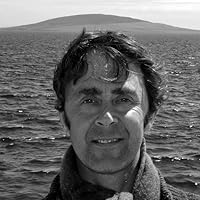
“When will Scottish culture be able to sustain a body of criticism worthy of its cultural production?”
― Justified Sinners: An Archaeology of Scottish Counter Culture, 1960 - 2000
― Justified Sinners: An Archaeology of Scottish Counter Culture, 1960 - 2000
“This credo of youth is engulfed in a chorus of other voices: pilot-plans, social models, manifestos, concrete poetry, sound poetry, Happenings - new models of order in spaces of doubt. But what followed? The epitome of youthful rebellion is a thunderbolt; its aftermath so much charred earth. Re-reading Tom McGrath's Riverside Interview, I was struck by the characterisations of Alex Trocchi and R.D. Laing as justified sinners, strewing psychic chaos, inspiring a thunderous mixed-up scene. Their adventures in consciousness spiralled into drugs, alcoholism, broken relationships and early graves. Tom describes them as prototypes of evil but, while admitting their darkness, pledges himself again to the rebel party.”
― Justified Sinners: An Archaeology of Scottish Counter Culture, 1960 - 2000
― Justified Sinners: An Archaeology of Scottish Counter Culture, 1960 - 2000

“Yes, I go along with the idea of a Scottish Spring. It was genuinely a time of beginnings, a time of openings, and I always felt that those who left Scotland then - eg. Kenneth White, Douglas Dunn - were too impatient and should have stayed. New international configurations - Sottish-American, Scottish-Russian, Scottish-Brazilian - appeared. New genres like concrete poetry and sound-poetry challenged a fair amount of opposition. I remember Hugh MacDiarmid growling in 1970 "I'd hate an Ian Finlay poem on my gravetstone." Publishers like Wild Hawthorn, Migrant, Eugen Gomringer, Hansjörg Mayer, encouraged Scotland to see the world and the world to see Scotland.”
― Justified Sinners: An Archaeology of Scottish Counter Culture, 1960 - 2000
― Justified Sinners: An Archaeology of Scottish Counter Culture, 1960 - 2000

“The counter-culture was global - or so we thought. For the first time we felt in touch with California and Paris, Poland and India and together we would change the world. Even Edinburgh would move to a more open and humane and anarchic direction. It and we would be a tonic to the nation and the very idea of 'nation' would become irrelevant.
Scottish culture believed itself to be 'European' but surely it gloried in a powerful insularity too. And that was all to be moribund, this was a brave new world and we had no irony in that belief. The dystopias of Huxley and Orwell were forgotten - we now had the key to happiness. And surprisingly even now, it still seems we were doing the right thing and it was good.”
― Justified Sinners: An Archaeology of Scottish Counter Culture, 1960 - 2000
Scottish culture believed itself to be 'European' but surely it gloried in a powerful insularity too. And that was all to be moribund, this was a brave new world and we had no irony in that belief. The dystopias of Huxley and Orwell were forgotten - we now had the key to happiness. And surprisingly even now, it still seems we were doing the right thing and it was good.”
― Justified Sinners: An Archaeology of Scottish Counter Culture, 1960 - 2000
All Quotes
|
My Quotes
|
Add A Quote
Browse By Tag
- Love Quotes 102k
- Life Quotes 80.5k
- Inspirational Quotes 77k
- Humor Quotes 44.5k
- Philosophy Quotes 31.5k
- Inspirational Quotes Quotes 28.5k
- God Quotes 27k
- Wisdom Quotes 25k
- Truth Quotes 25k
- Romance Quotes 24.5k
- Poetry Quotes 23.5k
- Life Lessons Quotes 22.5k
- Quotes Quotes 21.5k
- Death Quotes 21k
- Happiness Quotes 19k
- Hope Quotes 19k
- Faith Quotes 18.5k
- Inspiration Quotes 18k
- Motivational Quotes 16k
- Spirituality Quotes 16k
- Relationships Quotes 16k
- Religion Quotes 15.5k
- Life Quotes Quotes 15.5k
- Writing Quotes 15k
- Love Quotes Quotes 15k
- Success Quotes 14k
- Motivation Quotes 14k
- Time Quotes 13k
- Science Quotes 12k
- Motivational Quotes Quotes 12k
