
Find & Share Quotes with Friends
Lakota Quotes
Quotes tagged as "lakota"
Showing 1-30 of 30

“There is no word for goodbye in Lakota. That's what my mother used to tell me. Sure, there are words like toksa, which meant "later," that were used by people as a modern substitute. She'd told me later that the Lakota people didn't use a term for farewell because of the idea that we are forever connected. To say goodbye would mean the circle was broken.”
― Winter Counts
― Winter Counts

“Crazy Horse was dead. He was brave and good and wise. He never wanted anything but to save his people, and he fought the Wasichus only when they came to kill us in our own country. He was only thirty years old. They could not kill him in battle. They had to lie to him and kill him that way.
I cried all night, and so did my father.”
― Black Elk Speaks: Being the Life Story of a Holy Man of the Oglala Sioux
I cried all night, and so did my father.”
― Black Elk Speaks: Being the Life Story of a Holy Man of the Oglala Sioux

“Pain flashed through his eyes. “Dammit, Evie.” Steam huffed against my mouth. “I’m fucking drowning in my desire to be near you, to touch you”—he dropped his brow on mine and inhaled—“to be inside you.” ~ Jesse Beckett”
― Dead of Eve
― Dead of Eve
“This time, the rapids sent them through a dark tunnel that seemed timeless, blind, malevolent. A yawning throat of water.”
― The Porcupine Year
― The Porcupine Year
“He wondered if he would ever see the inside of one of those houses whose great windows blared sheaves of light. They made huge blurred spears that reached out into the balmy spring darkness.”
― Chickadee
― Chickadee
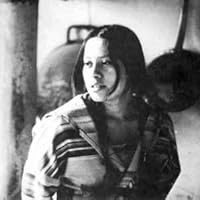
“When a Lakota woman says: “I am on my moon,” it means that she has her period, and that has a special magic and mythical meaning for us. Being on our moon is surrounded by ancient but ever-strong beliefs, by legends and mythology, by customs going back to the dawn of time. It is the widespread belief, not only among us Sioux but among most Native American tribes, that a menstruating woman has a special, overwhelming power that nullifies the power of the men, even that of the medicine men.”
―
―

“Il tempo trascorso ci ha allontanati, ma quando si vuole bene a qualcuno non c’è nulla capace di scalfire i sentimenti.”
― Paradise Valley: La trilogia
― Paradise Valley: La trilogia
“Una volta ho sentito Esther raccontarlo a Theresa. Diceva che il cuore fa strani scherzi quando si è innamorati...”
― Paradise Valley: La trilogia
― Paradise Valley: La trilogia
“Non sarà facile per te vivere là fuori, sei lontano da quel mondo da troppo tempo.” Ripensò alle parole che suo nonno gli aveva detto il giorno in cui aveva deciso di lasciare la riserva e non poté far altro che darsi dello stupido per non averle ascoltate. “Qui a pochi importa che il tuo sangue sia mischiato a quello dei wasi’chu, ma laggiù nelle loro città non incapperai che nel disprezzo e non potrai far nulla per nascondere ciò che sei, perché da dove vieni sta scritto sulla tua faccia.”
― Paradise Valley: La trilogia
― Paradise Valley: La trilogia

“His own mother’s blood was mixed between her Lakota mother and a French trapper. His father’s family came from Scotland to escape the English. The differences weren’t a problem with his mother’s people but among his father’s there was intolerance and prejudice.”
― Yavapai County Line: West of the Divide Book 1
― Yavapai County Line: West of the Divide Book 1
“When the Lakota chief Red Cloud finally quit fighting the intruders, he reportedly told a white delegation, "We didn't need all this land, and neither did you.”
― The Captured: A True Story of Abduction by Indians on the Texas Frontier
― The Captured: A True Story of Abduction by Indians on the Texas Frontier
“Although she lived in town, Old Tallow was so isolated by the force and strangeness of her personality that she could have been surrounded by a huge dark forest. She had never had any children, and each of her three husbands had slunk off in turn during the night, never to be seen again. Nobody knew exactly what it was that Tallow, in her younger days, had done to drive them off. It had probably been something terrible. After the last husband left, her face seemed to have gotten old suddenly, though the rest of her hadn’t weakened. She was a rangy woman over six feet in height. She was powerful, lean, and lived surrounded by ferocious animals more wolf than dog.”
― The Birchbark House
― The Birchbark House
“Each of Old Tallow’s feet seemed to take up as much space as a small child, but Omakayas didn’t mind. Warily, but completely, she loved the fierce old woman.”
― The Game of Silence
― The Game of Silence
“She told the holy stories and the funny stories, the aadizookaanag that explained how the world came into being, how it continued to be made.”
― The Game of Silence
― The Game of Silence
“The prairie almost seemed to mock them with its beauty. Every inch of their skin was covered with bites upon bites. Their faces were purple and swollen. The mosquitoes bit through cloth, they bit through hair, they were implacable. Every being suffered. Yet they kept moving.”
― Chickadee
― Chickadee
“Life had sprung up along the trail. The thin film of green in the trees had become a cloud of new leaves. Robins, bluebirds, vireos, finches, songbirds of all types made the brush along the trail a wall of sharp melody.”
― Chickadee
― Chickadee
“Animikiins used all his skills. But the earth is good at swallowing up all traces of people. At last, in spite Animikiins's great powers, they lost his trail.”
― Chickadee
― Chickadee

“After my sister Sandra was born the doctors there performed a hysterectomy on my mother, in fact sterilizing her without her permission, which was common at the time, and up to just a few years ago, so that it is hardly worth mentioning. In the opinion of some people, the fewer Indians there are, the better. As Colonel Chivington said to his soldiers: "Kill 'em all, big and small, nits make lice!”
― Lakota Woman
― Lakota Woman
“I did not take kindly to the discipline and to marching by the clock, left-right, left-right. I was never one to like being forced to do something. I do something because I feel like doing it. I felt this way always, as far as I can remember, and my sister Barbara felt the same way. An old medicine man once told me: "Us Lakotas are not like dogs who can be trained, who can be beaten and keep on wagging their tails, licking the hand that whipped them. We are like cats, little cats, big cats, wildcats, bobcats, mountain lions. It doesn't matter what kind, but cats who can't be tamed, who scratch if you step on their tails." But I was only a kitten and my claws were still small.”
― Lakota Woman
― Lakota Woman
“I tell them that we’re all equal in the circle, and if one is weak, to try to give her strength and try to help each other. I always want to make the point with the women who come around that I am no better than they are. And that they aren’t any better than I, even though they might drive a fancy car. They might be better off than I am, but in the traditional sense we’re all the same. In the sweats we pray for the men to understand us better, too. When they enter the lodge on all fours, I tell them it should remind them to be humble, that we are no better than our
four-legged relatives. When we huddle close together, our bodies touching, the darkness uniting us, I remind them that in the dark we cannot see our faces, or the color of our skins, that in the sweat lodge we are all the same and we cannot see whether we are Indian, white, or black. I tell them that our little lodge has become our universe, our galaxy. I remind them to turn inward into the vastness of their own minds. I sing to Kate Wiohpeyata, to the Spirit of the West. I sing so that the supernaturals will come in and take part in our purification and bless us.”
― Ohitika Woman
four-legged relatives. When we huddle close together, our bodies touching, the darkness uniting us, I remind them that in the dark we cannot see our faces, or the color of our skins, that in the sweat lodge we are all the same and we cannot see whether we are Indian, white, or black. I tell them that our little lodge has become our universe, our galaxy. I remind them to turn inward into the vastness of their own minds. I sing to Kate Wiohpeyata, to the Spirit of the West. I sing so that the supernaturals will come in and take part in our purification and bless us.”
― Ohitika Woman
“For me Lakota ceremonies are my way of living in balance, of recognizing myself as an Indian. They are the drumbeats of my heart. They open a magical door for me. I walk through it and, on the other side, see a different reality, the true image of the universe. This power dwells in the secret valley of my heart.”
― Ohitika Woman
― Ohitika Woman
“It is easy to relate to Indian religion. You don’t need a church or Sunday clothes to communicate with Grandfather. A certain rock or tree could be your church, a buffalo skull your altar, your pipe a bridge to the powers above. You can come into the sweat lodge and purify yourself, pray, and find comfort from the rocks, the water, and the sage. You can go up on a hill and be a church all by yourself. You don’t need a priest between yourself and the Grandfather Spirit.”
― Ohitika Woman
― Ohitika Woman
“When you hear the wind blowing through the pines, you can hear people, you can hear spirits during the dance. The spirits are in harmony with the dance, and they’ll sing and talk with us.”
― Ohitika Woman
― Ohitika Woman
“The fight for Big Mountain is being lost. The forced relocations are continuing. I fear that the beautiful country there will become a great black hole made by the strip miners. But I do not think that our fight has been in vain. One day it will bear fruit, and our years of support for the Big Mountain people have cemented the bond between the Diné and the Lakota people, particularly between the peyote church members of both tribes. It was like one long, long alowanpi—a seven-year-long relation-making ceremony.”
― Ohitika Woman
― Ohitika Woman
“If the Sioux of old were male chauvinists on one side, they were feminists on the other. They prayed to Wakan Tanka, whom they also called Tunkashila, the Grandfather Spirit. But the most important supernatural being in their mythology was Ptesan Win, the White Buffalo Calf Woman, who brought the sacred pipe to the Lakota, taught them its use, taught them, as a matter of fact, how to live as human beings. To emphasize her power, there is the tale that she first appeared to two young hunters, one of whom stretched out his hand to possess her physically. For this lack of respect he was burned up and reduced to a little heap of charred bones and ashes. This is a strange sort of mythology for a tribe whose young men boast of their sexual conquests. Our old tales also talk of Wohpe, another great supernatural being, whom a white person might call a goddess of love and beauty and purity, a woman and a shooting star at the same time. And there is the mystical woman who, in times long past, got pregnant by swallowing a pebble, giving birth to Iyan-Hokshi, the Stone Boy, heroic slayer of an evil witch. Unlike Wakan Tanka-Tunkashila, who, like the God of the Christians, never appears as a person, Ptesan Win and Wohpe are beautiful female beings. It is said that the White Buffalo Calf Woman dazzled humans with her unearthly beauty. In some tales, she appears to the hunters as a young girl in a shining white buckskin dress, and in others as naked, clothed only in her flowing raven hair. When she leaves the tribe, after teaching them all they need to know, she transforms herself into a white buffalo calf, symbolizing the close relationship between the people and this holy animal, who gave of itself so that the humans could live, whose skull is our sacred altar. And just as Ptesan Win instructed men and women in all the different aspects of life, so the buffalo gave us all the physical things we needed to survive—its flesh nourished us; out of its fur and hide we made robes and blankets; and out of its bones knives, needles, shovels, awls, even play sleds for the children. While it is impossible to imagine how Wakan Tanka-Tunkashila looks, if indeed he has a visible form, Ptesan Win and Wohpe appear in human shape. So the macho Sioux have what the anthros call a “culture heroine,” but no real culture hero.”
― Ohitika Woman
― Ohitika Woman
“One reason for the Lakotas’ aversion to becoming farmers was their belief that “you should not cut Grandmother’s hair, or rip up her bowels,” meaning that you should not dig up and plow the earth or cut the plants growing out of the soil.”
― Ohitika Woman
― Ohitika Woman
“The big companies call the Lakota land a “Nuclear Energy Park,” or “Black Hills Multinational Energy Domain,” or even “National Sacrifice Area.” I ask myself: “Who and what is to be sacrificed here?” It makes me shudder. Some people say: “The collapse of the Soviet Union will kill the uranium mining and that will be our Indian ‘peace dividend.’” I don’t believe it. They’ll still find plenty of use for that evil stuff, and they’ll always find Indian land as the ideal site to test their weapons on. In 1942, the government seized 133,000 acres of the Pine Ridge Reservation as a gunnery range to practice aerial bombing. This was near Sheep Mountain in one of the most scenic parts of South Dakota.”
― Ohitika Woman
― Ohitika Woman
“Bear Butte, sacred to the Cheyennes and Lakotas, now has a parking area and a paved road leading to the top from where gawking tourists with binoculars can watch one of our holy men undergo his vision quest. But the land is still there, beautiful, waiting to be redeemed, and so long as there is still a shred of life left in us we will keep on fighting for it. HECHEL LENA OYATE KIN NIPI KTE, so that my people may live.”
― Ohitika Woman
― Ohitika Woman
“There is an old Lakota song that begins: “To be a man it is difficult, they say.” Well, to be a Native American woman is even harder.”
― Ohitika Woman
― Ohitika Woman
All Quotes
|
My Quotes
|
Add A Quote
Browse By Tag
- Love Quotes 102.5k
- Life Quotes 81k
- Inspirational Quotes 77.5k
- Humor Quotes 45.5k
- Philosophy Quotes 32k
- Inspirational Quotes Quotes 28.5k
- God Quotes 27k
- Wisdom Quotes 25k
- Romance Quotes 25k
- Truth Quotes 25k
- Poetry Quotes 24.5k
- Life Lessons Quotes 23k
- Quotes Quotes 21.5k
- Death Quotes 21k
- Happiness Quotes 19k
- Hope Quotes 19k
- Faith Quotes 18.5k
- Inspiration Quotes 18k
- Relationships Quotes 16k
- Spirituality Quotes 16k
- Motivational Quotes 16k
- Religion Quotes 15.5k
- Life Quotes Quotes 15.5k
- Writing Quotes 15k
- Love Quotes Quotes 15k
- Success Quotes 14.5k
- Motivation Quotes 14k
- Time Quotes 13k
- Science Quotes 12.5k
- Motivational Quotes Quotes 12k