
Find & Share Quotes with Friends
Sioux Quotes
Quotes tagged as "sioux"
Showing 1-30 of 31

“Perhaps you have noticed that even in the slightest breeze you can hear the voice of the cottonwood tree; this we understand is its prayer to the Great Spirit, for not only men, but all things and all beings pray to Him continually in different ways.”
― Black Elk Speaks: Being the Life Story of a Holy Man of the Oglala Sioux
― Black Elk Speaks: Being the Life Story of a Holy Man of the Oglala Sioux

“...from the Plains Sioux Indians. The Great Spirit the creator, decided to separate the world of animals and the world of men, so He gathered all living things on the Great Plains, and He drew a line down in the dirt. That line began to expand and form into a great deep crevasse, and at the last moment before it became unbreachable Dog leapt over and stood by Man.
[from the book The NPR Interviews 1995, edited by Robert Siegel.]”
―
[from the book The NPR Interviews 1995, edited by Robert Siegel.]”
―

“Between 1870 and 1880 all Sioux were driven into reservations, fenced in and forced to give up everything that had given meaning to their life—their horses, their hunting, their arms, everything.”
― Lakota Woman
― Lakota Woman

“What is this animal?”
“A horse.”
The chief smiled slightly, and then shouted something to his men in Sioux. They laughed heartily.
“The white eye should stay out of the sun,” said the chief.
Marsh couldn’t help but become a little defensive.
“Wait. You’ve seen a horse’s bones, haven’t you?”
The chief nodded.
“Look at it closely.”
Marsh held the tiny skull up alongside the head of Red Cloud’s mount, comparing the two. The chief reached down and took the skull gingerly, and peered at it intently, turning it in his enormous but surprisingly dexterous hands.
“A small horse?”
“Precisely,” said Marsh, indicated the size with his hands. “Very small.”
The other Sioux laughed, but Red Cloud was fascinated.
“Where are these small horses? Show me one.”
“I’m sorry, I can’t. They are all dead. They died many, many years ago. Many snows. We search for their bones.”
“Why?”
“To . . . to honor them. To learn from them.”
“They speak to you?”
Marsh smiled. “Oh yes.”
“What do they say?”
“They tell us of their world. A world that has long since vanished.”
The chief looked down at the skull, then at Marsh. He shouted again to his men, in Sioux, and they lowered their rifles. He dismounted and turned to face Marsh.
“I am Red Cloud.”
“My name is Professor Marsh.”
“Marsh.” Red Cloud tested the name out loud, and then nodded in approval. “I will hear what these small horses have to teach.”
―
“A horse.”
The chief smiled slightly, and then shouted something to his men in Sioux. They laughed heartily.
“The white eye should stay out of the sun,” said the chief.
Marsh couldn’t help but become a little defensive.
“Wait. You’ve seen a horse’s bones, haven’t you?”
The chief nodded.
“Look at it closely.”
Marsh held the tiny skull up alongside the head of Red Cloud’s mount, comparing the two. The chief reached down and took the skull gingerly, and peered at it intently, turning it in his enormous but surprisingly dexterous hands.
“A small horse?”
“Precisely,” said Marsh, indicated the size with his hands. “Very small.”
The other Sioux laughed, but Red Cloud was fascinated.
“Where are these small horses? Show me one.”
“I’m sorry, I can’t. They are all dead. They died many, many years ago. Many snows. We search for their bones.”
“Why?”
“To . . . to honor them. To learn from them.”
“They speak to you?”
Marsh smiled. “Oh yes.”
“What do they say?”
“They tell us of their world. A world that has long since vanished.”
The chief looked down at the skull, then at Marsh. He shouted again to his men, in Sioux, and they lowered their rifles. He dismounted and turned to face Marsh.
“I am Red Cloud.”
“My name is Professor Marsh.”
“Marsh.” Red Cloud tested the name out loud, and then nodded in approval. “I will hear what these small horses have to teach.”
―
“The first wave of guilt came with images of the protest against the Dakota Access Pipeline in 2016. The pipeline was constructed to transport crude oil through the Dakotas into Illinois. It was voted on and decided by White men and given permission not through voluntary easements, as was originally required, but instead through forced condemnations and evictions. The Standing Rock Sioux disagreed with the pipeline, as it was likely to destroy their ancestral burial grounds and taint their water supply with viscous, black poison. Their voices went unheard.”
― Thinning Blood: A Memoir of Family, Myth, and Identity
― Thinning Blood: A Memoir of Family, Myth, and Identity
“When the construction was announced to continue as planned, the tribe and their allies came together. People from across two hundred tribes and beyond to other communities came together to try and protect their water, their lives. They were met with forces from the National Guard and seventy-five other law enforcement agencies across the country. These forces used concussion grenades and automatic rifles against civilians. They spent hours shooting them with water cannons in subfreezing temperatures to try and make them give in.”
― Thinning Blood: A Memoir of Family, Myth, and Identity
― Thinning Blood: A Memoir of Family, Myth, and Identity
“I was working towards my bachelor's degree in creative writing at Arizona State University when videos, pictures, and stories from these protests started blooming across my Facebook feed. I saw Native people holding their ground and being ground down by the opposing police force. I saw them bitten by dogs and hosed down and maimed by rubber bullets hitting their faces and bodies, all while bright white words scrolled across the bottom of the video, explaining the situation and giving statistics.”
― Thinning Blood: A Memoir of Family, Myth, and Identity
― Thinning Blood: A Memoir of Family, Myth, and Identity
“I am Mary Brave Bird. After I had my baby during the siege of Wounded Knee they gave me a special name Ohitika Win, Brave Woman, and fastened an eagle plume in my hair, singing brave-heart songs for me. I am a woman of the Red Nation, a Sioux woman. That is not easy.”
― Lakota Woman
― Lakota Woman
“I have white blood in me. Often I have wished to be able to purge it out of me. As a young girl I used to look at myself in the mirror, trying to find a clue as to who and what I was. My face is very Indian, and so are my eyes and my hair, but my skin is very light. Always I waited for the summer, for the prairie sun, the Badlands sun, to tan me and make me into a real skin.”
― Lakota Woman
― Lakota Woman
“Our land itself is a legend, especially the area around Grass Mountain where I am living now. The fight for our land is at the core of our existence, as it has been for the last two hundred years. Once the land is gone, then we are gone too. The Sioux used to keep winter counts, picture writings on buffalo skin, which told our people's story from year to year. Well, the whole country is one vast winter count. You can't walk a mile without coming to some family's sacred vision hill, to an ancient Sun Dance circle, an old battle ground, a place where something worth remembering happened. Mostly a death, a proud death or a drunken death. We are a great people for dying. "It's a good day to die!" that's our old battle cry. But the land with its tar paper shacks and outdoor privies, not one of them straight, but all leaning this way or that way, is also a land to live on, a land for good times and telling jokes and talking of great deeds done in the past. But you can't live forever off the deeds of Sitting Bull or Crazy Horse. You can't wear their eagle feathers, freeload off their legends. You have to make your own legends now. It isn't easy.”
― Lakota Woman
― Lakota Woman
“The little settlements we lived in-He-Dog, Upper Cut Meat, Parmelee, St. Francis, Belvidere-were places without hope where bodies and souls were being destroyed bit by bit. Schools left many of us almost illiterate. We were not taught any skills. The land was leased to white ranchers. Jobs were almost nonexistent on the reservation, and outside the res whites did not hire Indians if they could help it. There was nothing for the men
to do in those days but hit the bottle. The men were psychologically crippled and thus my mother did not have much choice when it came to picking a husband. The men had nothing to live for, so they got drunk and drove off at ninety miles an hour in a car without lights, without brakes, and without destination, to die a warrior's death.”
― Lakota Woman
to do in those days but hit the bottle. The men were psychologically crippled and thus my mother did not have much choice when it came to picking a husband. The men had nothing to live for, so they got drunk and drove off at ninety miles an hour in a car without lights, without brakes, and without destination, to die a warrior's death.”
― Lakota Woman
“I could not very well go to every warrior and ask him, ''Are you by any chance gay?" This is not to criticize winktes. We Sioux have always believed that a person is free to be what he or she wants to be.”
― Lakota Woman
― Lakota Woman
“Sound is important. Our sound is the sound of nature and animals, not the notes of a white man's scale. Our language comes from the water, the flowers, the wild creatures, the winds. Crow Dog believes that the newborn child can understand this universal language, but later he forgets it. He teaches about harmony between humans and the earth, between man and man and between man and woman.”
― Lakota Woman
― Lakota Woman
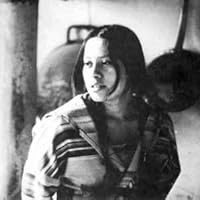
“I am an iyeska, a half-breed, and there are some on the res who won’t let me forget it. The full-bloods, the ikche wichasha, the “wild, natural beings,” often look down upon the half-breeds as no longer living in the traditional Indian way, as being “apples,” red on the outside and white inside. The half-breeds, in turn, look upon the full-bloods as backward. All this doesn’t mean much. Ikche wichasha or iyeska, we are all no longer living like the old Indians—we all go to the same stores and supermarkets and have had to compromise, with one foot in the white and the other in the Indian world. Also, at Rosebud we are all related in some way, particularly as we recognize fourth, fifth, and sixth cousins as relatives. I am a half breed. So what?”
― Ohitika Woman
― Ohitika Woman
“In 1912, the chief had his first ride in a motorcar. Studying our ancestors’ history, I am always struck by the fact that my great-grandfathers and great-grandmothers made the jump from the Stone Age to the industrial age in one single lifetime. Iron Shell and Hollow Horn Bear grew up making their fires with flint and steel and had gone to war with bows and stone-tipped arrows. They lived off the buffalo. In their old age they rode in cars, made telephone calls, posed for photographs, and had dinner with journalists and politicians in fancy East Coast restaurants.”
― Ohitika Woman
― Ohitika Woman
“He was the last maker of traditional Sioux flutes, which all ended in a bird’s head, the sound coming out of the open beak. He himself could play the flute beautifully. These were instruments for courting, making the love music. Uncle Fool Bull died in 1975, almost one hundred years old. He still remembered the massacre of some three hundred Lakota men, women, and children at Wounded Knee, in the winter of 1890.”
― Ohitika Woman
― Ohitika Woman
“I’m just running the sweat. I’m not a leader. I’m just part of the circle. There are no leaders here, just women supporting each other.”
― Ohitika Woman
― Ohitika Woman
“I’ve sweated with women of all colors—with Asian women, with people who have been facing down tanks in Tiananmen Square. I’ve sweated with South African women from the antiapartheid movement, with women from San Salvador and Guatemala who are Indians like myself. I tell them all: “I can relate to you, because I’ve been where you are. Whether at Wounded Knee or Soweto, or at Tiananmen Square, it’s the same. This sweat is for freedom.” And I also sweat for our men to be strong, for the children to be strong against the things that destroy our people.”
― Ohitika Woman
― Ohitika Woman
“For me Lakota ceremonies are my way of living in balance, of recognizing myself as an Indian. They are the drumbeats of my heart. They open a magical door for me. I walk through it and, on the other side, see a different reality, the true image of the universe. This power dwells in the secret valley of my heart.”
― Ohitika Woman
― Ohitika Woman
“Indian religion—I use the English word religion for want of a better one—is an all-the-time thing. Whether you eat breakfast, or sweep the floor, or get the kids to school, it is always with you. We are not like the many white people who go to church on a Sunday for two hours and that is the sum total of their weekly religious experience. And we are not like Catholics who, once in a while, go to confession and come out of it bathed in innocence like newborn babies.”
― Ohitika Woman
― Ohitika Woman
“It is easy to relate to Indian religion. You don’t need a church or Sunday clothes to communicate with Grandfather. A certain rock or tree could be your church, a buffalo skull your altar, your pipe a bridge to the powers above. You can come into the sweat lodge and purify yourself, pray, and find comfort from the rocks, the water, and the sage. You can go up on a hill and be a church all by yourself. You don’t need a priest between yourself and the Grandfather Spirit.”
― Ohitika Woman
― Ohitika Woman
“When you hear the wind blowing through the pines, you can hear people, you can hear spirits during the dance. The spirits are in harmony with the dance, and they’ll sing and talk with us.”
― Ohitika Woman
― Ohitika Woman
“AIM and all the other Indian rights organizations recognize alcoholism as our number one problem and they try all kinds of approaches, but nothing seems to work. You can’t solve the drinking problem without getting rid of its causes but you can’t do this either, because it is the government and white society that are at the root of the problem, and both are beyond our power and influence. That goes not only for our Sioux reservations but for nearly all tribes in the United States. It is the whites who manufacture the booze, who transport and distribute it among us, who profit from it, and who make the laws governing the sale of liquor. It is the neglect of society at large that makes it impossible for us to rise from our abject poverty. So we drown our misery in cheap wine and whiskey.”
― Ohitika Woman
― Ohitika Woman
“If the Sioux of old were male chauvinists on one side, they were feminists on the other. They prayed to Wakan Tanka, whom they also called Tunkashila, the Grandfather Spirit. But the most important supernatural being in their mythology was Ptesan Win, the White Buffalo Calf Woman, who brought the sacred pipe to the Lakota, taught them its use, taught them, as a matter of fact, how to live as human beings. To emphasize her power, there is the tale that she first appeared to two young hunters, one of whom stretched out his hand to possess her physically. For this lack of respect he was burned up and reduced to a little heap of charred bones and ashes. This is a strange sort of mythology for a tribe whose young men boast of their sexual conquests. Our old tales also talk of Wohpe, another great supernatural being, whom a white person might call a goddess of love and beauty and purity, a woman and a shooting star at the same time. And there is the mystical woman who, in times long past, got pregnant by swallowing a pebble, giving birth to Iyan-Hokshi, the Stone Boy, heroic slayer of an evil witch. Unlike Wakan Tanka-Tunkashila, who, like the God of the Christians, never appears as a person, Ptesan Win and Wohpe are beautiful female beings. It is said that the White Buffalo Calf Woman dazzled humans with her unearthly beauty. In some tales, she appears to the hunters as a young girl in a shining white buckskin dress, and in others as naked, clothed only in her flowing raven hair. When she leaves the tribe, after teaching them all they need to know, she transforms herself into a white buffalo calf, symbolizing the close relationship between the people and this holy animal, who gave of itself so that the humans could live, whose skull is our sacred altar. And just as Ptesan Win instructed men and women in all the different aspects of life, so the buffalo gave us all the physical things we needed to survive—its flesh nourished us; out of its fur and hide we made robes and blankets; and out of its bones knives, needles, shovels, awls, even play sleds for the children. While it is impossible to imagine how Wakan Tanka-Tunkashila looks, if indeed he has a visible form, Ptesan Win and Wohpe appear in human shape. So the macho Sioux have what the anthros call a “culture heroine,” but no real culture hero.”
― Ohitika Woman
― Ohitika Woman
“One reason for the Lakotas’ aversion to becoming farmers was their belief that “you should not cut Grandmother’s hair, or rip up her bowels,” meaning that you should not dig up and plow the earth or cut the plants growing out of the soil.”
― Ohitika Woman
― Ohitika Woman
“After five hundred years of being held in subjection, we are finally standing up on our hind legs. Together with my sisters from many tribes, I am a birth-giver, a rebirth-giver, fighting to ensure a life for unborn generations. I am a Sioux woman!”
― Ohitika Woman
― Ohitika Woman
“We wanted no war with the whites. All we wanted was to be left alone. But they forced us to defend our land, and Red Cloud, Crazy Horse, and our Cheyenne allies fought the army along the Bozeman Trail.”
― Ohitika Woman
― Ohitika Woman
“But we fight not only for our own, much diminished, Rosebud Reservation. We also fight for what rightfully belongs, or did belong, to all Sioux and Cheyennes—the sacred Black Hills. There has been a legal battle going on over this for a lifetime, and the white lawyers who worked for us on our claims have become millionaires, and that is the only result so far. The government and the highest courts in the land have admitted that this huge area was stolen from us. But stolen or “bought,” Uncle Sam never gives any Indian land back. Instead he has forked over some 122 million dollars to pay for the stolen land. But we have not accepted it. What we are saying is: “Give us the Black Hills back. Then, maybe we will accept the money you are holding in escrow for us as payment for all the gold and uranium you have taken, and are still taking, out of the hills.” Fourteen billion dollars in gold alone have been taken out of our sacred land and they offer us 120 million in compensation! That’s like someone stealing my brand-new car and coming back twenty years later saying: “I’m sorry I stole that car from you but I want to make it up to you. Here’s twenty bucks.”
― Ohitika Woman
― Ohitika Woman
“There is an old Lakota song that begins: “To be a man it is difficult, they say.” Well, to be a Native American woman is even harder.”
― Ohitika Woman
― Ohitika Woman
All Quotes
|
My Quotes
|
Add A Quote
Browse By Tag
- Love Quotes 102.5k
- Life Quotes 81k
- Inspirational Quotes 77.5k
- Humor Quotes 45.5k
- Philosophy Quotes 32k
- Inspirational Quotes Quotes 28.5k
- God Quotes 27k
- Wisdom Quotes 25k
- Romance Quotes 25k
- Truth Quotes 25k
- Poetry Quotes 24.5k
- Life Lessons Quotes 23k
- Quotes Quotes 21.5k
- Death Quotes 21k
- Happiness Quotes 19k
- Hope Quotes 19k
- Faith Quotes 18.5k
- Inspiration Quotes 18k
- Relationships Quotes 16k
- Spirituality Quotes 16k
- Motivational Quotes 16k
- Religion Quotes 15.5k
- Life Quotes Quotes 15.5k
- Writing Quotes 15k
- Love Quotes Quotes 15k
- Success Quotes 14.5k
- Motivation Quotes 14k
- Time Quotes 13k
- Science Quotes 12.5k
- Motivational Quotes Quotes 12k