
Find & Share Quotes with Friends
Montgomery Quotes
Quotes tagged as "montgomery"
Showing 1-22 of 22

“The ghosts of things that never happened are worse than the ghosts of things that did.”
― Emily's Quest
― Emily's Quest

“I wasn’t going to argue with you. Why ever would you think that? I never argue."
Lucian smiled at her. She was so small, it amazed him she was such a strong person. "Of course you do not argue. What was I thinking? Go to sleep, honey, and allow my poor body to rest."
"I’m already asleep. You’re the one gabbing.”
― Dark Guardian
Lucian smiled at her. She was so small, it amazed him she was such a strong person. "Of course you do not argue. What was I thinking? Go to sleep, honey, and allow my poor body to rest."
"I’m already asleep. You’re the one gabbing.”
― Dark Guardian

“However," he continued when she remained silent, her throat a knot of emotion, "it seems Montgomery could not help himself when it came to this vase. I'm afraid he has a weakness for beautiful things and has been known to relocate an item if he feels it is not being accorded the proper appreciation. Once he 'relocated' an ancient sculpture from the home of another archangel.”
― Archangel's Consort
― Archangel's Consort

“I was in the kitchen drinking coffee when I heard Coretta cry, "Martin, Martin, come quickly!" I put down my cup and ran toward the living room. As I approached the front window Coretta pointed joyfully to a slowly moving bus: "Darling, it's empty!”
― The Autobiography of Martin Luther King, Jr.
― The Autobiography of Martin Luther King, Jr.
“Peace is the byproduct of understanding in conjunction with the ability to agree or disagree in harmony”
―
―
“As a young man, Montgomery was noted by his superiors for his strong abilities as an analyst. He began the war in 1914 as a Lieutenant leading a platoon of 30 men. Within only four years, he had become the Chief of Staff of a division by age 30.”
― Bernard Montgomery's Art of War
― Bernard Montgomery's Art of War
“Like Montgomery, Musashi was a physically aggressive man who devoted his entire life to mastering the art of war. Also like Montgomery, Musashi was an independent thinker who believed a warrior needed to have a well-rounded intellectual background in order to truly master strategy.”
― Bernard Montgomery's Art of War
― Bernard Montgomery's Art of War
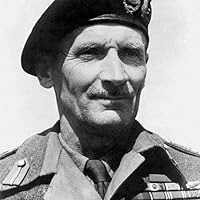
“War is not an act of God. War grows directly out of the things which individuals do or fail to do. It is, in fact, the consequence of national policies or lack of policies.”
― Bernard Montgomery's Art of War
― Bernard Montgomery's Art of War
“The troops must be brought to a state of wild enthusiasm. They must enter the fight with the light of battle in their eyes and definitely wanting to kill the enemy.”
― Bernard Montgomery's Art of War
― Bernard Montgomery's Art of War
“Race determines variables that yield results undesirable to one sector, while rendering a noticeable favor to others.”
―
―

“Many historians, with an ‘if only’ approach to the British defeat, have focused so much on different aspects of Operation Market Garden which went wrong that they have tended to overlook the central element. It was quite simply a very bad plan right from the start and right from the top. Every other problem stemmed from that.”
― Arnhem: The Battle for the Bridges, 1944
― Arnhem: The Battle for the Bridges, 1944
“High morale implies essentially the ability to triumph over discomforts and dangers and carry on with the job.”
― Bernard Montgomery's Art of War
― Bernard Montgomery's Art of War
“Christian Consultants of Texas is a real estate company that helps distressed homeowners facing foreclosure to either stay in their homes or relocate. They work with people who have credit issues and late payments on their mortgage and help them find new accommodations.”
―
―
“[The Montgomery Bus Boycott] is not a drama with only one actor. More precisely it is the chronicle of 50,000 Negroes who took to heart the principles of nonviolence, who learned to fight for their rights with the weapon of love, and who in the process, acquired a new estimate of their own human worth.”
― Stride Toward Freedom: The Montgomery Story
― Stride Toward Freedom: The Montgomery Story
“There is another side to the picture: it is the white community of Montgomery, long led or intimidated by a few extremists, that finally turned in disgust on the perpetrators of crime in the name of segregation. The change should not be exaggerated. The White Citizens Council is still active. Confessed bombers still win their freedom in the courts. And opposition to integration is still the rule. Yet by the end of the bus struggle it was clear that the vast majority of Montgomery's whites preferred peace and law to the excesses performed in the name of segregation. And even though the many saw segregation as right because it was the tradition, there were always the courageous few who saw the injustice in segregation and fought against it side by side with the Negroes.”
― Stride Toward Freedom: The Montgomery Story
― Stride Toward Freedom: The Montgomery Story
“But this discontent was still latent in 1954. At that time both Negroes and whites accepted the well-established patterns of segregation as a matter of fact. Hardly anyone challenged the system. Montgomery was an easy-going town; it could even have been described as a peaceful town. But the peace was achieved at the cost of human servitude.”
― Stride Toward Freedom: The Montgomery Story
― Stride Toward Freedom: The Montgomery Story
“Sir," I said, "you have never had real peace in Montgomery. You have had a sort of negative peace in which the Negro too often accepted his state of subordination. But this is not true peace. True peace is not merely the absence of tension; it is the presence of justice. The tension we see in Montgomery today is the necessary tension that comes when the oppressed rise up and start to move forward toward a permanent, positive peace.”
― Stride Toward Freedom: The Montgomery Story
― Stride Toward Freedom: The Montgomery Story
“During the rush hours the sidewalks were crowded with laborers and domestic workers, many of them well past middle age, trudging patiently to their jobs and home again, sometimes as much as twelve miles. They knew why they walked, and the knowledge was evident in the way they carried themselves. And as I watched them I knew that there is nothing more majestic than the determined courage of individuals willing to suffer and sacrifice for their freedom and dignity.”
― Stride Toward Freedom: The Montgomery Story
― Stride Toward Freedom: The Montgomery Story
“But there comes a time when people get tired of being trampled by oppression. There comes a time when people get tired of being plunged into the abyss of exploitation and nagging injustice. The story of Montgomery is the story of 50,000 such Negroes who were willing to substitute tired feed for tired souls, and walk the streets of Montgomery until the walls of segregation were finally battered by the forces of justice.”
― Stride Toward Freedom: The Montgomery Story
― Stride Toward Freedom: The Montgomery Story
“Mayor Gayle, Commissioner Sellers, and several white reporters had reached the house before I did [after the bombing] and were standing in the dining room. After reassuring myself about my family's safety, I went to speak to them. Both Gayle and Sellers expressed their regret that "this unfortunate incident has taken place in our city." One of the trustees of my church, who is employed in the public school system of Montgomery, was standing beside me when the mayor and commissioner spoke. Although in a vulnerable position, he turned to the mayor and said: "You may express your regrets, but you must face the fact that your public statements created the atmosphere for this bombing. This is the end result of your 'get-tough' policy." Neither Mayor Gayle nor Commissioner Sellers could reply.”
― Stride Toward Freedom: The Montgomery Story
― Stride Toward Freedom: The Montgomery Story
“The skies did not fall when integrated buses finally traveled the streets of Montgomery.”
― Stride Toward Freedom: The Montgomery Story
― Stride Toward Freedom: The Montgomery Story
“The bus struggle in Montgomery, Alabama, is now history. As the integrated buses roll daily through the city they carry, along with their passengers, a meaning-crowded symbolism. Accord among the great majority of passengers is evidence of the basic good will of man for man and a portent of peace in the desegregated society to come. Occasional instances of discord among passengers are a reminder that in other areas of Montgomery life segregation yet obtains with all of its potential for group strife and personal conflict. Indeed, segregation is still a reality throughout the South.
Where do we go from here? Since the problem in Montgomery is merely symptomatic of the larger national problem, where do we go not only in Montgomery but all over the South and the nation? Forces maturing for years have given rise to the present crisis in race relations. What are these forces that have brought the crisis about? What will be the conclusion? Are we caught in a social and political impasse, or do we have at our disposal the creative resources to achieve the ideals of brotherhood and harmonious living?”
― Stride Toward Freedom: The Montgomery Story
Where do we go from here? Since the problem in Montgomery is merely symptomatic of the larger national problem, where do we go not only in Montgomery but all over the South and the nation? Forces maturing for years have given rise to the present crisis in race relations. What are these forces that have brought the crisis about? What will be the conclusion? Are we caught in a social and political impasse, or do we have at our disposal the creative resources to achieve the ideals of brotherhood and harmonious living?”
― Stride Toward Freedom: The Montgomery Story
All Quotes
|
My Quotes
|
Add A Quote
Browse By Tag
- Love Quotes 102.5k
- Life Quotes 81k
- Inspirational Quotes 77.5k
- Humor Quotes 45.5k
- Philosophy Quotes 32k
- Inspirational Quotes Quotes 28.5k
- God Quotes 27k
- Wisdom Quotes 25k
- Romance Quotes 25k
- Truth Quotes 25k
- Poetry Quotes 24.5k
- Life Lessons Quotes 23k
- Quotes Quotes 21.5k
- Death Quotes 21k
- Happiness Quotes 19k
- Hope Quotes 19k
- Faith Quotes 18.5k
- Inspiration Quotes 18k
- Relationships Quotes 16k
- Spirituality Quotes 16k
- Motivational Quotes 16k
- Religion Quotes 15.5k
- Life Quotes Quotes 15.5k
- Writing Quotes 15k
- Love Quotes Quotes 15k
- Success Quotes 14.5k
- Motivation Quotes 14k
- Time Quotes 13k
- Science Quotes 12.5k
- Motivational Quotes Quotes 12k