
Find & Share Quotes with Friends
Moral Philosophy Quotes
Quotes tagged as "moral-philosophy"
Showing 1-30 of 163

“As you say of yourself, I too am an Epicurean. I consider the genuine (not the imputed) doctrines of Epicurus as containing everything rational in moral philosophy which Greece and Rome have left us.
[Letter to William Short, 31 October 1819]”
― Letters of Thomas Jefferson
[Letter to William Short, 31 October 1819]”
― Letters of Thomas Jefferson

“If we can use an H-bomb--and as you said it's no checker game; it's real, it's war and nobody is fooling around--isn't it sort of ridiculous to go crawling around in the weeds, throwing knives and maybe getting yourself killed . . . and even losing the war . . . when you've got a real weapon you can use to win? What's the point in a whole lot of men risking their lives with obsolete weapons when one professor type can do so much more just by pushing a button?'
Zim didn't answer at once, which wasn't like him at all. Then he said softly, 'Are you happy in the Infantry, Hendrick? You can resign, you know.'
Hendrick muttered something; Zim said, 'Speak up!'
I'm not itching to resign, sir. I'm going to sweat out my term.'
I see. Well, the question you asked is one that a sergeant isn't really qualified to answer . . . and one that you shouldn't ask me. You're supposed to know the answer before you join up. Or you should. Did your school have a course in History and Moral Philosophy?'
What? Sure--yes, sir.'
Then you've heard the answer. But I'll give you my own--unofficial--views on it. If you wanted to teach a baby a lesson, would you cuts its head off?'
Why . . . no, sir!'
Of course not. You'd paddle it. There can be circumstances when it's just as foolish to hit an enemy with an H-Bomb as it would be to spank a baby with an ax. War is not violence and killing, pure and simple; war is controlled violence, for a purpose. The purpose of war is to support your government's decisions by force. The purpose is never to kill the enemy just to be killing him . . . but to make him do what you want him to do. Not killing . . . but controlled and purposeful violence. But it's not your business or mine to decide the purpose of the control. It's never a soldier's business to decide when or where or how--or why--he fights; that belongs to the statesmen and the generals. The statesmen decide why and how much; the generals take it from there and tell us where and when and how. We supply the violence; other people--"older and wiser heads," as they say--supply the control. Which is as it should be. That's the best answer I can give you. If it doesn't satisfy you, I'll get you a chit to go talk to the regimental commander. If he can't convince you--then go home and be a civilian! Because in that case you will certainly never make a soldier.”
― Starship Troopers
Zim didn't answer at once, which wasn't like him at all. Then he said softly, 'Are you happy in the Infantry, Hendrick? You can resign, you know.'
Hendrick muttered something; Zim said, 'Speak up!'
I'm not itching to resign, sir. I'm going to sweat out my term.'
I see. Well, the question you asked is one that a sergeant isn't really qualified to answer . . . and one that you shouldn't ask me. You're supposed to know the answer before you join up. Or you should. Did your school have a course in History and Moral Philosophy?'
What? Sure--yes, sir.'
Then you've heard the answer. But I'll give you my own--unofficial--views on it. If you wanted to teach a baby a lesson, would you cuts its head off?'
Why . . . no, sir!'
Of course not. You'd paddle it. There can be circumstances when it's just as foolish to hit an enemy with an H-Bomb as it would be to spank a baby with an ax. War is not violence and killing, pure and simple; war is controlled violence, for a purpose. The purpose of war is to support your government's decisions by force. The purpose is never to kill the enemy just to be killing him . . . but to make him do what you want him to do. Not killing . . . but controlled and purposeful violence. But it's not your business or mine to decide the purpose of the control. It's never a soldier's business to decide when or where or how--or why--he fights; that belongs to the statesmen and the generals. The statesmen decide why and how much; the generals take it from there and tell us where and when and how. We supply the violence; other people--"older and wiser heads," as they say--supply the control. Which is as it should be. That's the best answer I can give you. If it doesn't satisfy you, I'll get you a chit to go talk to the regimental commander. If he can't convince you--then go home and be a civilian! Because in that case you will certainly never make a soldier.”
― Starship Troopers

“The creed which accepts as the foundation of morals, Utility, or the Greatest-Happiness Principle, holds that actions are right in proportion as they tend to promote happiness, wrong as they tend to produce the reverse of happiness. By happiness is intended pleasure, and the absence of pain; by unhappiness, pain, and the privation of pleasure.”
― Utilitarianism
― Utilitarianism
“I will call no being good who is not what I mean when I apply that epithet to my fellow creatures; and if such a creature can sentence me to hell for not so calling him, to hell I will go .”
― An examination of Sir William Hamilton's philosophy, and of the principal philosophical questions discussed in his writings
― An examination of Sir William Hamilton's philosophy, and of the principal philosophical questions discussed in his writings

“The good which every man, who follows after virtue, desires for himself he will also desire for other men...”
― Ethics
― Ethics

“There's right and there's wrong. Y'gotta do one or the other. Do the other and you may be walking around, but you're dead as a beaver hat.”
―
―

“The state of a moral man, is one of tranquillity and peace; the state of an immoral man is one of perpetual unrest.”
― Philosophy in the Boudoir
― Philosophy in the Boudoir

“We must not conclude that morals are worthless because they differ according to time and place, and that it would be wise to show our historic learning by at once discarding the moral customs of our group. A little anthropology is a dangerous thing. [...] Social order is none the less necessary; the game must still have rules in order to be played; men must know what to expect of one another in the ordinary circumstances of life. Hence the unanimity with which the members of a society practise its moral code is quite as important as the contents of that code. Our heroic rejection of the customs and morals of our tribe, upon our adolescent discovery of their relativity, betrays the immaturity of our minds; given another decade and we begin to understand that there may be more wisdom in the moral code of the group—the formulated experience of generations of the race—than can be explained in a college course. Sooner or later the disturbing realization comes to us that even that which we cannot understand may be true.”
― Our Oriental Heritage
― Our Oriental Heritage

“Ethical actions can often entail short-term pain, but will always result in long-term gains. By contrast, unethical actions frequently have short-term gains, which make them so attractive. But I guarantee that unethical actions will always result in some form of long-term pain and ultimate collapse, frequently in unexpected ways.”
―
―

“When we began this thing, you were intent to save the world. Now you’re more concerned about getting your hands dirty. Well, fuck your sense of propriety. I hope the view is lovely from atop your high horse while you watch the world burn.” ~Grist”
― Monsters & Mind Games
― Monsters & Mind Games

“If you don’t think that moral character is of incalculable value, you’re not thinking.”
― BECOME: Unleash the Power of Moral Character and Be Proud of the Life You Choose
― BECOME: Unleash the Power of Moral Character and Be Proud of the Life You Choose


“Morality is the lullaby of the herd, sung to keep their dreams small. Wake up, and you will find the world is yours to shape.”
―
―

“Some people don't apply a stop loss, so there's no limit to how far their character can fall.”
― "Zaki's Gift Of Love"
― "Zaki's Gift Of Love"


“Of course virtue is good habit and dutiful action. But the background condition of such habit and such action, in human beings, is a just mode of vision and a good quality of consciousness. It is a task to come to see the world as it is.”
― The Sovereignty of Good
― The Sovereignty of Good

“Thus, because Christian morality leaves animals out of account (of this, more later on), they are at once outlawed in philosophical morals; they are mere “things,” mere means to any ends whatsoever. They can therefore be used for vivisection, hunting, coursing, bullfights, and horse racing, and can be whipped to death as they struggle along with heavy carts of stone. Shame on such a morality that is worthy of pariahs, chandalas, and mlechchhas, and that fails to recognize the eternal essence that exists in every living thing, and shines forth with inscrutable insignificance from all eyes that see the sun! But that morality knows and respects only its own worthy species, whose characteristic reason [Vernunft] is the condition on which a being can be an object of moral consideration and respect.”
― The Basis of Morality
― The Basis of Morality

“Imagination withers when realisation blooms, and the ethical view of our condition withers along with it.”
― An Intelligent Person's Guide to Modern Culture
― An Intelligent Person's Guide to Modern Culture

“Blessed Virgin,' I whispered, even though I couldn't even hear myself. 'Why must you keep sending me innocent monsters?”
― What Feasts at Night
― What Feasts at Night

“The way of heaven has no favourites.
But it stays consistently on the side of the good."
——Lao Tzu”
― 100 quotes by Lao Tzu in Chinese Mandarin: 中文普通话名言佳句100 - 中文普通話名言佳句100 [Best quotes in Chinese Mandarin]
But it stays consistently on the side of the good."
——Lao Tzu”
― 100 quotes by Lao Tzu in Chinese Mandarin: 中文普通话名言佳句100 - 中文普通話名言佳句100 [Best quotes in Chinese Mandarin]

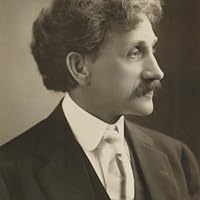
“All of these victimizations, the enslavement of species by species, of race by race, and of class by class, are aspects of one and the same fundamental fact. They are all exemplifications of the same principle—the principle asserting the right to escape one's part in the hardships of life—the doctrine that the weak are, and of right ought to be, the means, and the strong the ends—the doctrine that might makes it right for some to burglarize the lives of others of all that is precious, and at the same time to add to others' woes by the compulsory imposition of their own.”
― Better World Philosophy: A Sociological Synthesis
― Better World Philosophy: A Sociological Synthesis
“...weakness was a sin – the greatest sin of all, in fact.
But strength?
Strength washed away all transgressions.
It was the only virtue that truly mattered.”
― Method Acting: An Actor’s Journey In Another World : Act 1: Immortality Starts With Face
But strength?
Strength washed away all transgressions.
It was the only virtue that truly mattered.”
― Method Acting: An Actor’s Journey In Another World : Act 1: Immortality Starts With Face

“Nothing in life happens without purpose — even if that purpose remains hidden from us.
— Volodymyr Shablia”
―
— Volodymyr Shablia”
―
“„Warum schweigen so viele in der U-Bahn oder sehen weg, wenn ein paar Rechte einen Schwarzen anpöbeln oder Teenager einen Obdachlosen? Warum schweigen in Deutschland ganze Dörfer wenn einer kommt und nach der Zeit 1933 und 1943 fragt? Ja es gibt Ausnahmen, gibt immer Ausnahmen. Es gibt Menschen, die in der U-Bahn nicht schweigen, die vor ihrem Chef nicht katzbuckeln, die unangenehme Wahrheiten aussprechen. Immer gab es Widerstand gegen Lüge, Unrecht, Unterdrückung, Armut, Krieg. Aber immer ging dieser Widerstand von kleinen Minderheiten, oft nur von Einzelnen aus. Und nicht selten endete dieser Widerstand mit dem Tod. Mut ist wohl keine Sache des Willens und des bewussten Entschlusses, sondern die Menschheit scheint eben aus zwei Gruppen zu bestehen: einer Minderheit, die keine Angst kennt und „von Natur aus“ mutig ist, und eine Mehrheit, die „von Natur aus“ feige ist. Also gibt es eigentlich gar keine mutigen Menschen, denn wer keine Angst hat, braucht keinen Mut. Und wer ihn bräuchte hat ihn nicht. Diese Meinung scheint den meisten Feiglingen anzuhängen und manche rechtfertigen damit sogar ihre Feigheit.”
― Mutige Menschen: Für Frieden, Freiheit und Menschenrechte
― Mutige Menschen: Für Frieden, Freiheit und Menschenrechte
“„Von Natur aus sind die meisten feige. Angst und Furcht sind natürliche, evolutionär entstandene, genetische Überlebensprogramme. Darum ist Mut die Ausnahme und Feigheit die Regel. Eben deshalb ist instinktives, gedankenloses Mitläufertum die beste Basis für jeden Diktator und der Mut weniger Einzelner die größte Gefahr für de Inhaber der Macht.”
― Mutige Menschen: Für Frieden, Freiheit und Menschenrechte
― Mutige Menschen: Für Frieden, Freiheit und Menschenrechte
“„Wer selber keinen Mut bewiesen hat, sollte wenigstens jenen Respekt erweisen, die ihn bewiesen haben, statt sie auch noch schlecht zu machen. Und allen anderen, denen nie Mut abverlangt wurde, weil sie in einem Land leben, das keine Helden nötig hat, sollten dankbar sein für das Glück in solch einem Land leben zu dürfen.”
― Mutige Menschen: Für Frieden, Freiheit und Menschenrechte
― Mutige Menschen: Für Frieden, Freiheit und Menschenrechte
“Mit der Freiheit verhält es sich ähnlich wie mit dem Humor. Jeder behauptet, er habe ihn, nur wenige haben ihn wirklich. Jeder behauptet, er sei für Freiheit, sogar die Unterdrücker behaupten es. Aber nur wenige sind wirklich frei. Und nur wenige haben so ein großes Verlangen nach Freiheit, dass sie dafür unter Einsatz ihres Lebens kämpfen.”
― Mutige Menschen: Für Frieden, Freiheit und Menschenrechte
― Mutige Menschen: Für Frieden, Freiheit und Menschenrechte

“Without religious faith, runs the argument, we cannot anchor our moral truths or truly know right from wrong. Without belief in God we will be lost in a miasma of moral nihilism. Yet the transformation in the first four centuries not just in the fortunes of Christianity but also in the ethical ideas that animated it reveals the flexibility of religious precepts. Believers may see religious ethics as absolute. They have to, in order to believe. But God Himself appears to be highly pragmatic. The absoluteness of religious precepts can seem unforgiving, less so the precepts themselves. The success of religious morality derives from its ability to cut its beliefs according to social needs while at the same time insisting that such beliefs are sacred because they are God-given.”
― The Quest for a Moral Compass: A Global History of Ethics
― The Quest for a Moral Compass: A Global History of Ethics
All Quotes
|
My Quotes
|
Add A Quote
Browse By Tag
- Love Quotes 102.5k
- Life Quotes 81k
- Inspirational Quotes 77.5k
- Humor Quotes 45.5k
- Philosophy Quotes 32k
- Inspirational Quotes Quotes 29k
- God Quotes 27k
- Wisdom Quotes 25.5k
- Romance Quotes 25k
- Truth Quotes 25k
- Poetry Quotes 24.5k
- Life Lessons Quotes 23k
- Quotes Quotes 21.5k
- Death Quotes 21k
- Happiness Quotes 19k
- Hope Quotes 19k
- Faith Quotes 18.5k
- Inspiration Quotes 18k
- Spirituality Quotes 16k
- Relationships Quotes 16k
- Motivational Quotes 16k
- Religion Quotes 15.5k
- Life Quotes Quotes 15.5k
- Writing Quotes 15k
- Love Quotes Quotes 15k
- Success Quotes 14.5k
- Motivation Quotes 14k
- Time Quotes 13k
- Science Quotes 12.5k
- Motivational Quotes Quotes 12k