
 Sign in with Facebook
Roman History Quotes
Quotes tagged as "roman-history"
Showing 1-30 of 33

“As had happened with Julius Caesar, it turned out that the people of Rome were actually quite keen on Gaius and were not fans of presumptuous senators and magistrates making unilateral decisions about the nature of Roman government with swords. Supreme executive power derives from a mandate from the masses, they believed, not from some farcical bloody murder. Strange men in corridors distributing stab wounds was no basis for a system of government.”
― A Fatal Thing Happened on the Way to the Forum: Murder in Ancient Rome
― A Fatal Thing Happened on the Way to the Forum: Murder in Ancient Rome
“...while cleverness is appropriate to rhetoric, and inventiveness to poetry, truth alone is appropriate to history.”
―
―

“I am dying, Egypt, dying; only
I here importune death awhile, until
Of many thousand kisses the poor last
I lay upon thy lips.”
― Antony and Cleopatra
I here importune death awhile, until
Of many thousand kisses the poor last
I lay upon thy lips.”
― Antony and Cleopatra

“When [Servius Galba] was a commoner he seemed too big for his station, and had he never been emperor, no one would have doubted his ability to reign.”
― The Histories
― The Histories

“Triumphantly, he announced their deaths to the cheering crowd in a famous one-word euphemism: vixere, 'they have lived' – that is, 'they're dead'.”
― SPQR: A History of Ancient Rome
― SPQR: A History of Ancient Rome

“But we are all Goths, for all that, whoever we are; which is to say, Outlanders. And like the Goth Sarus we still owe loyalty to an Empire, but we no longer know of what the Empire consists. We are still bound by the statement of Stilicho that the highest duty in the World is the proper ordering of the World. There will be, and are, other worlds; and perhaps it is not a terrible thing that a world should end. But we are still in admiration at the great corpse of it.”
― The Fall of Rome
― The Fall of Rome
“The historian Cassiodorus believed that the selective destruction of Alaric, as regards the Greek monuments, was of good effect. Alaric had some taste and was awed by really great art. The Greeks were only human, and all their work could not have been excellent. But almost all their ancient work that survived the ravages of Alaric was of unsurpassed excellence.
There is abominable and worthless ancient Greek art in Asia Minor, in Constantinople, in Thebes, in Eritrea, in the Cyclades and other islands. There is little or none of this worthless ancient art surviving in the path of the Gothic Greek adventure; not in Athens, or Megara or Corinth or Argos. Sparta does not figure in the account at all; it never had art.
It is said that Alaric destroyed half of the art of Greece. It may have been the worst half. He was a critic of unusual effectiveness.”
― The Fall of Rome
There is abominable and worthless ancient Greek art in Asia Minor, in Constantinople, in Thebes, in Eritrea, in the Cyclades and other islands. There is little or none of this worthless ancient art surviving in the path of the Gothic Greek adventure; not in Athens, or Megara or Corinth or Argos. Sparta does not figure in the account at all; it never had art.
It is said that Alaric destroyed half of the art of Greece. It may have been the worst half. He was a critic of unusual effectiveness.”
― The Fall of Rome
“You demand my surrender as though you were not aware that Cleopatra preferred to die a queen rather than remain alive, however high her rank.”
―
―
“This short history should have something to satisfy every taste and perversion: action, treachery, fratricide and regicide, corruption, and bloodshed. It contains thirteen murders, the victims being mostly of one family. It lists the ways in which a man or an Empire may be surrounded and destroyed; and contains a veritable catalog of subversions and finely wrought treacheries—which the reader may be able to make use of in his own life.”
― The Fall of Rome
― The Fall of Rome
“This time the senators met in the temple of the goddess Concord, or Harmony, a sure sign that affairs of state were anything but harmonious.”
― SPQR: A History of Ancient Rome
― SPQR: A History of Ancient Rome

“Rome was an evolutionary society, not a revolutionary one. Constitutional crises tended to lead not to the abolition of previous arrangements but to the accretion of new layers of governance.”
― Cicero: The Life and Times of Rome's Greatest Politician
― Cicero: The Life and Times of Rome's Greatest Politician
“The Roman emperor, Augustus famously boasted that he had inherited a city of brick and was leaving one of marble.”
― Young Michelangelo: The Path to the Sistine
― Young Michelangelo: The Path to the Sistine
“So it should be; that none but Antony
Should conquer Antony, but woe 'tis so!”
― Antony and Cleopatra
Should conquer Antony, but woe 'tis so!”
― Antony and Cleopatra
“Olympius, in the name of the Emperor Honorius, ordered the forces in Bologna to take the field against Alaric, on peril of the death of their families. The generals sent word that they could not find the forces of Alaric. The scouts from Bologna silently saluted the Goths of Alaric as they went by, but they could not find them.”
― The Fall of Rome
― The Fall of Rome
“Here we come to a semantic difficulty. Other peoples who were of considerable civilization had been referred to as barbarians for more than a thousand years. Others had been called by the names of the wolves. When the wolves themselves came, there was no other name to give them. The Goths, who were kingdom-founding Christians, had been called barbarians. The Gauls of ancient lineage had been so called, and the talented Vandals.
Even the Huns had been called barbarians. This is a thing beyond all comprehension, and yet it is not safe to contradict the idea even today. The Huns were a race of over-civilized kings traveling with their Courts. In the ordering of military affairs and in overall organization they had no superiors in the world. They were skilled diplomats, filled with urbanity and understanding. All who came into contact with them, Persians, Armenians, Greeks, Romans, were impressed by the Huns' fairness in dealing—considering that they were armed invaders; by their restraint and adaptability; by their judgment of affairs; by their easy luxury. They brought a new elegance to the Empire peoples; and they had assimilated a half dozen cultures, including that of China. But the Huns were not barbarians; no more were any of the other violent visitors to the Empire heretofore.”
― The Fall of Rome
Even the Huns had been called barbarians. This is a thing beyond all comprehension, and yet it is not safe to contradict the idea even today. The Huns were a race of over-civilized kings traveling with their Courts. In the ordering of military affairs and in overall organization they had no superiors in the world. They were skilled diplomats, filled with urbanity and understanding. All who came into contact with them, Persians, Armenians, Greeks, Romans, were impressed by the Huns' fairness in dealing—considering that they were armed invaders; by their restraint and adaptability; by their judgment of affairs; by their easy luxury. They brought a new elegance to the Empire peoples; and they had assimilated a half dozen cultures, including that of China. But the Huns were not barbarians; no more were any of the other violent visitors to the Empire heretofore.”
― The Fall of Rome
“The Western Empire, supported generation after generation by half a hundred of the strongest and most remarkable men in history, from Stilicho to Charlemagne, died and disintegrated and left off being the Empire.
The Eastern Empire, supported by fools and slaves and fops, and ruled by the worst and most incompetent of men and women, managed to endure and thrive for a thousand years more.”
― The Fall of Rome
The Eastern Empire, supported by fools and slaves and fops, and ruled by the worst and most incompetent of men and women, managed to endure and thrive for a thousand years more.”
― The Fall of Rome
“The Goths had trained bears and possibly, from one garbled account, trained seals.
The dance is something with no survival, lacking verbal or pictorial record. The Goths may have had it. If they painted, it was not in a medium or on a material that has survived. Their history was unwritten. Their scientific speculation may not have gone beyond mead-table discussions and arguments. There is no record of their early philosophy. Since they were Germans, they must have constructed philosophical systems; and also, since they were Germans, these would have been erroneous.”
― The Fall of Rome
The dance is something with no survival, lacking verbal or pictorial record. The Goths may have had it. If they painted, it was not in a medium or on a material that has survived. Their history was unwritten. Their scientific speculation may not have gone beyond mead-table discussions and arguments. There is no record of their early philosophy. Since they were Germans, they must have constructed philosophical systems; and also, since they were Germans, these would have been erroneous.”
― The Fall of Rome
“Stilicho first talked of himself; and then of the Empire, which was an extension of himself. He gave it as his studied and honest opinion that he was the best horseman in the world, the best archer and targeteer, the best lancer, and that he had been the best swordsman; one cannot remain the best with the sword without spending six to eight hours a day in the practice of it. Stilicho attested that he was the greatest foot soldier alive, being able to cover afoot seventy Roman miles over rough country between midnight and midnight under the full weight of arms and provisions—about a hundred pounds in modern weight. Stilicho could endure hunger and thirst and privation beyond all others; he could plan and project more than could another man; he could hold every detail of a countryside in his head, and could recall the underfoot stones of a night path a dozen years later. He could see the pattern of affairs and the pattern behind the pattern.
Stilicho spoke of himself without vainglory, and certainly without modesty. He acknowledged that it was unusual for one man so to excel in everything; but was happy that that one person should be such a responsible person as himself. He gave the opinion that even in himself it would be a short-term affair. Soon his hand and his mind would weaken a little, and soon another man—probably one of them—would move into his place. A dozen years, he told them, is an extreme limit of the time in which a man may serve faultlessly”
― The Fall of Rome
Stilicho spoke of himself without vainglory, and certainly without modesty. He acknowledged that it was unusual for one man so to excel in everything; but was happy that that one person should be such a responsible person as himself. He gave the opinion that even in himself it would be a short-term affair. Soon his hand and his mind would weaken a little, and soon another man—probably one of them—would move into his place. A dozen years, he told them, is an extreme limit of the time in which a man may serve faultlessly”
― The Fall of Rome
“Several bitter contemporary references to the pseudo-Emperor Eugenius had puzzled us. They asked how a man of such an appearance could attempt the pagan re-establishment. They asked it in horror, for there were certain horrifying aspects to this particular pagan reversion. It was not the old disinterested paganism; it was impassioned and very nearly diabolical in some of its manifestations.
The meaning of the references came clear with the examination of reproductions of coins and medallions of the pseudo-Emperor. Eugenius, who affected an old oriental style in hair and beard, had the face of Jesus Christ.”
― The Fall of Rome
The meaning of the references came clear with the examination of reproductions of coins and medallions of the pseudo-Emperor. Eugenius, who affected an old oriental style in hair and beard, had the face of Jesus Christ.”
― The Fall of Rome
“Rufinus was an orator and a lawyer, a master of civil administration and agenda. It was because of him that the Eastern Empire—Byzantium—became a bureaucracy for a thousand years; and lived on because its administration had become too intricate to die—though there are those who say that its death was concealed in a sea of paper for that one thousand years. The heritage of Rufinus was the first and longest-enduring paper Empire.
It is not accidental that in the tenure of Rufinus as Master of Offices, the duplication of written copies was first brought about. This was not on the order of carbon paper used at the instant of writing; it was wet-process copies made from a finished piece. The process is a detail, however; in the true sense Rufinus was the inventor of carbon copies. Shorthand was then five hundred years old, but Rufinus was the inventor of an improved form of shorthand.
It is believed that certain clerks of his appointing are still shuffling papers at the same desks. The paper world he set up was self-perpetuating.”
― The Fall of Rome
It is not accidental that in the tenure of Rufinus as Master of Offices, the duplication of written copies was first brought about. This was not on the order of carbon paper used at the instant of writing; it was wet-process copies made from a finished piece. The process is a detail, however; in the true sense Rufinus was the inventor of carbon copies. Shorthand was then five hundred years old, but Rufinus was the inventor of an improved form of shorthand.
It is believed that certain clerks of his appointing are still shuffling papers at the same desks. The paper world he set up was self-perpetuating.”
― The Fall of Rome
“Alaric now at this moment of supreme crisis, coming down to the rough shore and seeing the howling waves, raised his hand to heaven and called out that the Gulf of Corinth should freeze!
It froze!
And the Goths, shattering the last scrim of Roman interceptors, abandoned their horses and crossed the ice on foot!”
― The Fall of Rome
It froze!
And the Goths, shattering the last scrim of Roman interceptors, abandoned their horses and crossed the ice on foot!”
― The Fall of Rome
“It is said that—Arcadius having offered its weight in gold for the head of Gainas—King Uldin drew out the brains of Gainas and poured in molten lead to win a better bargain with his prize. This part of the story has been doubted, and for no better reason than that it had been told five hundred years earlier of the head of Gaius Gracchus—as though a good trick might not be pulled more than once.”
― The Fall of Rome
― The Fall of Rome
“The Forum was the city’s political, commercial, and legal heart, but it was also its spiritual center, a space more sacred than the city itself.”
― Cicero: The Life and Times of Rome's Greatest Politician
― Cicero: The Life and Times of Rome's Greatest Politician

“Sirius looked about as intelligent as the temple cats who liked to chase their own tails.”
― Domna, Part One: The Sun God's Daughter
― Domna, Part One: The Sun God's Daughter
“For that they [the Iazyges] were still strong at this time [A.D. 175] and had done the Romans great harm was evident from the fact that they returned a hundred thousand captives that were still in their hands even after the many who had been sold, had died, or had escaped, and that they promptly furnished as their contribution to the alliance eight thousand cavalry, fifty-five hundred of whom he [Marcus Aurelius] sent to Britain.”
― Dio’s Roman History, Vol. 9 of 9
― Dio’s Roman History, Vol. 9 of 9

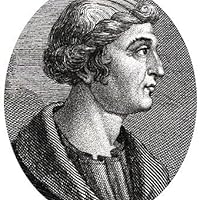
“That freedom, the plunging back into the ancient past, appears always to have heightened his alienation from the present. To sure his love for classical Latin didn't lead him to idealize, as some of his contemporaries did Ancient Roman history, Poggio understand that history had it's full measure of full folly and wickedness. But he was aware that the city in which he lived was a pathetic shadow of it's past glory.”
― The Swerve: How the World Became Modern
― The Swerve: How the World Became Modern

“The history of Rome is the most fascinating historical laboratory available to
sociologists. It provides a 700-year stretch of written records and archaeological remains.”
― The Sources of Social Power: Volume 1, A History of Power from the Beginning to AD 1760
sociologists. It provides a 700-year stretch of written records and archaeological remains.”
― The Sources of Social Power: Volume 1, A History of Power from the Beginning to AD 1760

“The Peacock & The Eagle: Cleopatra's Entry Into Tarsus by Stewart Stafford
Cleopatra arrives, regal and mighty,
From ocean spray as Aphrodite,
Wealthy and waif, yearning for her,
Dared all to defy her possessive aura.
Mark Antony, struck by her sultry gaze,
Lepidus, prisoner in a bureaucrat's maze,
Sees power slipping from a friend’s hand,
Ensnared by a siren from a scorched land.
Lepidus was Caesar's trusted right hand;
A granule falling through hourglass sand,
Antony, headstrong military provocateur;
Funeral orator from bloody crown auteur.
Bargain's scorpion pincers; no longer twain:
Cleopatra was Ceres, promising Rome grain,
Antony was Mars' armed emissary,
Business and pleasure's flood tributary.
Antony: "Barge of emerald, Elysium's onyx!
Beyond counsel words of sage sardonic,
Gliding the Cydnus's silken seam,
This Nile Helen shall be my queen."
Lepidus: "Pleasure vessel of a floating whore,
Yours for a sesterce on the Tiber's shore,
Honour your oath, noble Roman creed,
Lest passion’s shipwreck sets out to sea.”
"This Venus virago on her mirage barge;
Serpent prow, silver oars, rhythmic charge!
What hubris to think she can equal,
The bloody talons of our Roman eagle!"
Antony: "Feast your eyes past peacock's bower,
She speaks Rome's tongue of naked power.
Mark it, that obsidian Sphinx stings -
Human head, lion's body, eagle wings!
"That is the form she takes to the public:
I smell a perfumed alliance for the Republic!
With Plebeians as her tickled cats, they hum,
I crave her beauty and company. Come!"
© 2024, Stewart Stafford. All rights reserved.”
―
Cleopatra arrives, regal and mighty,
From ocean spray as Aphrodite,
Wealthy and waif, yearning for her,
Dared all to defy her possessive aura.
Mark Antony, struck by her sultry gaze,
Lepidus, prisoner in a bureaucrat's maze,
Sees power slipping from a friend’s hand,
Ensnared by a siren from a scorched land.
Lepidus was Caesar's trusted right hand;
A granule falling through hourglass sand,
Antony, headstrong military provocateur;
Funeral orator from bloody crown auteur.
Bargain's scorpion pincers; no longer twain:
Cleopatra was Ceres, promising Rome grain,
Antony was Mars' armed emissary,
Business and pleasure's flood tributary.
Antony: "Barge of emerald, Elysium's onyx!
Beyond counsel words of sage sardonic,
Gliding the Cydnus's silken seam,
This Nile Helen shall be my queen."
Lepidus: "Pleasure vessel of a floating whore,
Yours for a sesterce on the Tiber's shore,
Honour your oath, noble Roman creed,
Lest passion’s shipwreck sets out to sea.”
"This Venus virago on her mirage barge;
Serpent prow, silver oars, rhythmic charge!
What hubris to think she can equal,
The bloody talons of our Roman eagle!"
Antony: "Feast your eyes past peacock's bower,
She speaks Rome's tongue of naked power.
Mark it, that obsidian Sphinx stings -
Human head, lion's body, eagle wings!
"That is the form she takes to the public:
I smell a perfumed alliance for the Republic!
With Plebeians as her tickled cats, they hum,
I crave her beauty and company. Come!"
© 2024, Stewart Stafford. All rights reserved.”
―

“You need not’ he said ‘lose these hours’. For he thought every hour gone that was not given to study.”
―
―
All Quotes
|
My Quotes
|
Add A Quote
Browse By Tag
- Love Quotes 102k
- Life Quotes 80.5k
- Inspirational Quotes 77k
- Humor Quotes 44.5k
- Philosophy Quotes 31.5k
- Inspirational Quotes Quotes 28.5k
- God Quotes 27k
- Truth Quotes 25k
- Wisdom Quotes 25k
- Romance Quotes 24.5k
- Poetry Quotes 23.5k
- Life Lessons Quotes 22.5k
- Quotes Quotes 21.5k
- Death Quotes 21k
- Happiness Quotes 19k
- Hope Quotes 19k
- Faith Quotes 18.5k
- Inspiration Quotes 18k
- Motivational Quotes 16k
- Spirituality Quotes 16k
- Relationships Quotes 16k
- Religion Quotes 15.5k
- Life Quotes Quotes 15.5k
- Writing Quotes 15k
- Love Quotes Quotes 15k
- Success Quotes 14k
- Motivation Quotes 14k
- Time Quotes 13k
- Science Quotes 12k
- Motivational Quotes Quotes 12k
