
Find & Share Quotes with Friends
Sovereignty Quotes
Quotes tagged as "sovereignty"
Showing 1-30 of 139

“If you truly want to be respected by people you love, you must prove to them that you can survive without them.”
― The Infinity Sign
― The Infinity Sign

“There is not a square inch in the whole domain of our human existence over which Christ, who is Sovereign over all, does not cry, Mine!”
―
―

“Like a gloomy and sinister paradox since its apparition until now, socialism suffered terrible and terrifying metamorphoses. With the name of the most human doctrine—Socialism—the most ominous and naughty crimes against humanity were done. The National Socialism of Hitler created Auschwitz and Majdanek and the People’s socialism of Stalin — Gulag and Kolima! And both of them buried more than fifty million people! That’s monstrous!”
― Socialism Is Dead! Long Live Socialism!: The Marx Code-Socialism with a Human Face
― Socialism Is Dead! Long Live Socialism!: The Marx Code-Socialism with a Human Face
“Democracy is a pretty word. Democracy is a captivating magic. The oppressed classes always wanted and the oppressing ones always promised a democracy. But this was precisely for democracy that the both parts had always fought. The great French Revolution proclaimed the great appeal "Liberty, Equality, Fraternity". The history showed that from the class viewpoint, they could indicate different things, distinct contents; these concepts must be filled with different sense. In the class society, in the society locked in a state, Liberty is always at the top of somebody’s spear! Equality is the Achilles’ heel, into which this spear is plunged. Humanity is the pledge for plunging it by all force. ”
― Socialism Is Dead! Long Live Socialism!: The Marx Code-Socialism with a Human Face
― Socialism Is Dead! Long Live Socialism!: The Marx Code-Socialism with a Human Face
“In a popular state the inhabitants are divided into certain classes,” Montesquieu affirmed in a Marxian manner a century before Marx! So, the popular state is a fiction; it is transient, fleeting, and for this reason — imaginable only. In its rigorous scientific sense of a class instrument, it is practically an empty matter sophism, a complete commonplaceness, an offspring of mental weakness. There is no such state! If it is a state, it is not popular! If it is popular, it is not a state yet! The State is a violent institution for social injustice generated by two main classes, which are main ones because they are at enmity… Any people closed in a state, are divided into classes. “For indeed any city, however small, is in fact divided into two, one the city of the poor, the other of the rich.”(Plato, The Republic). Not Marx, still Plato said the truth!”
― Socialism Is Dead! Long Live Socialism!: The Marx Code-Socialism with a Human Face
― Socialism Is Dead! Long Live Socialism!: The Marx Code-Socialism with a Human Face

“Men will allow God to be everywhere but on his throne. They will allow him to be in his workshop to fashion worlds and make stars. They will allow Him to be in His almonry to dispense His alms and bestow his bounties. they will allow Him to sustain the earth and bear up the pillars thereof, or light the lamps of heaven, or rule the waves of the ever-moving ocean; but when God ascends Hes throne, His creatures then gnash their teeth. And we proclaim an enthroned God, and His right to do as He wills with His own, to dispose of His creatures as He thinks well, without consulting them in the matter; then it is that we are hissed and execrated, and then it is that men turn a deaf ear to us, for God on His throne is not the God they love. But it is God upon the throne that we love to preach. It is God upon His throne whom we trust.”
―
―

“Man approaches God most nearly when he is in one sense least like God. For what can be more unlike than fullness and need, sovereignty and humility, righteousness and penitence, limitless power and a cry for help?”
― The Four Loves
― The Four Loves

“The object of this Essay is to assert one very simple principle, as entitled to govern absolutely the dealings of society with the individual in the way of compulsion and control, whether the means used be physical force in the form of legal penalties, or the moral coercion of public opinion. That principle is, that the sole end for which mankind are warranted, individually or collectively in interfering with the liberty of action of any of their number, is self-protection. That the only purpose for which power can be rightfully exercised over any member of a civilized community, against his will, is to prevent harm to others. His own good, either physical or moral, is not a sufficient warrant. He cannot rightfully be compelled to do or forbear because it will be better for him to do so, because it will make him happier, because, in the opinions of others, to do so would be wise, or even right. These are good reasons for remonstrating with him, or reasoning with him, or persuading him, or entreating him, but not for compelling him, or visiting him with any evil, in case he do otherwise. To justify that, the conduct from which it is desired to deter him must be calculated to produce evil to someone else. The only part of the conduct of any one, for which he is amenable to society, is that which concerns others. In the part which merely concerns himself, his independence is, of right, absolute. Over himself, over his own body and mind, the individual is sovereign.”
― On Liberty
― On Liberty

“Why some people feel more comfortable in the “margin” of society, may simply be that it imparts them more breathing space, shores up their identity, embodies a gateway to self-determination, and confers them a sense of sovereignty, allowing more time for stressless apprehension and thoughtful reflection. (“If he doesn't play ball » )”
―
―

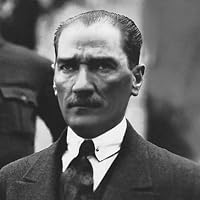
“No matter how tiny you look, you can lead huge men if you have what the huge men don't have.”
―
―

“God's relationship with man does not work in a way in which man stumbles and then God has to drop what he is doing in order to lift him up; rather, man stumbles so that God can lift him up. Hence it is utterly impossible to truly diminish his glory.”
― Killosophy
― Killosophy

“When God is our Holy Father, sovereignty, holiness, omniscience, and immutability do not terrify us; they leave us full of awe and gratitude. Sovereignty is only tyrannical if it is unbounded by goodness; holiness is only terrifying if it is untempered by grace; omniscience is only taunting if it is unaccompanied by mercy; and immutability is only torturous if there is no guarantee of goodwill.”
―
―


“The logic of the Bible says: Act according to God's "will of command," not according to his "will of decree." God's "will of decree" is whatever comes to pass. "If the Lord wills, we will live and do this or that" (James 4:15). God's "will of decree" ordained that his Son be betrayed (Luke 22:22), ridiculed (Isaiah 53:3), mocked (Luke 18:32), flogged (Matthew 20:19), forsaken (Matthew 26:31), pierced (John 19:37), and killed (Mark 9:31). But the Bible teaches us plainly that we should not betray, ridicule, mock, flog, forsake, pierce, or kill innocent people. That is God's "will of command." We do not look at the death of Jesus, clearly willed by God, and conclude that killing Jesus is good and that we should join the mockers.”
―
―

“If poetry introduces the strange, it does so by means of the familiar. The poetic is the familiar dissolving into the strange, and ourselves with it. It never dispossesses us entirely, for the words, the images (once dissolved) are charged with emotions already experienced, attached to objects which link them to the known.”
― Inner Experience
― Inner Experience
“What's simple is that everything good comes from God, and everything bad comes from man. Where it gets complicated is that everything seemingly good but ultimately bad comes from man, and everything seemingly bad but ultimately good comes from God.”
― Healology
― Healology

“Thus it is well to seem merciful faithful humane religious and upright and also to be so but the mind should remain so balanced that were it needful not to be so you should be able and know how to change to the contrary.”
― The Prince
― The Prince
“The skeptic says that the believer has lost his own mind under God. On the contrary, it is the people who follow God who are most like his children, who willingly and consciously walk in his will; but those who oppose him oppose him vainly and at their own expense, and, figuratively, seem to be more like his tools. They don't diminish his glory, but instead he still manages to use them in ways of unconsciously carrying out his will.”
― Killosophy
― Killosophy
“Of all the major religions, or lack thereof, the atheist's is one of the best pretenders: his foundation for all existences, as well as moral behaviors for the permanent good of mankind, begins at science but ends at himself, the Napoleon complex of both intelligence and imagination. On the other hand the anti-theist wouldn't survive without a deity beyond himself to hunt. He doesn't pretend, he simply nullifies his own position.”
― Killosophy
― Killosophy

“It's all very well for us to sit here in the west with our high incomes and cushy lives, and say it's immoral to violate the sovereignty of another state. But if the effect of that is to bring people in that country economic and political freedom, to raise their standard of living, to increase their life expectancy, then don't rule it out.”
―
―

“As truly as God by His power once
created, so truly by that same power must God every moment maintain.”
― Humility: The Journey Toward Holiness – Classic Devotional Meditations on the Character of Christ
created, so truly by that same power must God every moment maintain.”
― Humility: The Journey Toward Holiness – Classic Devotional Meditations on the Character of Christ

“The first few lines of the third chapter run as follows: All significant concepts of the modern theory of the state are secularized theological concepts not only because of their historical development—in which they were transferred from theology to the theory of the state, whereby, for example, the omnipotent God became the omnipotent lawgiver—but also because of their systematic structure, the recognition of which is necessary for a sociological consideration of these concepts. The state of exception in jurisprudence is analogous to the miracle in theology. Only by being aware of this analogy can we appreciate the manner in which the philosophical idea of the state developed over the last few centuries. I had quickly come to see Carl Schmitt as an incarnation of Dostoevsky’s Grand Inquisitor. During a stormy conversation at Plettenberg in 1980, Carl Schmitt told me that anyone who failed to see that the Grand Inquisitor was right about the sentimentality of Jesuitical piety had grasped neither what a Church was for, nor what Dostoevsky—contrary to his own conviction—had “really conveyed, compelled by the sheer force of the way in which he posed the problem.” I always read Carl Schmitt with interest, often captivated by his intellectual brilliance and pithy style. But in every word I sensed something alien to me, the kind of fear and anxiety one has before a storm, an anxiety that lies concealed in the secularized messianic dart of Marxism. Carl Schmitt seemed to me to be the Grand Inquisitor of all heretics.”
― To Carl Schmitt: Letters and Reflections
― To Carl Schmitt: Letters and Reflections
“Schmitt begins his book Political Theology by saying “sovereign is he who decides on the exception,” and what he means here is that the key feature of sovereignty is deciding when the law doesn’t apply. This means standing above the law, and in e ect, to be the law. America claims the right to override the internal decision of countries in the Western Hemisphere—the so-called Monroe Doctrine—and it has repeatedly overridden it by toppling regimes in Latin America. Russia claims the same power over Ukraine, and the war in Ukraine is being fought not over Ukraine’s self-determination, but over who decides the exception in Ukraine: America or Russia. This war, like all wars, is being waged over sovereignty. War is not “politics by other means”, 16 but war is the essence of politics. There is always a sovereign, which is another way of saying that absolutism is the only form that politics can ever take. This is a hard pill to swallow, especially for us who have been raised to believe in liberal democracy. And yet, the mature, realistic, and consistent view is that the essential feature of governance is dictatorship, or as Schmitt puts it, the state is “in the decisive case the ultimate authority”, because if it’s not, then whatever is the ultimate authority is de facto the state. [...] Sometimes diferences are just too deep to be resolved by words, by negotiation, by parliaments, by debate. At this point the question arises, quis interpretabitur —who interprets? Your constitution is worth no more than the man interpreting it. Serious disagreement requires dictatorship. When actual lives are on the line Rome creates a dictator, America invokes the national security exception, Napoleon declares “I am the revolution” — even the most limp-wristed HR managerialism, when pushed to justify itself, takes refuge in the paradox of tolerance. [...] Even liberalism stands and falls on this basic foundation, however much it pretends otherwise. The dictator is the protector; without the protector, no Lord Protector; without the Lord Protector, no liberalism. He is always lurking in the background.”
― The Cultured Thug Handbook: A Guide to Radical Right-Wing Thought
― The Cultured Thug Handbook: A Guide to Radical Right-Wing Thought

“You are not here to fit inside a scripture. You are here to be a scripture.”
― Holy Fire: Reclaiming Desire, Shakti, and the Sacred Self
― Holy Fire: Reclaiming Desire, Shakti, and the Sacred Self

“„Not everything that demands your attention deserves your power.”
― OBSIDIAN: The System of Inner Sovereignty
― OBSIDIAN: The System of Inner Sovereignty
“Real authority is not demanded; it is projected through stillness and absolute alignment with your own principles.”
― The Black King
― The Black King
All Quotes
|
My Quotes
|
Add A Quote
Browse By Tag
- Love Quotes 102.5k
- Life Quotes 81k
- Inspirational Quotes 77.5k
- Humor Quotes 45.5k
- Philosophy Quotes 32k
- Inspirational Quotes Quotes 29k
- God Quotes 27k
- Wisdom Quotes 25.5k
- Romance Quotes 25k
- Truth Quotes 25k
- Poetry Quotes 24.5k
- Life Lessons Quotes 23k
- Quotes Quotes 21.5k
- Death Quotes 21k
- Happiness Quotes 19k
- Hope Quotes 19k
- Faith Quotes 18.5k
- Inspiration Quotes 18k
- Relationships Quotes 16k
- Spirituality Quotes 16k
- Motivational Quotes 16k
- Religion Quotes 15.5k
- Life Quotes Quotes 15.5k
- Writing Quotes 15k
- Love Quotes Quotes 15k
- Success Quotes 14.5k
- Motivation Quotes 14k
- Time Quotes 13k
- Science Quotes 12.5k
- Motivational Quotes Quotes 12k