
Find & Share Quotes with Friends
Stendal Quotes
Quotes tagged as "stendal"
Showing 1-2 of 2
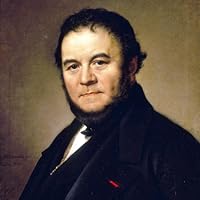
“So often have I studied the views of Florence, that I was familiar with the city before I ever set foot within its walls; I found that I could thread my way through the streets without a guide. Turning to the left I passed before a bookseller's shop, where I bought a couple of descriptive surveys of the city (guide). Twice only was I forced to inquire my way of passers by, who answered me with politeness which was wholly French and with a most singular accent; and at last I found myself before the facade of Santa Croce.
Within, upon the right of the doorway, rises the tomb of Michelangelo; lo! There stands Canova's effigy of Alfieri; I needed no cicerone to recognise the features of the great Italian writer. Further still, I discovered the tomb of Machiavelli; while facing Michelangelo lies Galileo. What a race of men! And to these already named, Tuscany might further add Dante, Boccaccio and Petrarch. What a fantastic gathering! The tide of emotion which overwhelmed me flowed so deep that it scarce was to be distinguished from religious awe. The mystic dimness which filled the church, its plain, timbered roof, its unfinished facade – all these things spoke volumes to my soul. Ah! Could I but forget...! A Friar moved silently towards me; and I, in the place of that sense of revulsion all but bordering on physical horror which usually possesses me in such circumstances, discovered in my heart a feeling which was almost friendship. Was not he likewise a Friar, Fra Bartolomeo di San Marco, that great painter who invented the art of chiaroscuro, and showed it to Raphael, and was the forefather of Correggio? I spoke to my tonsured acquaintance, and found in him an exquisite degree of politeness. Indeed, he was delighted to meet a Frenchman. I begged him to unlock for me the chapel in the north-east corner of the church, where are preserved the frescoes of Volterrano. He introduced me to the place, then left me to my own devices. There, seated upon the step of a folds tool, with my head thrown back to rest upon the desk, so that I might let my gaze dwell on the ceiling, I underwent, through the medium of Volterrano's Sybills, the profoundest experience of ecstasy that, as far as I am aware, I ever encountered through the painter's art. My soul, affected by the very notion of being in Florence, and by proximity of those great men whose tombs I had just beheld, was already in a state of trance. Absorbed in the contemplation of sublime beauty, I could perceive its very essence close at hand; I could, as it were, feel the stuff of it beneath my fingertips. I had attained to that supreme degree of sensibility where the divine intimations of art merge with the impassioned sensuality of emotion. As I emerged from the porch of Santa Croce, I was seized with a fierce palpitations of the heart (that same symptom which, in Berlin, is referred to as an attack of nerves); the well-spring of life was dried up within me, and I walked in constant fear of falling to the ground.
I sat down on one of the benches which line the piazza di Santa Croce; in my wallet, I discovered the following lines by Ugo Foscolo, which I re-read now with a great surge of pleasure; I could find no fault with such poetry; I desperately needed to hear the voice of a friend who shared my own emotion (…)”
― Rome, Naples et Florence
Within, upon the right of the doorway, rises the tomb of Michelangelo; lo! There stands Canova's effigy of Alfieri; I needed no cicerone to recognise the features of the great Italian writer. Further still, I discovered the tomb of Machiavelli; while facing Michelangelo lies Galileo. What a race of men! And to these already named, Tuscany might further add Dante, Boccaccio and Petrarch. What a fantastic gathering! The tide of emotion which overwhelmed me flowed so deep that it scarce was to be distinguished from religious awe. The mystic dimness which filled the church, its plain, timbered roof, its unfinished facade – all these things spoke volumes to my soul. Ah! Could I but forget...! A Friar moved silently towards me; and I, in the place of that sense of revulsion all but bordering on physical horror which usually possesses me in such circumstances, discovered in my heart a feeling which was almost friendship. Was not he likewise a Friar, Fra Bartolomeo di San Marco, that great painter who invented the art of chiaroscuro, and showed it to Raphael, and was the forefather of Correggio? I spoke to my tonsured acquaintance, and found in him an exquisite degree of politeness. Indeed, he was delighted to meet a Frenchman. I begged him to unlock for me the chapel in the north-east corner of the church, where are preserved the frescoes of Volterrano. He introduced me to the place, then left me to my own devices. There, seated upon the step of a folds tool, with my head thrown back to rest upon the desk, so that I might let my gaze dwell on the ceiling, I underwent, through the medium of Volterrano's Sybills, the profoundest experience of ecstasy that, as far as I am aware, I ever encountered through the painter's art. My soul, affected by the very notion of being in Florence, and by proximity of those great men whose tombs I had just beheld, was already in a state of trance. Absorbed in the contemplation of sublime beauty, I could perceive its very essence close at hand; I could, as it were, feel the stuff of it beneath my fingertips. I had attained to that supreme degree of sensibility where the divine intimations of art merge with the impassioned sensuality of emotion. As I emerged from the porch of Santa Croce, I was seized with a fierce palpitations of the heart (that same symptom which, in Berlin, is referred to as an attack of nerves); the well-spring of life was dried up within me, and I walked in constant fear of falling to the ground.
I sat down on one of the benches which line the piazza di Santa Croce; in my wallet, I discovered the following lines by Ugo Foscolo, which I re-read now with a great surge of pleasure; I could find no fault with such poetry; I desperately needed to hear the voice of a friend who shared my own emotion (…)”
― Rome, Naples et Florence

“Ali kakve veze ima Stendal sa psihičkim poremećajem? Stendal je najslavniji primer slične nedaće, i zato je izabran kao paradigma. Francuski pisac je zapravo u svom putopisu u Italiji, opisao slabost koja ga je obuzela upravo u Firenci, prilikom posete bazilici Santa Kroče. Godina je 1817; Stendal, pošto se dolazeći iz Bolonje spustio sa Apenina, ulazi u Firencu kroz kapiju San Galo i odmah odlazi u baziliku. U brdima, tokom noći, kočiju u kojoj je putovao napali su razbojnici koji verovatno nisu bili na nekom zavidnom estetskom nivou. Pred bazilikom njegovo srce mahnito lupa. Preplavljuje ga snažno osećanje izazvano atmosferom duboke religioznosti u crkvi, njenim pročeljem i grobnicama slavnih ljudi. Na kraju, u pratnji jednog opata odlazi u kapelu Nikolini, gde ostaje da posmatra Volteranove Sibile. U tom trenutku javlja se slabost. Stendal beleži: "Kao omađijan posmatrao sam veličanstvenu lepotu, gledao sam je izbliza, dodirivao sam je, da tako kažem. Dosegao sam onu tačku duševnog stanja na kojoj se susreću božanski čulni osećaji koje umetnost pruža i najstrastvenija osećanja. Kada sam izašao iz bazilike srce mi je udaralo snažnim damarima, to u Berlinu zovu "živcima": osećao sam kako iz mene ističe život, hodao sam u strahu da se ne srušim."
Ali "turista" Stendal ume da se nosi sa slabošću koja ga je obuzela, njegova kultura mu daje protivotrov koji mu pomaže da se izleči: "Seo sam na jednu od klupa na trgu Santa Kroče; s uživanjem sam ponovo pročitao one Foskolove stihove koje nosim u lisnici ne obazirući se na njihovu mestimičnu nesavršenost: bio mi je potreban prijatelj s kojim ću podeliti svoje duševno stanje". Stendal nosi sa sobom stihove "Grobova" u kojima Foskolo opeva grobove italijanskih velikana: i upravo u trenutku kada ga obizima snažan osećaj bola on traži neki umirujući znak (prijatelja) u kojem će se ogledati da bi podelio to osećanje, obuzdao ga i jezički izrazio.”
―
Ali "turista" Stendal ume da se nosi sa slabošću koja ga je obuzela, njegova kultura mu daje protivotrov koji mu pomaže da se izleči: "Seo sam na jednu od klupa na trgu Santa Kroče; s uživanjem sam ponovo pročitao one Foskolove stihove koje nosim u lisnici ne obazirući se na njihovu mestimičnu nesavršenost: bio mi je potreban prijatelj s kojim ću podeliti svoje duševno stanje". Stendal nosi sa sobom stihove "Grobova" u kojima Foskolo opeva grobove italijanskih velikana: i upravo u trenutku kada ga obizima snažan osećaj bola on traži neki umirujući znak (prijatelja) u kojem će se ogledati da bi podelio to osećanje, obuzdao ga i jezički izrazio.”
―
All Quotes
|
My Quotes
|
Add A Quote
Browse By Tag
- Love Quotes 102.5k
- Life Quotes 81k
- Inspirational Quotes 77.5k
- Humor Quotes 45.5k
- Philosophy Quotes 32k
- Inspirational Quotes Quotes 28.5k
- God Quotes 27k
- Wisdom Quotes 25k
- Romance Quotes 25k
- Truth Quotes 25k
- Poetry Quotes 24.5k
- Life Lessons Quotes 23k
- Quotes Quotes 21.5k
- Death Quotes 21k
- Happiness Quotes 19k
- Hope Quotes 19k
- Faith Quotes 18.5k
- Inspiration Quotes 18k
- Relationships Quotes 16k
- Motivational Quotes 16k
- Spirituality Quotes 16k
- Religion Quotes 15.5k
- Life Quotes Quotes 15.5k
- Writing Quotes 15k
- Love Quotes Quotes 15k
- Success Quotes 14.5k
- Motivation Quotes 14k
- Time Quotes 13k
- Science Quotes 12.5k
- Motivational Quotes Quotes 12k