
Find & Share Quotes with Friends
Symptom Quotes
Quotes tagged as "symptom"
Showing 1-19 of 19


“Retro is a symptom of a generation that is too lazy to innovate.”
― The Confessions of a Misfit
― The Confessions of a Misfit

“Reality is for those who cannot face their dream.”
― Enjoy Your Symptom!: Jacques Lacan in Hollywood and Out
― Enjoy Your Symptom!: Jacques Lacan in Hollywood and Out

“Secret elisions within families are suddenly revealed by self-execution, and just as quickly sheeted with excuses, blame, and counter-blame. But sense is made of the world only through relationship between action and reaction, symptom and cause. No change is possible without analysis of accountability.”
― The Eclipse: A Memoir of Suicide
― The Eclipse: A Memoir of Suicide

“Thus it may be said that the symptoms are often ways of containing the anxiety; they are the anxiety in structuralized form. Freud rightly remarks about psychological symptoms: "The symptom is bound anxiety," or, in other words, anxiety which has been crystallized into an ulcer or heart palpitations or some other symptom.”
― The Meaning of Anxiety
― The Meaning of Anxiety
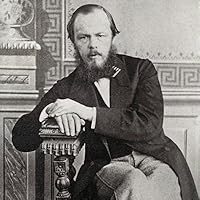
“...epilepsijos metu būdavo viena stadija prieš pat priepuolį (jeigu tik priepuolis ištikdavo dar su sąmone), kada staiga, užėjus liūdesiui, dvasinei tamsai, slogumui, protarpiais tarytum įsiliepsnodavo jo smegenyse ir nepaprastai įsitempdavo iš karto visos jo gyvybinės galios. Gyvybės, sąmoningumo pojūtis beveik dešimteriopai padidėdavo tomis akimirkomis, kurios praeidavo kaip žaibas. Protas, širdis nutviksdavo nepaprasta šviesa; visas jo susijaudinimas, visos dvejonės, visas nerimas tarytum nuščiūdavo iš karto, ištirpdavo kažin kokioje aukštesnėje rimtyje, sklidinoje giedro, harmoningo džiaugsmo ir vilties, sklidinoje išminties bei galutinės priežasties. Bet tokie momentai, tie pragiedruliai tik pranašaudavo tą galutinę sekundę (niekuomet ne ilgiau nei vieną sekundę), kurią prasidėdavo pats priepuolis.”
―
―
“We can perhaps hold both the desire to separate from these bodily memories and the willingness to be with them in the broad embrace of welcome and compassion.
I do believe this kind of acceptance is a lifetime's work that inevitably leads to 'failure' at times. Our biology wants to protect us from what may harm us, and the arising of implicit memory can feel quite threatening.
If we can soften towards our own tendency to want to move away and offer to begin again with gestures of inclusion, this is likely what is possible and optimal for us humans.
Humility and grace are perhaps the gifts of this tension, gifts that we can then extend to our people in the form of honoring their struggle.”
― The Heart of Trauma: Healing the Embodied Brain in the Context of Relationships
I do believe this kind of acceptance is a lifetime's work that inevitably leads to 'failure' at times. Our biology wants to protect us from what may harm us, and the arising of implicit memory can feel quite threatening.
If we can soften towards our own tendency to want to move away and offer to begin again with gestures of inclusion, this is likely what is possible and optimal for us humans.
Humility and grace are perhaps the gifts of this tension, gifts that we can then extend to our people in the form of honoring their struggle.”
― The Heart of Trauma: Healing the Embodied Brain in the Context of Relationships
“A fundamental feature of the symptom coherence model of symptom production is the recognition that the suffering due to a functional symptom is actually the lesser of two evils - the other, greater evil being the suffering that is unconsciously expected from not having the symptom.”
― Unlocking the Emotional Brain: Eliminating Symptoms at Their Roots Using Memory Reconsolidation
― Unlocking the Emotional Brain: Eliminating Symptoms at Their Roots Using Memory Reconsolidation

“During my five years on Mauna Kea, workers routinely displayed the symptoms of Cerebral Hypoxia”
―
―

“As a human I'm complex, as a human I don't have limits, but the book have it's own limits. All the time something good happens?? But why people don't continue to live in horror??
It satisfies me, to see how people suck blood it's a symptom that you are watching a vampire... But it's to far isn't it??
Sometimes to dream, how you dream and how you wake up in the dream and you wake up from that dream... wow that's awesome!?”
―
It satisfies me, to see how people suck blood it's a symptom that you are watching a vampire... But it's to far isn't it??
Sometimes to dream, how you dream and how you wake up in the dream and you wake up from that dream... wow that's awesome!?”
―

“Når vi har stillet en diagnose, uanset om den er rigtig eller forkert, blæser vi liv i vores sociale konstruktion. [...]
Patientens symptomer er reelle, men det diagnostiske begreb er ikkeeksisterende, idet det ikke definerer noget, der eksisterer uafhængigt af os.”
― Deadly Psychiatry and Organised Denial
Patientens symptomer er reelle, men det diagnostiske begreb er ikkeeksisterende, idet det ikke definerer noget, der eksisterer uafhængigt af os.”
― Deadly Psychiatry and Organised Denial
“Healing is often if not usually caused not by the medication but by the belief with which the patient has left the hospital or pharmacy.”
―
―

“Violence is not normal, it is taught, it is a symptom of insanity.”
― The Eden Fruitarian Guidebook
― The Eden Fruitarian Guidebook

“Wird die Dynamik, Symptome zu beseitigen, gesellschaftlich betrachtet, so scheint dies eine darunterliegende Angst zu zeigen, das zu bearbeiten, was hinter den Symptomen liegt. Das beschleunigte Optimieren der Spätmoderne steht einem tiefen Verständnis im Weg und hält die Erstarrung im Kern aufrecht. Es werden stattdessen Wege gesucht, Symptome/Unangenehmes zu beseitigen – der Fokus scheint sich immer weiter vom Kern wegzubewegen, in-dem mehr und mehr Schichten von Kompensationsstrategien um ihn gelegt werden.”
― Radikal verbunden: Über traumatisierende Herrschaft und den spirituellen Aktivismus als Brücke zwischen sozio-politischem Aufdecken und mitfühlender Bezogenheit
― Radikal verbunden: Über traumatisierende Herrschaft und den spirituellen Aktivismus als Brücke zwischen sozio-politischem Aufdecken und mitfühlender Bezogenheit
“What would you do if I told you excessive masturbation can be a symptom of electromagnetic radiation exposure?”
―
―
“What we must bear in mind here is the radical ontological status of symptom: symptom, conceived as sinthome, is literally our only substance, the only positive support of our being, the only point that gives consistency to the subject. In other words, symptom is the way we - the subjects - 'avoid madness', the way we 'choose something (the symptom-formation) instead of nothing (radical psychotic autism, the destruction of the symbolic universe)' through the binding of our enjoyment to a certain signifying, symbolic formation which assures a minimum of consistency to our being-in-the-world.
If the symptom in this radical dimension is unbound, it means literally 'the end of the world' - the only alternative to the symptom is nothing: pure autism, a psychic suicide, surrender to the death drive, even to the total destruction of the symbolic universe. That is why the final Lacanian definition of the end of the psychoanalytic process is *identification with the symptom*. The analysis achieves its end when the patient is able to recognize, in the Real of his symptom, the only support of his being. that is how we must read Freud's *wo es war, soll ich werden*: you, the subject, must identify yourself with the place where your symptom already was; in its 'pathological' particularity you must recognize the element which gives consistency to your being.”
― The Sublime Object of Ideology
If the symptom in this radical dimension is unbound, it means literally 'the end of the world' - the only alternative to the symptom is nothing: pure autism, a psychic suicide, surrender to the death drive, even to the total destruction of the symbolic universe. That is why the final Lacanian definition of the end of the psychoanalytic process is *identification with the symptom*. The analysis achieves its end when the patient is able to recognize, in the Real of his symptom, the only support of his being. that is how we must read Freud's *wo es war, soll ich werden*: you, the subject, must identify yourself with the place where your symptom already was; in its 'pathological' particularity you must recognize the element which gives consistency to your being.”
― The Sublime Object of Ideology
All Quotes
|
My Quotes
|
Add A Quote
Browse By Tag
- Love Quotes 102.5k
- Life Quotes 81k
- Inspirational Quotes 77.5k
- Humor Quotes 45.5k
- Philosophy Quotes 32k
- Inspirational Quotes Quotes 28.5k
- God Quotes 27k
- Wisdom Quotes 25k
- Romance Quotes 25k
- Truth Quotes 25k
- Poetry Quotes 24.5k
- Life Lessons Quotes 23k
- Quotes Quotes 21.5k
- Death Quotes 21k
- Happiness Quotes 19k
- Hope Quotes 19k
- Faith Quotes 18.5k
- Inspiration Quotes 18k
- Relationships Quotes 16k
- Spirituality Quotes 16k
- Motivational Quotes 16k
- Religion Quotes 15.5k
- Life Quotes Quotes 15.5k
- Writing Quotes 15k
- Love Quotes Quotes 15k
- Success Quotes 14.5k
- Motivation Quotes 14k
- Time Quotes 13k
- Science Quotes 12.5k
- Motivational Quotes Quotes 12k