
Discover new books on Goodreads
Meet your next favorite book




“That means there has never been a parent on earth who wants joy for his or her children as much as your Father in heaven wants joy for you, his child. There has never been a human father who wanted to answer his child’s petitions as much as God wants to answer yours. Yet we know that God is not only loving but holy and just. How can he shower blessings down on sinful people who deserve the opposite? The answer is that Jesus got the scorpion and the snake so that we could have food at the Father’s table. He received the sting and venom of death in our place (cf. 1 Cor 15:55; Heb 2:14–15; Gen 3:15).”
― Prayer: Experiencing Awe and Intimacy with God
― Prayer: Experiencing Awe and Intimacy with God
“We are as strictly and solemnly commanded to pray as in the others . . . not to kill, not to steal, etc.”165 We must pray whether we feel like it or not.”
― Prayer: Experiencing Awe and Intimacy with God
― Prayer: Experiencing Awe and Intimacy with God

“Reading furnishes the mind only with materials of knowledge; it is thinking that makes what we read ours.”
―
―

“Here we are able to reach a major conclusion of this study. None of these major figures who constituted the inner circle of Jesus would have become or remained followers of Jesus after the crucifixion if there was no resurrection and no resurrection appearances of Jesus. The church, in the persons of its earliest major leaders, was constituted by the event of the resurrection, coupled with the Pentecost event! The stories of these figures, especially their post-Easter stories, are the validation of this fact. There would be no church without the risen and appearing Jesus.”
― What Have They Done with Jesus? Beyond Strange Theories & Bad History-Why We Can Trust the Bible
― What Have They Done with Jesus? Beyond Strange Theories & Bad History-Why We Can Trust the Bible

“The Philosopher, too, says of the wicked (Ethic. ix, 4) that "their soul is divided against itself . . . one part pulls this way, another that"; and afterwards he concludes, saying: "If wickedness makes a man so miserable, he should strain every nerve to avoid vice.”
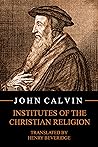
― The Summa Theologica: Complete Edition
― The Summa Theologica: Complete Edition
 Christian Theological/Philosophical Book Club
— 1931 members
— last activity Sep 25, 2026 08:42AM
Christian Theological/Philosophical Book Club
— 1931 members
— last activity Sep 25, 2026 08:42AM
The primary guidelines for this group are a sincere love for the true God of the Bible and a commitment to relying on the Word of God (the Bible) as t ...more

Nick’s 2025 Year in Books
Take a look at Nick’s Year in Books, including some fun facts about their reading.

1,474 books
|
67 friends

491 books
|
41 friends

1,228 books
|
99 friends

513 books
|
2,328 friends

3,412 books
|
49 friends

2,956 books
|
79 friends

3 books
|
169 friends

522 books
|
212 friends
More friends…


Favorite Genres
Polls voted on by Nick
Lists liked by Nick