 Sign in with Facebook



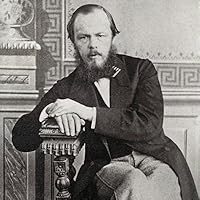
“I've been sitting here now, and do you know what I was saying to myself? If I did not believe in life, if I were to lose faith in the woman I love, if I were to lose faith in the order of things, even if I were to become convinced, on the contrary, that everything is a disorderly, damned, and perhaps devilish chaos, if I were struck even by all the horrors of human disillusionment--still I would want to live, and as long as I have bent to this cup, I will not tear myself from it until I've drunk it all. However, by the age of thirty, I will probably drop the cup, even if I haven't emptied it, and walk away...I don't know where. But until my thirtieth year, I know this for certain, my youth will overcome everything--all disillusionment, all aversion to live. I've asked myself many times: is there such despair in the world as could overcome this wild and perhaps indecent thirst for life in me, and have decided that apparently there is not--that is, once again, until my thirtieth year, after which I myself shall want no more, so it seems to me. Some snotty-nosed, consumptive moralists, poets especially, often call this thirst for life base. True, it's a feature of the Karamazovs, to some extent, this thirst for life despite all; it must be sitting in you too; but why is it base? There is still an awful lot of centripetal force on our planet, Alyosha. I want to live, and I do live, even if it be against logic. Though I do not believe in the order of things, still the sticky little leaves that come out in the spring are dear to me, the blue sky is dear to me, some people are dear to me, whom one loves sometimes, would you believe it, without even knowing why; some human deeds are dear to me, which one has perhaps long ceased believing in, but still honors with one's heart, out of old habit...I want to go to Europe, Alyosha, I'll go straight from here. Of course I know that I will only be going to a graveyard, but to the most, the most previous graveyard, that's the thing! The precious dead lie there, each stone over them speaks of such ardent past life, of such passionate faith in their deeds, their truth, their struggle, and their science, that I--this I know beforehand--will fall to the ground and kiss those stones and weep over them--being wholeheartedly convinced, at the same time, that it has all long been a graveyard and nothing more. And I will not weep from despair, but simply because I will be happy in my shed tears. I will be drunk with my own tenderness. Sticky spring leaves, the blue sky--I love them, that's all! Such things you love not with your mind, not with logic, but with your insides, your guts, you love your first young strength...”
― The Brothers Karamazov
― The Brothers Karamazov

“The truth about the world, he said, is that anything is possible. Had you not seen it all from birth and thereby bled it of its strangeness it would appear to you for what it is, a hat trick in a medicine show, a fevered dream, a trance bepopulate with chimeras having neither analogue nor precedent, an itinerant carnival, a migratory tentshow whose ultimate destination after many a pitch in many a mudded field is unspeakable and calamitous beyond reckoning.
The universe is no narrow thing and the order within it is not constrained by any latitude in its conception to repeat what exists in one part in any other part. Even in this world more things exist without our knowledge than with it and the order in creation which you see is that which you have put there, like a string in a maze, so that you shall not lose your way. For existence has its own order and that no man's mind can compass, that mind itself being but a fact among others.”
― Blood Meridian, or, the Evening Redness in the West
The universe is no narrow thing and the order within it is not constrained by any latitude in its conception to repeat what exists in one part in any other part. Even in this world more things exist without our knowledge than with it and the order in creation which you see is that which you have put there, like a string in a maze, so that you shall not lose your way. For existence has its own order and that no man's mind can compass, that mind itself being but a fact among others.”
― Blood Meridian, or, the Evening Redness in the West

“But the artist appeals to that part of our being which is not dependent on wisdom; to that in us which is a gift and not an acquisition— and, therefore, more permanently enduring. He speaks to our capacity for delight and wonder, to the sense of mystery surrounding our lives; to our sense of pity, and beauty, and pain; to the latent feeling of fellowship with all creation— and to the subtle but invincible conviction of solidarity that knits together the loneliness of innumerable hearts, to the solidarity in dreams, in joy, in sorrow, in aspirations, in illusions, in hope, in fear, which binds men to each other, which binds together all humanity— the dead to the living and the living to the unborn.”
― The Nigger of the Narcissus
― The Nigger of the Narcissus

“..for the growing good of the world is partly dependent on unhistoric acts; and that things are not so ill with you and me as they might have been, is half owing to the number who lived faithfully a hidden life, and rest in unvisited tombs.”
― Middlemarch
― Middlemarch

“The Couple Overfloweth
We sometimes go on as though people can’t express themselves. In fact they’re always expressing themselves. The sorriest couples are those where the woman can’t be preoccupied or tired without the man saying “What’s wrong? Say something…,” or the man, without the woman saying … and so on. Radio and television have spread this spirit everywhere, and we’re riddled with pointless talk, insane quantities of words and images. Stupidity’s never blind or mute. So it’s not a problem of getting people to express themselves but of providing little gaps of solitude and silence in which they might eventually find something to say. Repressive forces don’t stop people expressing themselves but rather force them to express themselves; What a relief to have nothing to say, the right to say nothing, because only then is there a chance of framing the rare, and ever rarer, thing that might be worth saying. What we’re plagued by these days isn’t any blocking of communication, but pointless statements. But what we call the meaning of a statement is its point. That’s the only definition of meaning, and it comes to the same thing as a statement’s novelty. You can listen to people for hours, but what’s the point? . . . That’s why arguments are such a strain, why there’s never any point arguing. You can’t just tell someone what they’re saying is pointless. So you tell them it’s wrong. But what someone says is never wrong, the problem isn’t that some things are wrong, but that they’re stupid or irrelevant. That they’ve already been said a thousand times. The notions of relevance, necessity, the point of something, are a thousand times more significant than the notion of truth. Not as substitutes for truth, but as the measure of the truth of what I’m saying. It’s the same in mathematics: Poincaré used to say that many mathematical theories are completely irrelevant, pointless; He didn’t say they were wrong – that wouldn’t have been so bad.
(Negotiations)”
― Negotiations 1972-1990
We sometimes go on as though people can’t express themselves. In fact they’re always expressing themselves. The sorriest couples are those where the woman can’t be preoccupied or tired without the man saying “What’s wrong? Say something…,” or the man, without the woman saying … and so on. Radio and television have spread this spirit everywhere, and we’re riddled with pointless talk, insane quantities of words and images. Stupidity’s never blind or mute. So it’s not a problem of getting people to express themselves but of providing little gaps of solitude and silence in which they might eventually find something to say. Repressive forces don’t stop people expressing themselves but rather force them to express themselves; What a relief to have nothing to say, the right to say nothing, because only then is there a chance of framing the rare, and ever rarer, thing that might be worth saying. What we’re plagued by these days isn’t any blocking of communication, but pointless statements. But what we call the meaning of a statement is its point. That’s the only definition of meaning, and it comes to the same thing as a statement’s novelty. You can listen to people for hours, but what’s the point? . . . That’s why arguments are such a strain, why there’s never any point arguing. You can’t just tell someone what they’re saying is pointless. So you tell them it’s wrong. But what someone says is never wrong, the problem isn’t that some things are wrong, but that they’re stupid or irrelevant. That they’ve already been said a thousand times. The notions of relevance, necessity, the point of something, are a thousand times more significant than the notion of truth. Not as substitutes for truth, but as the measure of the truth of what I’m saying. It’s the same in mathematics: Poincaré used to say that many mathematical theories are completely irrelevant, pointless; He didn’t say they were wrong – that wouldn’t have been so bad.
(Negotiations)”
― Negotiations 1972-1990


Ker’s 2025 Year in Books
Take a look at Ker’s Year in Books, including some fun facts about their reading.

383 books
|
4,951 friends

33 books
|
6 friends

1,518 books
|
30 friends

290 books
|
2 friends

1,808 books
|
43 friends

688 books
|
26 friends


Favorite Genres
Polls voted on by Ker
Lists liked by Ker
