Discover new books on Goodreads
Meet your next favorite book




When I want my husband to clean up the yard, but I also want to keep the peace, I have to monitor my tone so it doesn’t betray the resentment I feel, because he never notices tasks that need to be done without my reminders. I find myself
...more


“As you become a happier person, the left frontal region of your brain becomes more active (Davidson 2004). What flows through your mind sculpts your brain. Thus, you can use your mind to change your brain for the better—which will benefit your whole being, and every other person whose life you touch.”
― Buddha's Brain: The Practical Neuroscience of Happiness, Love, and Wisdom
― Buddha's Brain: The Practical Neuroscience of Happiness, Love, and Wisdom
“Yet any statement that starts with “Well, at least…” diminishes the distress and comes across as a lack of caring—or even as a kind of one-upmanship. When I first meet people who are adjusting to a terminal diagnosis, I never try to diminish their emotions. “Yes, this is terrible news and it’s very, very sad,” I say. “You don’t need to make excuses for the way you feel. You have a right to feel this way.” These words identify and recognize the struggle the dying person and family are going through. Validation is one of the first and most important tools for opening a different door.”
― Final Journeys: A Practical Guide for Bringing Care and Comfort at the End of Life
― Final Journeys: A Practical Guide for Bringing Care and Comfort at the End of Life

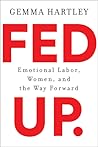
“The times when men have to think about our desires and needs and emotional responses are culturally viewed as exceptional acts. It’s above and beyond, and it’s not meant to last forever. There’s an expiration date on the demand for men’s emotional labor in a relationship. Women, on the other hand, must offer it in perpetuity.”
― Fed Up: Emotional Labor, Women, and the Way Forward
― Fed Up: Emotional Labor, Women, and the Way Forward
“Moments like these remind me why it’s so hard for men like my husband to helm the ship of emotional labor in a family. It’s not the norm. It’s not the expectation. The societal pressures he grew up with were the polar opposite of mine in terms of emotional labor. Caring was not an expectation for him; in fact, it was tacitly frowned upon as not masculine. The men in his life did not take the time to write letters to their grandmothers, or prepare meals for the family, or take charge as equal parents and partners. Men’s main societal pressure is to be breadwinners. They are expected to put this priority above family, above caring, above emotional labor—always. There is no open space for him to learn, no support system that will help him achieve the full equality he may desire at home. As Tiffany Dufu writes in Drop the Ball, “Until the contributions that women make at work are seen as just as valuable as the contributions women make at home, the contributions that men make at home will never be considered as valuable as the contributions men make at work. Just as women need affirmation on both fronts, so do men.” 5 Yet so often, that affirmation never comes. Their efforts, though praised, are undercut by the overplayed manner in which we give that praise. The pat on the back men get for parenting is akin to the exaltation we give children for messily making their bed or dressing themselves with two different socks and sparkly sandals. We praise the effort and turn a blind eye to the incompetence.”
― Fed Up: Emotional Labor, Women, and the Way Forward
― Fed Up: Emotional Labor, Women, and the Way Forward
“By adulthood women are already far more skilled at emotional labor, and that disparity in experience makes it seem logical for men to hand over the reins. Whether consciously or not, men tend to perform emotional labor as a means to an end, whereas women perform emotional labor as a way of being. That’s how we get from a happy and equitable relationship at the onset to the simmering resentment that appears years later.”
― Fed Up: Emotional Labor, Women, and the Way Forward
― Fed Up: Emotional Labor, Women, and the Way Forward

Leilah’s 2025 Year in Books
Take a look at Leilah’s Year in Books, including some fun facts about their reading.

462 books
|
23 friends

881 books
|
54 friends

57 books
|
32 friends

442 books
|
23 friends

249 books
|
31 friends

383 books
|
94 friends

2,786 books
|
400 friends

38 books
|
28 friends
More friends…


Favorite Genres
Art, Book Club, Business, Christian, Classics, Contemporary, Fiction, Memoir, Music, Non-fiction, Philosophy, Poetry, Psychology, Religion, Self help, Spirituality, and Travel
Polls voted on by Leilah
Lists liked by Leilah