This will prevent Maud from sending you messages, friend request or from viewing your profile. They will not be notified. Comments on discussion boards from them will be hidden by default.
“she had only made things worse. His angry eyes met hers in the mirror, and she remembered his soft plump infant hand pressed against her cheek, his laughter trilling through the rooms. Another boy altogether, that child. Where had he gone?”
―
Kim Edwards,
The Memory Keeper's Daughter
“God created things which had free will. That means creatures which can go wrong or right. Some people think they can imagine a creature which was free but had no possibility of going wrong, but I can't. If a thing is free to be good it's also free to be bad. And free will is what has made evil possible. Why, then, did God give them free will? Because free will, though it makes evil possible, is also the only thing that makes possible any love or goodness or joy worth having. A world of automata -of creatures that worked like machines- would hardly be worth creating. The happiness which God designs for His higher creatures is the happiness of being freely, voluntarily united to Him and to each other in an ecstasy of love and delight compared with which the most rapturous love between a man and a woman on this earth is mere milk and water. And for that they've got to be free. Of course God knew what would happen if they used their freedom the wrong way: apparently, He thought it worth the risk. (...) If God thinks this state of war in the universe a price worth paying for free will -that is, for making a real world in which creatures can do real good or harm and something of real importance can happen, instead of a toy world which only moves when He pulls the strings- then we may take it it is worth paying.”
―
C.S. Lewis,
The Case for Christianity
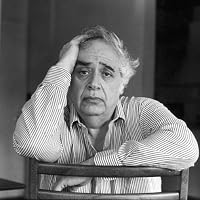
“These days readers shun difficulty, because they are so desperately distracted. The Age of the Screen jeopardizes the art of the novel.”
―
Harold Bloom,
The Bright Book of Life: Novels to Read and Reread
“As soon as the first ring finished, I heard his voice, “Hello, Boss! Do we have a case?” I had to laugh. Rudy was, to say the least, a strange young man for many reasons, but he’d become invaluable to me in helping solve my last three cases. “Your presumption is correct, Rudy. Yes, we have a case. It’s just your kind of job and I need you here ASAP.”
―
Behcet Kaya,
Uncanny Alliance