This will prevent Kenny from sending you messages, friend request or from viewing your profile. They will not be notified. Comments on discussion boards from them will be hidden by default.
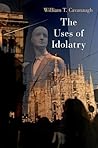
The empirical argument of this book is that worship has not receded in a supposedly “secular” world, but has rather migrated from the explicit worship of God to the implicit worship of things of human creation.
“The ancients who wished to demonstrate illustrious virtue throughout the kingdom, first ordered well their own states. Wishing to order well their states, they first regulated their families. Wishing to regulate their families, they first cultivated their persons. Wishing to cultivate their persons, they first rectified their hearts. Wishing to rectify their hearts, they first sought to be sincere in their thoughts. Wishing to be sincere in their thoughts, they first extended to the utmost their knowledge. Such extention of knowledge lay in the investigation of things… From the Son of Heaven down to the mass of the people, all must consider the cultivation of the person the root of everything besides.”
―
Anonymous
“Of Course God does not consider you hopeless. If He did, He would not be moving you to seek Him (and He obviously is)... Continue seeking Him with seriousness. Unless He wanted you, you would not be wanting Him.”
―
C.S. Lewis,
Letters of C. S. Lewis
“So I decided a little waltzing would be very good, and it was. I plan to do all my waltzing here in the study. I have thought I might have a book ready at hand to clutch if I began to experience unusual pain, so that would have been a special recommendation from being found in my hands. That seems theatrical, on consideration, and it might have the perverse effective of burdening the book with unpleasant associations. The ones I considered, by the way, were Donne and Herbert and Barth's Epistle to the Romans and Volume II of Calvin's institutes. Which is by no means to slight volume I.”
―
Marilynne Robinson,
Gilead
“The original Christians regarded the deposit of faith, as finally inseparable from the very living substance of the Gospel in the saving event of Christ crucified, risen and glorified, but as once and for all entrusted to the church through its apostolic foundation in Christ, informing, structuring and quickening its life and faith and mission as the body of Christ in the world... While the deposit of faith was replete with the truth as it is in Jesus, embodying kerygmatic, didactic and theological content, but its very nature it could not be resolved into a system of truths or set of normative doctrines and formulated beliefs, for the truths and doctrines and beliefs entailed could not be abstracted from the embodied form which they were given in Christ in the apostolic foundation of the church without loss of their real substance. Nevertheless in this embodied form "the faith once for all delivered to the saints" constituted the regulative basis for all explicit formulation of Christian truth, doctrine and belief in the deepening understanding of the church and its regular instruction of catechumens and the faithful. app is”
―
Thomas F. Torrance,
The Trinitarian Faith: The Evangelical Theology of the Ancient Catholic Faith
“Mearcstapa is not a comfortable role. Life on the borders of a group— and in the space between groups—is prone to dangers literal and figurative, with people both at “home” and among the “other” likely to misunderstand or mistrust the motivations, piety, and loyalty of the border-stalker. But mearcstapa can be a role of cultural leadership in a new mode, serving functions including empathy, memory, warning, guidance, mediation, and reconciliation. Those who journey to the borders of their group and beyond will encounter new vistas and knowledge that can enrich the group.”
―
Makoto Fujimura,
Culture Care: Reconnecting with Beauty for our Common Life
Emerging Scholars Network
— 19 members
— last activity Dec 26, 2013 09:52AM
The Emerging Scholars Network is called to identify, encourage, and equip the next generation of Christian scholars who seek to be a redeeming influenThe Emerging Scholars Network is called to identify, encourage, and equip the next generation of Christian scholars who seek to be a redeeming influence within higher education....more






 Emerging Scholars Network
— 19 members
— last activity Dec 26, 2013 09:52AM
Emerging Scholars Network
— 19 members
— last activity Dec 26, 2013 09:52AM



