
Discover new books on Goodreads
Meet your next favorite book





“where we are drawn and pulled. and when we are shifted and stirred. in what makes us feel. and feel alive. or feel understood, like outstretched hands and lifelines, like home. in our self-searching, where we feel soul memory. or in the inspiration touches and in what feels like free and brings us wide-lung breathing. and in our fire-catching and lightning-chasing, they meet us there with sparks. where we light-find and heart-reach or lose breath and dream wild… i think we find our soulmates in the places we go to find our souls.”
―
―

“we all seem to function in the exact same way: We hurt people, and we are hurt by people. We feel left out, envious, not good enough, sick, and tired. We have unrealized dreams and deep regrets. We are certain that we were meant for more and that we don’t even deserve what we have. We feel ecstatic and then numb. We wish our parents had done better by us. We wish we could do better by our children. We betray and we are betrayed. We lie and we are lied to. We say good-bye to animals, to places, to people we cannot live without. We are so afraid of dying. Also: of living. We have fallen in love and out of love, and people have fallen in love and out of love with us. We wonder if what happened to us that night will mean we can never be touched again without fear. We live with rage bubbling. We are sweaty, bloated, gassy, oily. We love our children, we long for children, we do not want children. We are at war with our bodies, our minds, our souls. We are at war with one another. We wish we’d said all those things while they were still here. They’re still here, and we’re still not saying those things. We know we won’t. We don’t understand ourselves. We don’t understand why we hurt those we love. We want to be forgiven. We cannot forgive. We don’t understand God. We believe. We absolutely do not believe. We are lonely. We want to be left alone. We want to belong. We want to be loved. We want to be loved. We want to be loved.”
― Untamed
― Untamed

“There is a third premise of the recovery movement that I do endorse enthusiastically: The patterns of problems in childhood that recur into adulthood are significant. They can be found by exploring your past, by looking into the corners of your childhood. Coming to grips with your childhood will not yield insight into how you became the adult you are: The causal links between childhood events and what you have now become are simply too weak. Coming to grips with your childhood will not make your adult problems go away: Working through the past does not seem to be any sort of cure for troubles. Coming to grips with your childhood will not make you feel any better for long, nor will it raise your self-esteem.
Coming to grips with childhood is a different and special voyage. The sages urged us to know ourselves, and Plato warned us that the unexamined life is not worth living. Knowledge acquired on this voyage is about patterns, about the tapestry that we have woven. It is not knowledge about causes. Are there consistent mistakes we have made and still make? In the flush of victory, do I forget my friends—in the Little League and when I got that last big raise? (People have always told me I'm a good loser but a bad winner.) Do I usually succeed in one domain but fail in another? (I wish I could get along with the people I really love as well as I do with my employers.) Does a surprising emotion arise again and again? (I always pick fights with people I love right before they have to go away.) Does my body often betray me? (I get a lot of colds when big projects are due.)
You probably want to know why you are a bad winner, why you get colds when others expect a lot of you, and why you react to abandonment with anger. You will not find out. As important and magnetic as the “why” questions are, they are questions that psychology cannot now answer. One of the two clearest findings of one hundred years of therapy is that satisfactory answers to the great “why” questions are not easily found; maybe in fifty years things will be different; maybe never. When purveyors of the evils of “toxic shame” tell you that they know it comes from parental abuse, don't believe them. No one knows any such thing. Be skeptical even of your own “Aha!” experiences: When you unearth the fury you felt that first kindergarten day, do not assume that you have found the source of your lifelong terror of abandonment. The causal links may be illusions, and humility is in order here. The other clearest finding of the whole therapeutic endeavor, however, is that change is within our grasp, almost routine, throughout adult life. So even if why we are what we are is a mystery, how to change ourselves is not.
Mind the pattern. A pattern of mistakes is a call to change your life. The rest of the tapestry is not determined by what has been woven before. The weaver herself, blessed with knowledge and with freedom, can change—if not the material she must work with—the design of what comes next.”
― What You Can Change and What You Can't: The Complete Guide to Successful Self-Improvement

“From our immersion in scarcity arise the habits of scarcity. From the scarcity of time arises the habit of hurrying. From the scarcity of money comes the habit of greed. From the scarcity of attention comes the habit of showing off. From the scarcity of meaningful labor comes the habit of laziness. From the scarcity of unconditional acceptance comes the habit of manipulation.”
― The More Beautiful World Our Hearts Know Is Possible
― The More Beautiful World Our Hearts Know Is Possible
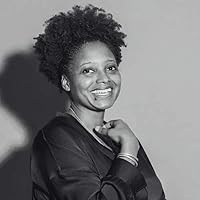
“Motherland. Madre Patria. We are born of a nation, and we are shaped by its features. Whatever that nation offers — whether it’s hardship or opportunity — is our inheritance.
When we see ourselves belonging wholly to our nation, it can be difficult to decipher its flaws and shortcomings. We make excuses for its failures and contradictions, just as family members sometimes cover for one another. It’s a form of denial.
Conversely, when your own nation lets you down, when it leaves you vulnerable, when it fails to make good on the promises of citizenship, the sense of betrayal you’re left with is nothing short of traumatic.”
―

Pauline’s 2025 Year in Books
Take a look at Pauline’s Year in Books, including some fun facts about their reading.
Pauline hasn't connected with her friends on Goodreads, yet.


Favorite Genres
Art, Biography, Business, Classics, Ebooks, Fiction, Historical fiction, Memoir, Music, Poetry, Psychology, Romance, Self help, Travel, and Nonfiction
Polls voted on by Pauline
Lists liked by Pauline