
Discover new books on Goodreads
Meet your next favorite book


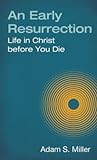
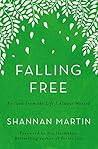
In a world where we possess the power to distract or buy our way out of most discomfort, can we ever really mean it when we say God is all we need? Can untested words ring anything but hollow from our lips? Faithful and capable folk, we
...more


“You’ll find out it’s little savors and little things that count more than big ones. A walk on a spring morning is better than an eighty-mile ride in a hopped-up car, you know why? Because it’s full of flavors, full of a lot of things growing. You’ve time to seek and find. I know, you’re after the broad effect now, I suppose that’s fit and proper. But you got to look at grapes as well as watermelons. You greatly admire skeletons and I like fingerprints; well, and good. Right now such things are bothersome to you, and I wonder if it isn’t because you never learned to use them. If you had your way you’d pass a law to abolish all the little jobs, the little things. But then you’d leave yourselves nothing to do between the big jobs and you’d have a devil of a time thinking up things? Cutting grass and pulling weeds can be a way of life.”
― Dandelion Wine
― Dandelion Wine

“Vocation does not come from willfulness. It comes from listening. I must listen to my life and try to understand what it is truly about-quite apart from what I would like it to be about-or my life will never represent anything real in the world, no matter how earnest my intentions.”
― Let Your Life Speak: Listening for the Voice of Vocation
― Let Your Life Speak: Listening for the Voice of Vocation
“Sunsets we always liked because they only happen once and go away."
"But, Lena, that's sad."
"No, if the sunset stayed and we got bored, that would be a real sadness.”
― Dandelion Wine
"But, Lena, that's sad."
"No, if the sunset stayed and we got bored, that would be a real sadness.”
― Dandelion Wine

“For me, trees have always been the most penetrating preachers. I revere them when they live in tribes and families, in forests and groves. And even more I revere them when they stand alone. They are like lonely persons. Not like hermits who have stolen away out of some weakness, but like great, solitary men, like Beethoven and Nietzsche. In their highest boughs the world rustles, their roots rest in infinity; but they do not lose themselves there, they struggle with all the force of their lives for one thing only: to fulfil themselves according to their own laws, to build up their own form, to represent themselves. Nothing is holier, nothing is more exemplary than a beautiful, strong tree. When a tree is cut down and reveals its naked death-wound to the sun, one can read its whole history in the luminous, inscribed disk of its trunk: in the rings of its years, its scars, all the struggle, all the suffering, all the sickness, all the happiness and prosperity stand truly written, the narrow years and the luxurious years, the attacks withstood, the storms endured. And every young farmboy knows that the hardest and noblest wood has the narrowest rings, that high on the mountains and in continuing danger the most indestructible, the strongest, the ideal trees grow.
Trees are sanctuaries. Whoever knows how to speak to them, whoever knows how to listen to them, can learn the truth. They do not preach learning and precepts, they preach, undeterred by particulars, the ancient law of life.
A tree says: A kernel is hidden in me, a spark, a thought, I am life from eternal life. The attempt and the risk that the eternal mother took with me is unique, unique the form and veins of my skin, unique the smallest play of leaves in my branches and the smallest scar on my bark. I was made to form and reveal the eternal in my smallest special detail.
A tree says: My strength is trust. I know nothing about my fathers, I know nothing about the thousand children that every year spring out of me. I live out the secret of my seed to the very end, and I care for nothing else. I trust that God is in me. I trust that my labor is holy. Out of this trust I live.
When we are stricken and cannot bear our lives any longer, then a tree has something to say to us: Be still! Be still! Look at me! Life is not easy, life is not difficult. Those are childish thoughts. Let God speak within you, and your thoughts will grow silent. You are anxious because your path leads away from mother and home. But every step and every day lead you back again to the mother. Home is neither here nor there. Home is within you, or home is nowhere at all.
A longing to wander tears my heart when I hear trees rustling in the wind at evening. If one listens to them silently for a long time, this longing reveals its kernel, its meaning. It is not so much a matter of escaping from one's suffering, though it may seem to be so. It is a longing for home, for a memory of the mother, for new metaphors for life. It leads home. Every path leads homeward, every step is birth, every step is death, every grave is mother.
So the tree rustles in the evening, when we stand uneasy before our own childish thoughts: Trees have long thoughts, long-breathing and restful, just as they have longer lives than ours. They are wiser than we are, as long as we do not listen to them. But when we have learned how to listen to trees, then the brevity and the quickness and the childlike hastiness of our thoughts achieve an incomparable joy. Whoever has learned how to listen to trees no longer wants to be a tree. He wants to be nothing except what he is. That is home. That is happiness.”
― Bäume: Betrachtungen und Gedichte
Trees are sanctuaries. Whoever knows how to speak to them, whoever knows how to listen to them, can learn the truth. They do not preach learning and precepts, they preach, undeterred by particulars, the ancient law of life.
A tree says: A kernel is hidden in me, a spark, a thought, I am life from eternal life. The attempt and the risk that the eternal mother took with me is unique, unique the form and veins of my skin, unique the smallest play of leaves in my branches and the smallest scar on my bark. I was made to form and reveal the eternal in my smallest special detail.
A tree says: My strength is trust. I know nothing about my fathers, I know nothing about the thousand children that every year spring out of me. I live out the secret of my seed to the very end, and I care for nothing else. I trust that God is in me. I trust that my labor is holy. Out of this trust I live.
When we are stricken and cannot bear our lives any longer, then a tree has something to say to us: Be still! Be still! Look at me! Life is not easy, life is not difficult. Those are childish thoughts. Let God speak within you, and your thoughts will grow silent. You are anxious because your path leads away from mother and home. But every step and every day lead you back again to the mother. Home is neither here nor there. Home is within you, or home is nowhere at all.
A longing to wander tears my heart when I hear trees rustling in the wind at evening. If one listens to them silently for a long time, this longing reveals its kernel, its meaning. It is not so much a matter of escaping from one's suffering, though it may seem to be so. It is a longing for home, for a memory of the mother, for new metaphors for life. It leads home. Every path leads homeward, every step is birth, every step is death, every grave is mother.
So the tree rustles in the evening, when we stand uneasy before our own childish thoughts: Trees have long thoughts, long-breathing and restful, just as they have longer lives than ours. They are wiser than we are, as long as we do not listen to them. But when we have learned how to listen to trees, then the brevity and the quickness and the childlike hastiness of our thoughts achieve an incomparable joy. Whoever has learned how to listen to trees no longer wants to be a tree. He wants to be nothing except what he is. That is home. That is happiness.”
― Bäume: Betrachtungen und Gedichte

“Dark clouds bring waters, when the bright bring none.”
― The Pilgrim's Progress
― The Pilgrim's Progress

Melissa’s 2025 Year in Books
Take a look at Melissa’s Year in Books, including some fun facts about their reading.

605 books
|
93 friends

693 books
|
90 friends

1,602 books
|
77 friends

1,088 books
|
69 friends

3,680 books
|
258 friends

1,707 books
|
87 friends

913 books
|
105 friends

2,972 books
|
34 friends
More friends…


Polls voted on by Melissa
Lists liked by Melissa