
 Sign in with Facebook

Zoe Schleining
https://pin.it/1QUmKuIRi


“It is, therefore, a great source of virtue for the practiced mind to learn, bit by bit, first to change about in visible and transitory things, so that afterwards it may be possible to leave them behind altogether. The man who finds his homeland sweet is still a tender beginner; he to whom every soil is as his native one is already strong; but he is perfect to whom the entire world is as a foreign land. The tender soul has fixed his love on one spot in the world; the strong man has extended his love to all places; the perfect man has extinguished his. From boyhood I have dwelt on foreign soil and I know with what grief sometimes the mind takes leave of the narrow hearth of a peasant's hut, and I know too how frankly it afterwards disdains marble firesides and panelled halls.”
― The Didascalicon of Hugh of Saint Victor: A Medieval Guide to the Arts
― The Didascalicon of Hugh of Saint Victor: A Medieval Guide to the Arts
“TO SEE EVERYTHING AND TO SEE IT OFTEN INCOMPARABLY MORE CLEARLY THAN OUR MOST REALISTIC MINDS SEE IT; to refuse to accept anyone or anything, but at the same time not to despise anything; to give way, to yield, from policy; never to lose sight of a useful practical object (such as rent-free quarters at the government expense, pensions, decorations), to keep their eye on that object through all the enthusiasms and volumes of lyrical poems, and at the same time to preserve "the sublime and the beautiful" inviolate within them to the hour of their death, and to preserve themselves also, incidentally, like some precious jewel wrapped in cotton wool if only for the benefit of "the sublime and the beautiful.".”
―
―
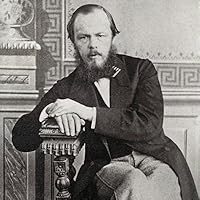
“Can a man of perception respect himself at all?”
― Notes from Underground, White Nights, The Dream of a Ridiculous Man, and Selections from The House of the Dead
― Notes from Underground, White Nights, The Dream of a Ridiculous Man, and Selections from The House of the Dead
“Let me explain: the pleasure came precisely from being too clearly aware of your own degradation; from the feeling of having gone to the uttermost limits; that it was vile, but it could not have been otherwise; that you could not escape, you could never make your-self into a different person; that even if enough faith and time remained for you to make yourself into some-thing different, you probably wouldn't want to change yourself; and even if you did want to, you wouldn't do
anything because, after all, perhaps it wasn't worth while to change. But finally, and chiefly, all this proceeded from the normal basic laws of intellectual activity and the inertia directly resulting from these laws, and conse-quently not only wouldn't you change yourself, you wouldn't even do anything at all. For example, it turns out in consequence of intensified awareness that it seems to be some kind of consolation to a scoundrel to feel fully conscious that he really is a scoundrel. But that's enough .. Ach, I've talked a lot, but what have I explained? How can this pleasure be accounted for? But I will explain myself. I'll go on to the end. That's why I took up my pen...”
―
anything because, after all, perhaps it wasn't worth while to change. But finally, and chiefly, all this proceeded from the normal basic laws of intellectual activity and the inertia directly resulting from these laws, and conse-quently not only wouldn't you change yourself, you wouldn't even do anything at all. For example, it turns out in consequence of intensified awareness that it seems to be some kind of consolation to a scoundrel to feel fully conscious that he really is a scoundrel. But that's enough .. Ach, I've talked a lot, but what have I explained? How can this pleasure be accounted for? But I will explain myself. I'll go on to the end. That's why I took up my pen...”
―

“There is no wealth but life. Life, including all its powers of love, of joy, and of admiration. That country is the richest which nourishes the greatest numbers of noble and happy human beings; that man is richest, who, having perfected the functions of his own life to the utmost, has also the widest helpful influence, both personal, and by means of his possessions, over the lives of others.”
― Unto This Last
― Unto This Last

Zoe’s 2024 Year in Books
Take a look at Zoe’s Year in Books, including some fun facts about their reading.
Zoe hasn't connected with their friends on Goodreads, yet.
Favorite Genres
Art, Christian, Classics, Contemporary, Fantasy, Historical fiction, History, Memoir, Philosophy, Poetry, and Romance
Polls voted on by Zoe
Lists liked by Zoe
