 Sign in with Facebook





“Human life, Rousseau understood, begins not in democracy but in monarchy. The baby, on whom caregivers ardently dote, has no way of surviving except by making slaves of others. Babies are so weak that they must either rule or die. Incapable of shared work or reciprocity, they can get things only by commands and threats, and by exploiting the worshipful love given them by others. (In letters, Rousseau made it clear that this was why he abandoned his children: he just didn’t have time to be at a baby’s beck and call.)”
― The Monarchy of Fear: A Philosopher Looks at Our Political Crisis
― The Monarchy of Fear: A Philosopher Looks at Our Political Crisis

“Epidemics have rules. They have boundaries. They are subject to overstories—and we are the ones who create overstories. They change in size and shape when they reach a tipping point—and it is possible to know when and where those tipping points are. They are driven by a number of people, and those people can be identified. The tools necessary to control an epidemic are sitting on the table, right in front of us. We can let the unscrupulous take them. Or we can pick them up ourselves, and use them to build a better world.”
― Revenge of the Tipping Point: Overstories, Superspreaders, and the Rise of Social Engineering
― Revenge of the Tipping Point: Overstories, Superspreaders, and the Rise of Social Engineering
“Think about the psychology of that kind of change. “If you’re just below that tipping point—you’re at 20 percent—you have no idea how close you are,” Centola says. In one of the versions of his game, with twenty people, having four dissidents didn’t make the slightest difference. But when he added one more—bringing the outsiders up to the magic 25 percent mark—the consensus abruptly shifted. “You don’t know that [with] one or two more people, you could trigger that tipping point,” he said. If change happened gradually, you could see that you were getting closer and closer to your goal—and you wouldn’t be surprised when you reached it. But if nothing happens and then everything happens, you are in the strange position of being discouraged during the long stretch when nothing is happening and stunned at the point when it all shifts.”
― Revenge of the Tipping Point: Overstories, Superspreaders, and the Rise of Social Engineering
― Revenge of the Tipping Point: Overstories, Superspreaders, and the Rise of Social Engineering
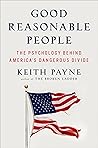
“cognitive response principle.” The principle says that no one changes their beliefs or attitudes based on information they receive. If they change, it is because of their own thoughts in response to the new information.”
― Good Reasonable People: The Psychology Behind America's Dangerous Divide
― Good Reasonable People: The Psychology Behind America's Dangerous Divide
“[It is] very hard to accept...the story that we tell ourselves that we bear no responsibility for the epidemics that surround us — that they come out of nowhere, that they should always surprise us.”
― Revenge of the Tipping Point
― Revenge of the Tipping Point

Roben’s 2025 Year in Books
Take a look at Roben’s Year in Books, including some fun facts about their reading.

217 books
|
94 friends

1,058 books
|
33 friends

241 books
|
146 friends

943 books
|
136 friends

1,241 books
|
160 friends

127 books
|
4 friends

162 books
|
131 friends

190 books
|
63 friends
More friends…


Polls voted on by Roben
Lists liked by Roben
